AI-Assisted Fuel Tax Credit Claims for Transport Fleets
Manual fuel logs make fuel tax credit claims slow, inconsistent, and hard to defend under audit. This guide explains how AI-assisted trip and fuel data reconciliation improves accuracy without replacing your accountant's final sign-off.
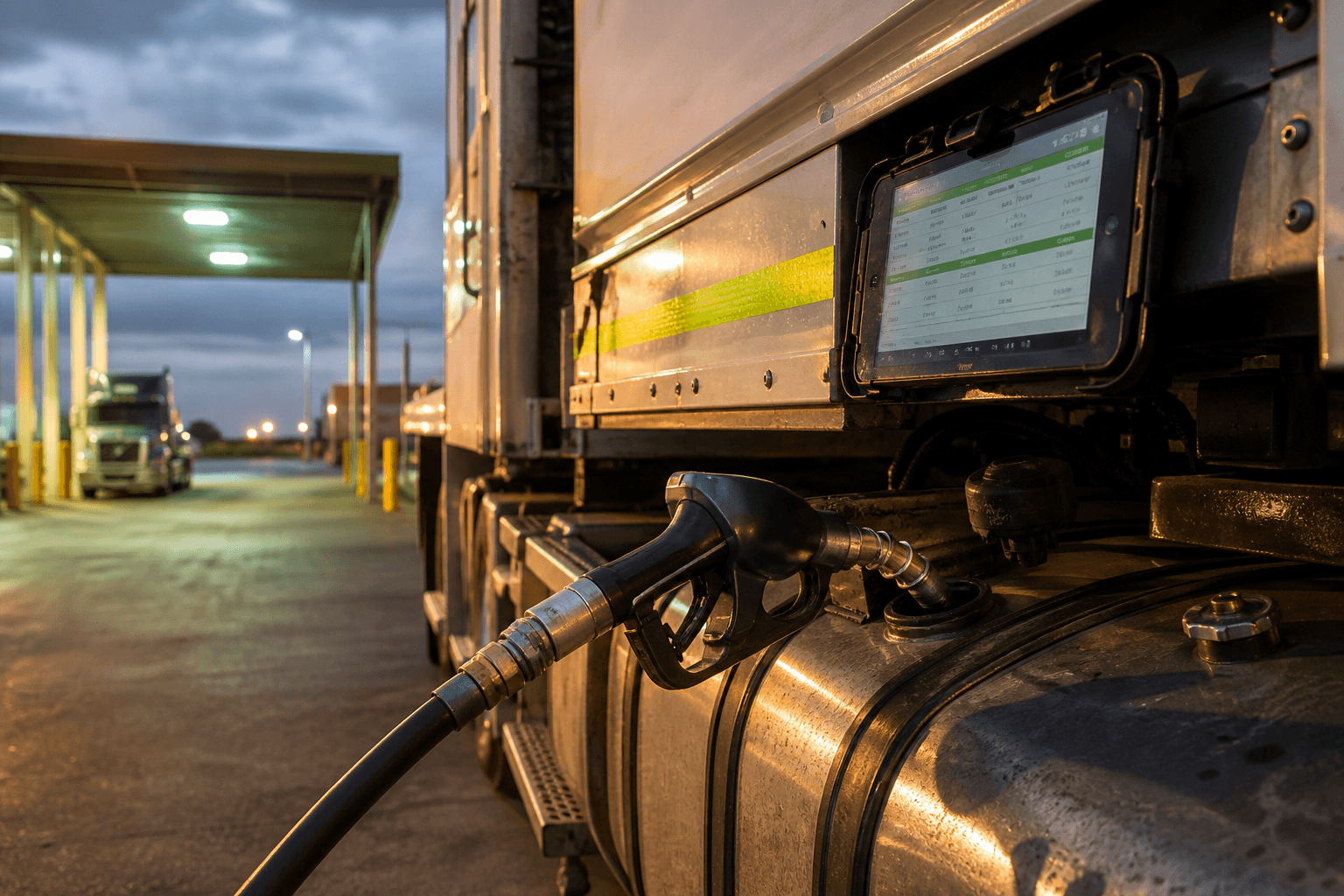
What are fuel tax credits, and why do transport fleets miss out?
Fuel tax credits (FTCs) are a scheme administered by the Australian Taxation Office that returns some or all of the fuel tax (excise or customs duty) included in the price of fuel used in eligible business activities, including heavy vehicle travel on public roads and off-road or auxiliary equipment use. Rates vary by fuel type, vehicle, and use, and the ATO updates them periodically — operators need to check current rates on ato.gov.au rather than rely on last year's figures. Many transport operators under-claim because their fuel and trip records don't cleanly separate eligible from ineligible use, or they over-claim because manual logs blur the line between on-road and off-road activity.
Why do manual fuel logs create risk for FTC claims?
Manual fuel logs are risky because they depend on drivers, dispatchers, or finance staff correctly recording odometer readings, fuel purchases, idle time, and auxiliary equipment use across potentially dozens of vehicles and hundreds of trips a month. Spreadsheet-based reconciliation is slow, error-prone, and hard to audit. A missed entry, a transposed figure, or an assumption about a trip's eligible proportion can mean a claim that's wrong in either direction — leaving money on the table or creating exposure if the ATO reviews the claim. For fleets running legacy telematics or fuel card systems that don't talk to each other, reconciling trip data against fuel purchases is often a manual, end-of-quarter scramble.
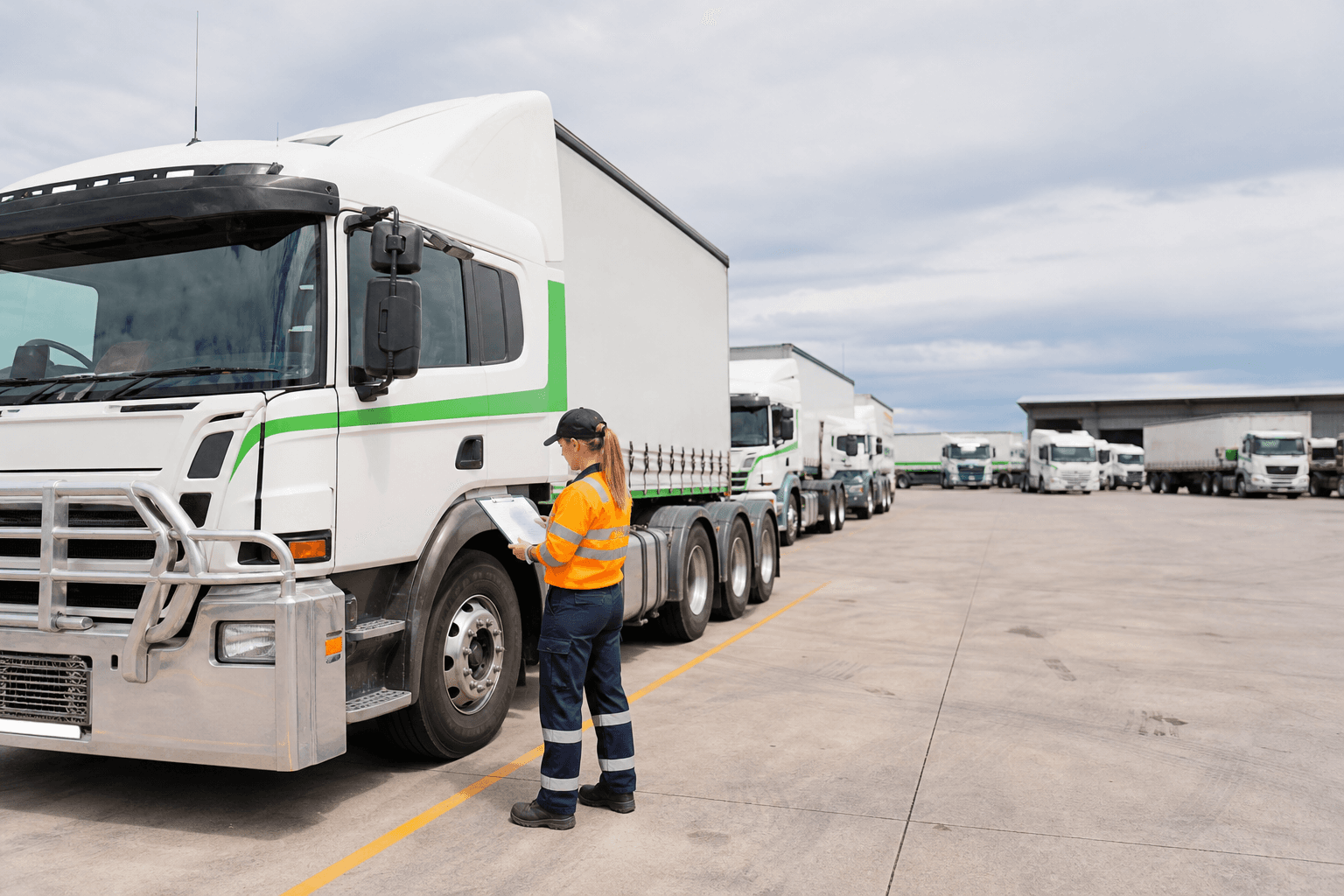
How does AI-assisted trip and fuel data reconciliation work?
AI-assisted reconciliation works by matching telematics data (GPS, odometer, engine hours), fuel card transactions, and trip or job records to automatically classify fuel use against eligible and ineligible categories, flagging gaps or inconsistencies for human review. Instead of a finance team manually cross-referencing spreadsheets, the system builds a structured, time-stamped trail linking each litre of fuel to a specific vehicle, trip, and activity type. This doesn't calculate the claim itself or interpret ATO eligibility rules — it produces the clean, consistent data an accountant or BAS agent needs to apply those rules correctly and defend the claim if it's ever reviewed.

This is the same discipline that underpins broader digital transformation work in logistics: building a single source of operational truth that multiple reporting obligations can draw from, rather than maintaining separate, disconnected spreadsheets for fuel tax, emissions, and compliance reporting.
Manual fuel logs vs AI-assisted reconciliation
| Manual fuel logs | AI-assisted reconciliation | |
|---|---|---|
| Data sources | Driver logs, fuel receipts, spreadsheets | Telematics, fuel cards, trip/job records, document intelligence |
| Consistency across fleet | Variable, depends on individual record-keeping | Standardised, same classification logic applied fleet-wide |
| Audit trail | Often incomplete or reconstructed after the fact | Continuous, time-stamped, exportable for review |
| Time to reconcile | Hours to days per BAS period | Largely automated, with exceptions flagged for review |
| Risk of mis-classification | Higher — relies on manual judgement per trip | Lower — rules applied consistently, anomalies surfaced |
| Final claim decision | Accountant/BAS agent | Accountant/BAS agent (unchanged) |
Does AI replace the accountant's sign-off?
No — AI does not replace the accountant's sign-off, and it shouldn't. Fuel tax credit eligibility involves judgement calls about vehicle type, road use, and auxiliary equipment that require professional interpretation of current ATO rules. What AI-assisted reconciliation does is remove the manual data-wrangling burden so your accountant or BAS agent is working from accurate, well-organised records instead of patchy fuel logs. The sign-off, the final calculation, and the ATO relationship remain with your finance team or tax adviser.
What does audit-ready documentation actually look like?
Audit-ready documentation is a consistent, traceable record that links every fuel purchase to a vehicle, a trip, and an activity classification, available on demand if the ATO reviews a claim. This means timestamps, odometer or engine-hour readings, GPS trip data, and fuel receipts that can be cross-referenced without manual reconstruction. Document intelligence tools that extract and structure data from fuel receipts, delivery dockets, and trip sheets make this kind of record-keeping far less dependent on manual data entry — see our document intelligence work for how this applies more broadly to logistics paperwork.
How does this connect to emissions reporting?
Fuel consumption data used to substantiate fuel tax credit claims is often the same raw data needed for Scope 1 emissions calculations under AASB S2 and NGER reporting obligations. Rather than building separate systems for tax and emissions reporting, fleets can structure fuel and trip data once and use it for multiple compliance purposes. Our emissions reporting service covers how this overlap works in practice for Scope 1 and Scope 3 measurement.
Where does this fit in a broader modernisation plan?
Fuel tax credit reconciliation is rarely the starting point for a transport operator's AI journey — it's usually one outcome of cleaning up fragmented telematics, fuel card, and trip data that also supports route optimisation, warehouse reporting, and compliance obligations. If your fleet is still relying on spreadsheets and manual fuel logs, an AI readiness assessment is a practical way to map what data you already have, where the gaps are, and what's worth fixing first. You can also browse our insights for more on how Australian transport and logistics operators are approaching digital transformation.
If you're exploring how to improve fuel tax credit accuracy and audit readiness without adding headcount to your finance team, we can help — we work with the systems you already have and leave the final sign-off exactly where it belongs: with your accountant.
Zero Footprint
The Zero Footprint team — AI modernisation for Australian logistics.