Standardising Telematics Data Across Mixed-OEM Fleets
Fleets running multiple truck OEMs often end up with GPS, fuel and engine data in incompatible formats. Here's how to reconcile mixed-OEM telematics feeds into one structure that predictive and route-optimisation models can actually use.

If your fleet has grown through acquisition, gradual renewal, or simply buying whatever truck suited the job at the time, you're probably running telematics from more than one OEM. Each system reports GPS, fuel, and engine data differently — and that inconsistency is one of the biggest blockers to using AI in logistics for route optimisation or predictive maintenance.
What is telematics data standardisation and why does it matter for AI readiness?
Telematics data standardisation is the process of converting GPS, fuel, engine and compliance data from multiple OEM and aftermarket telematics systems into one consistent structure — common units, common timestamps, common vehicle and event identifiers. Without it, predictive models and route-optimisation engines can't reliably compare or combine data across your fleet, because they're effectively reading several different languages at once.
Most mid-market operators don't set out to end up in this position. It happens gradually: a new depot comes with its own truck brand, a leasing deal bundles in a different telematics unit, or a vendor contract expires and gets replaced with something cheaper. Three years later, nobody can pull a single clean fuel-efficiency report across the whole fleet.
Why do mixed-OEM fleets end up with inconsistent telematics data?
Telematics is typically sold as bundled hardware plus a software dashboard, priced per vehicle, by vendors such as Teletrac Navman, Verizon Connect, Eroad and Samsara. These are generic products built for a broad market — not tailored to any one operator's dispatch, warehouse, or data-integration workflow, so each vendor's device captures, labels and exports data in its own proprietary format.
That's structurally why mixed-OEM fleets end up fragmented. OEM-native systems (Volvo, Scania, Kenworth, Isuzu and others) report engine and fuel telemetry through their own protocols, and the aftermarket boxes layered on top add yet another schema. The result is several parallel data streams that were never designed to talk to each other, let alone feed a single AI model.
What data fields need to be reconciled across OEM systems?
The core fields that typically need reconciliation are GPS position and speed, fuel consumption and fuel level, engine fault codes and idle time, odometer and hours-of-service data, and harsh-event flags (braking, acceleration, cornering). Each OEM may use different units, sampling frequencies, and naming conventions for the same underlying signal.

Practically, this means mapping every vendor's field names and units onto a single internal schema — litres vs gallons, UTC vs local timestamps, VIN vs internal asset ID — and deciding how to handle gaps where one OEM simply doesn't report a field the others do. It also means agreeing on a canonical event taxonomy, so a "harsh brake" from one system means the same thing as a "hard stop" from another.
What does a standardised telematics data structure look like?
A standardised structure is a single data model — usually a time-series table keyed by vehicle ID and timestamp — where every OEM feed is translated into the same fields, units and granularity before anything downstream touches it. This is the layer that makes cross-fleet reporting and model training possible.
| Characteristic | Raw multi-OEM data | Standardised structure |
|---|---|---|
| Units | Mixed (litres/gallons, km/miles) | Consistent, converted at ingestion |
| Vehicle identifiers | Vendor-specific IDs, VINs, internal codes | Single canonical asset ID |
| Event definitions | Different thresholds per OEM | One shared event taxonomy |
| Timestamps | Local time, UTC, inconsistent formats | Normalised to one timezone standard |
| Reporting | Per-vendor dashboard, manual export | Single source for analytics and models |
| AI/ML readiness | Not usable without manual cleaning | Model-ready without rework |
Getting to the right-hand column isn't a one-off IT project — it's an ongoing pipeline, because new vehicles, new OEMs and vendor firmware updates keep arriving.
How does data standardisation enable route optimisation and predictive models?
Route-optimisation and predictive-maintenance models are only as good as the data feeding them, and both need a consistent, fleet-wide view to work properly. A model trained only on data from one OEM's trucks will perform unevenly — or not at all — when applied to vehicles from a different manufacturer with different signal behaviour.
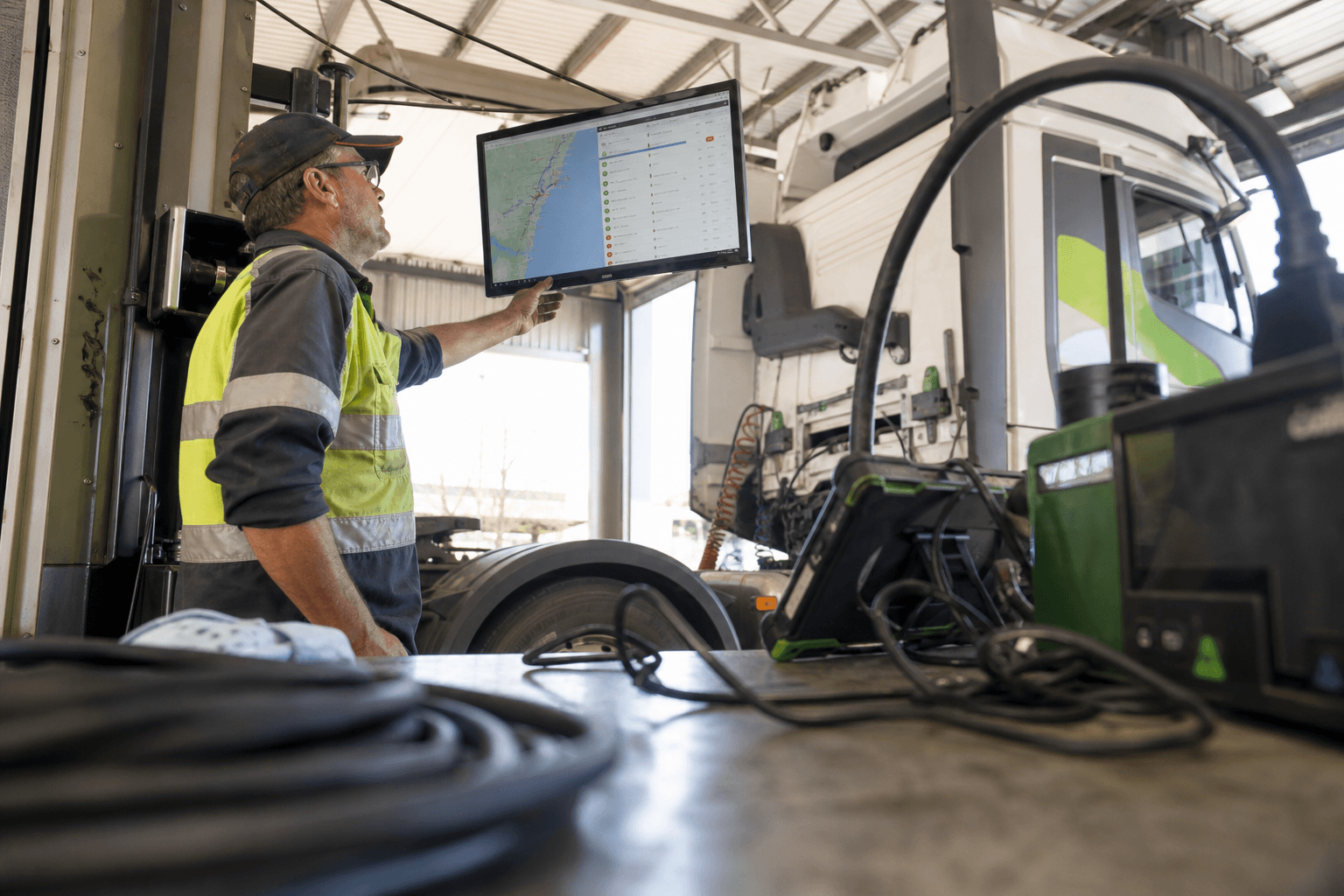
Once GPS, fuel and engine data sit in one structure, you can start answering fleet-wide questions you couldn't before: which routes genuinely burn more fuel once you've normalised for vehicle type, which vehicles are trending toward a maintenance event based on consistent fault-code patterns, and where dispatch decisions are costing you time across the whole fleet rather than just one depot. This is the groundwork our route-optimisation work depends on — models can't optimise what they can't see consistently.
What's the practical pathway to telematics standardisation?
The practical pathway starts with an inventory of every telematics source in the fleet, followed by field-level mapping, a pipeline to normalise incoming data in near real time, and a validation step to catch gaps or drift before models are trained on it. Most operators underestimate the mapping step — it's manual, detailed work, but it only has to be done properly once per OEM system.
This is also where legacy system modernisation and telematics standardisation overlap. If your TMS or WMS is five-plus years old and wasn't built with API integration in mind, bolting a normalisation layer onto it is a different exercise than building one for a modern, API-first stack. It's worth assessing both at the same time rather than treating them as separate problems.
For operators unsure where their data actually stands, an ai-readiness-assessment is usually the right starting point — it maps your current telematics, TMS and WMS feeds against what a route-optimisation or predictive-maintenance model would actually need, before any build work starts. We cover related ground in our insights, including how data quality issues show up in document processing and emissions reporting too.
If you're exploring how to get mixed-OEM telematics data into shape for AI, we can help — starting with an honest look at what you've already got.
Zero Footprint
The Zero Footprint team — AI modernisation for Australian logistics.