Mining Freight Complaint Emails for Operational Insights
Complaint emails and support tickets hold operational detail that numeric KPIs miss. Here's how AI text mining helps 3PLs and carriers turn unstructured customer feedback into a prioritised list of fixes.
Why complaint emails are an untapped data source for 3PLs and carriers
Most logistics operators measure performance through numbers — on-time delivery rates, dock-to-dock times, damage claims counts. But the richest detail about why things go wrong usually sits in unstructured text: complaint emails, support tickets, and driver notes. Voice-of-customer text mining is the use of AI in logistics to analyse this written feedback and surface patterns that numeric dashboards miss entirely.
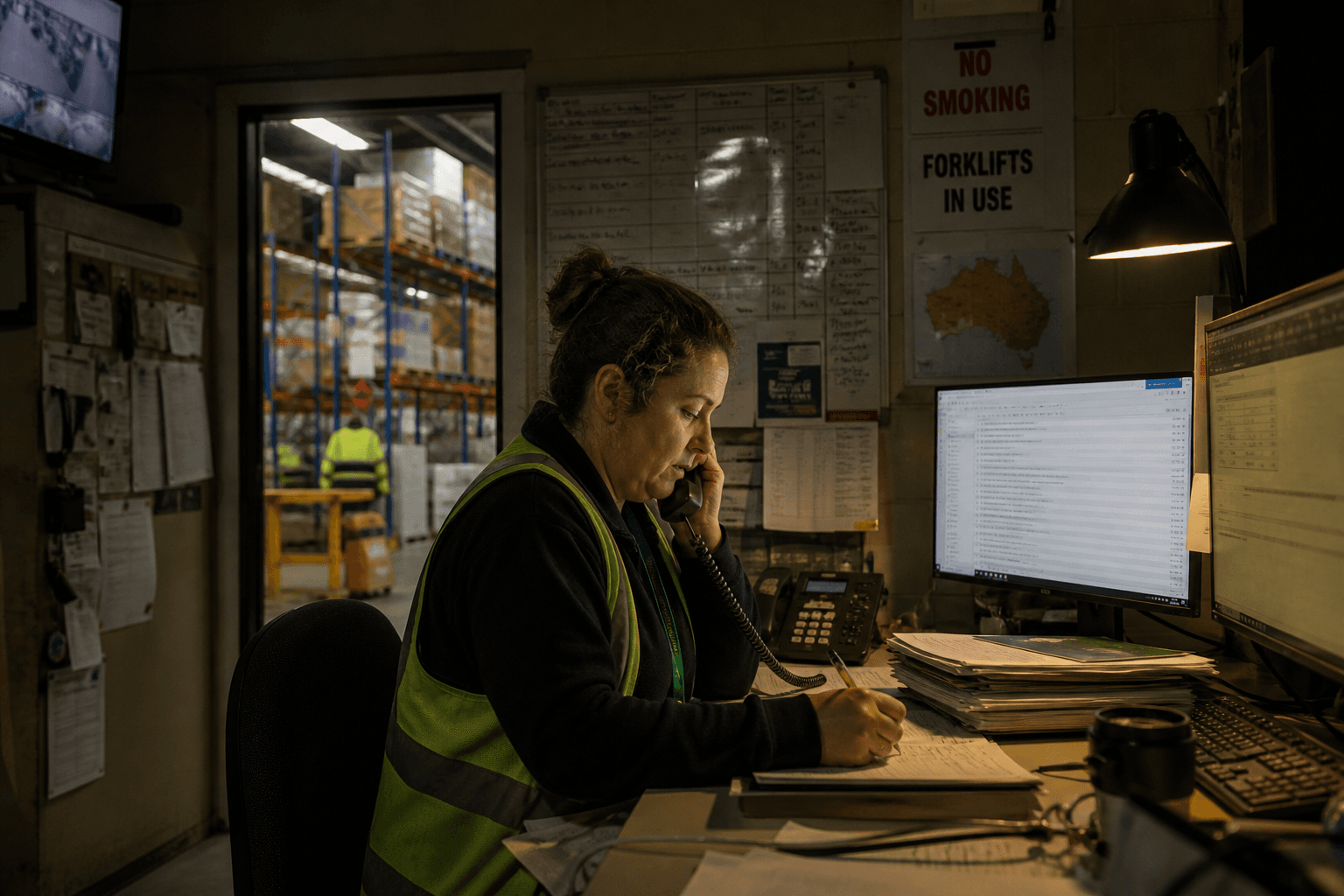
A customer who emails "driver left the pallet outside in the rain again" is telling you something your KPI dashboard can't: a recurring process failure tied to a specific depot, driver, or customer type. Multiply that by hundreds of emails a month and you have a dataset that's too large to read manually but too valuable to ignore.
What is voice-of-customer text mining?
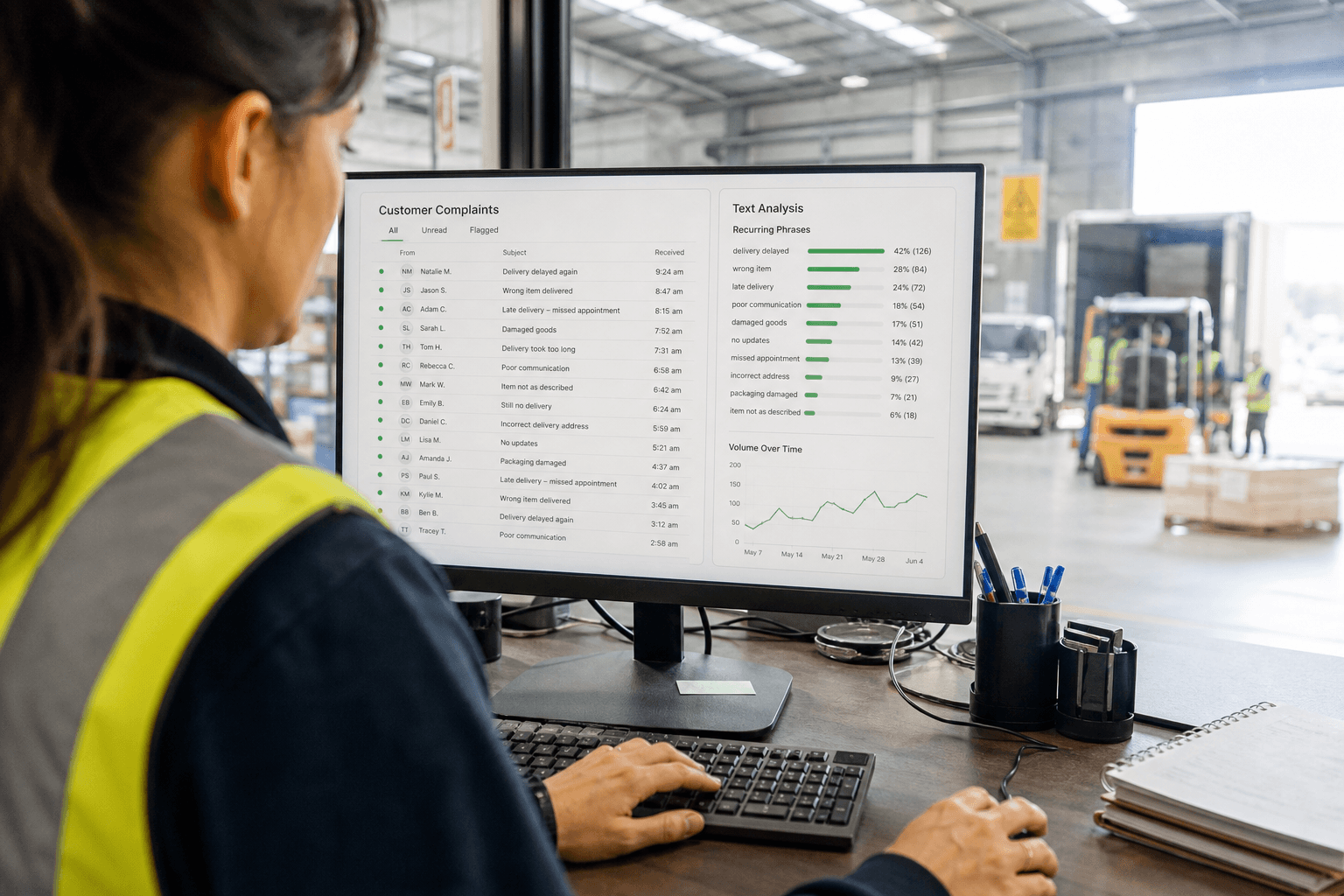
Voice-of-customer (VoC) text mining is the application of natural language processing to unstructured customer communications — emails, tickets, chat logs, call transcripts — to extract themes, sentiment, and recurring issues at scale. Rather than relying on someone tagging each ticket manually, the system reads the raw text and groups similar complaints automatically.
For freight and warehousing businesses, this typically means processing inboxes, CRM tickets, and even scanned proof-of-delivery notes with handwritten comments. The output isn't a single score — it's a structured breakdown of what customers are complaining about, how often, and where in the network it's happening.
How does this differ from standard customer service reporting?
Traditional support reporting relies on agents selecting a category from a dropdown list — "delivery delay," "damage," "billing query." This is fast but loses nuance, and categories are often chosen inconsistently between staff. Text mining reads the actual words customers used, which captures detail that pre-set categories flatten out.
The difference matters operationally. A dropdown might tell you "15% of tickets this month were delivery delays." Text analysis can tell you that a third of those delay complaints specifically mention a particular regional depot, a specific time window, or a named carrier partner — the kind of granularity that points directly to a fix.
| Approach | What it captures | Typical granularity | Effort to maintain |
|---|---|---|---|
| Manual ticket categorisation | Agent's chosen category | Low — broad buckets | High — requires consistent tagging discipline |
| Numeric KPI dashboards (OTD, damage rate) | Outcome measures | Medium — aggregate trends | Low once set up |
| AI text mining of complaint emails | Actual customer language, sentiment, recurring phrases | High — specific causes, locations, timing | Moderate — needs clean data pipeline |
What recurring issues can text mining actually surface?
Text mining is well suited to detecting patterns that are too subtle or too distributed for a person to notice by reading emails individually. Common findings in freight and 3PL operations include complaints clustering around specific lanes, repeat mentions of a named depot or driver, recurring language about communication gaps ("no one told me the delivery was delayed"), and seasonal spikes tied to peak volume periods.
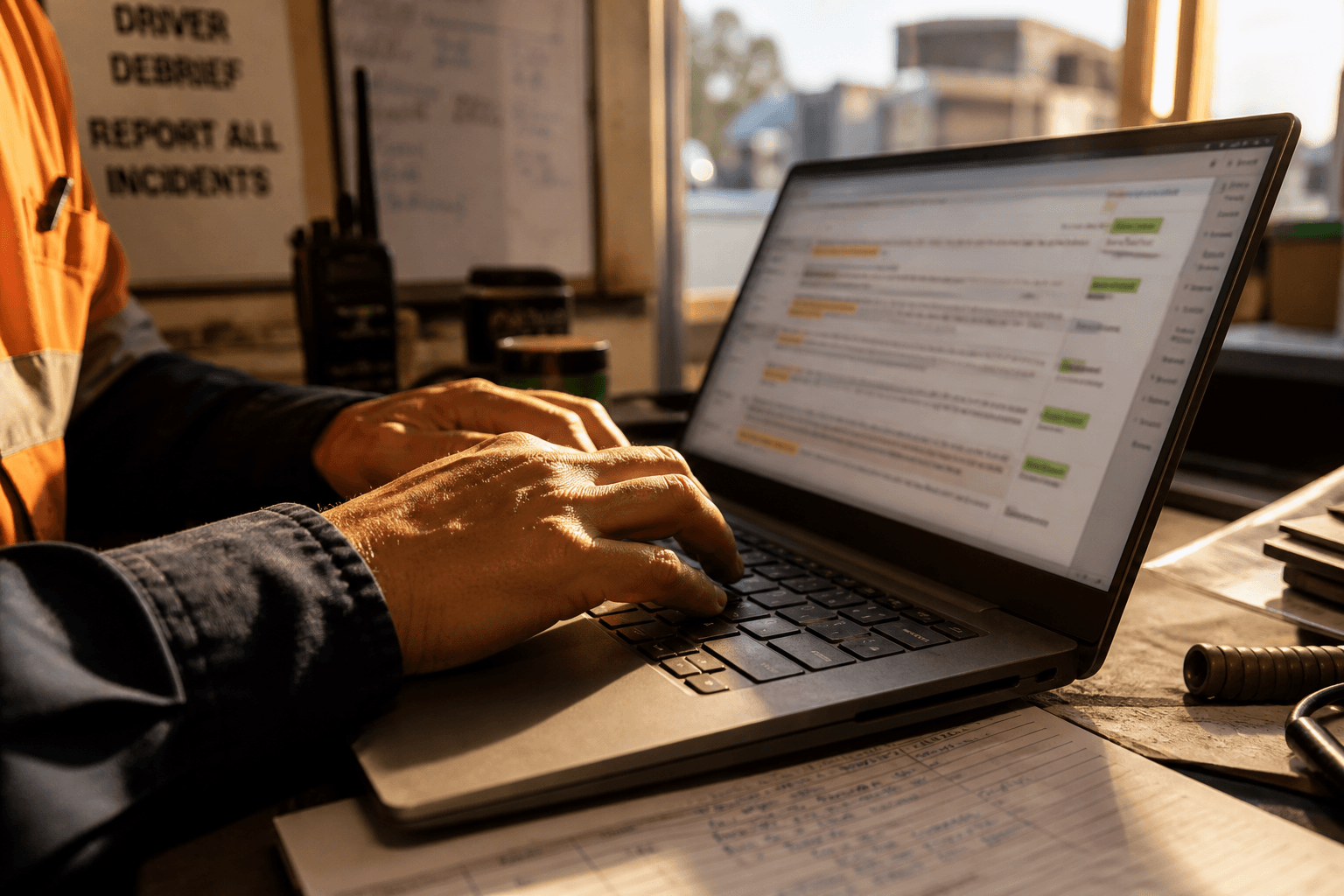
Because the analysis works on free text rather than pre-set categories, it can also pick up emerging issues before they're common enough to warrant their own dropdown option — for example, a new packaging supplier causing a wave of damage complaints that wouldn't yet be labelled consistently by support staff.
How should operators prioritise fixes from text mining output?
Prioritisation should combine frequency, severity, and customer value — not just raw complaint volume. A recurring but minor annoyance from a low-value account matters less operationally than a less frequent but high-severity issue affecting a major contracted customer, especially one tied to an SLA.
A practical approach is to rank clusters by three factors: how often the theme appears, whether it's linked to a contracted SLA or at-risk account, and whether the root cause looks operational (fixable through process or routing change) versus structural (requires capital investment, like warehouse automation). This turns a pile of unstructured complaints into a short, defensible list operations leaders can act on.
Where does this fit alongside other AI initiatives in logistics?
Voice-of-customer text mining sits naturally alongside other document-heavy AI use cases in freight and warehousing. The same underlying capability — reading and structuring unstructured text — also applies to proof-of-delivery notes, freight claims, and customs paperwork, which is the focus of our document-intelligence work with carriers and 3PLs.
It also complements operational initiatives like route-optimisation, since complaint clustering often reveals where in the network delays or service failures concentrate — useful input when reviewing routes, depot allocation, or driver scheduling. For operators just starting to explore what's realistic given their existing systems and data quality, an ai-readiness-assessment is usually the right starting point rather than jumping straight to a build.
Is this relevant if our complaint volume is low?
Even operators with modest ticket volumes can benefit, though the value scales with volume. Smaller carriers may find manual review still workable, but as complaint and ticket volume grows — particularly across multiple depots or after an acquisition — manual pattern-spotting becomes unreliable, and that's typically when text mining starts paying for itself in time saved and issues caught earlier.
It's also worth noting this isn't a replacement for talking to customers directly. It's a way to make sure the themes raised in hundreds of individual conversations don't get lost before they reach the people who can act on them.
Getting started without a data science team
You don't need an in-house data science function to pilot this. Most mid-market carriers and 3PLs already have the raw material — years of complaint emails and support tickets sitting in an inbox or CRM — they just haven't had a practical way to analyse it at scale. The starting point is usually a focused pilot on a defined time window and inbox, not a full system overhaul.
For more on how we approach these builds in practice, read our insights on applying AI to logistics operations.
If you're exploring how to turn complaint emails and support tickets into a prioritised list of operational fixes, get in touch and we can talk through whether a pilot makes sense for your business.
Zero Footprint
The Zero Footprint team — AI modernisation for Australian logistics.