AI-Assisted Trade Finance & LC Documentation for Forwarders
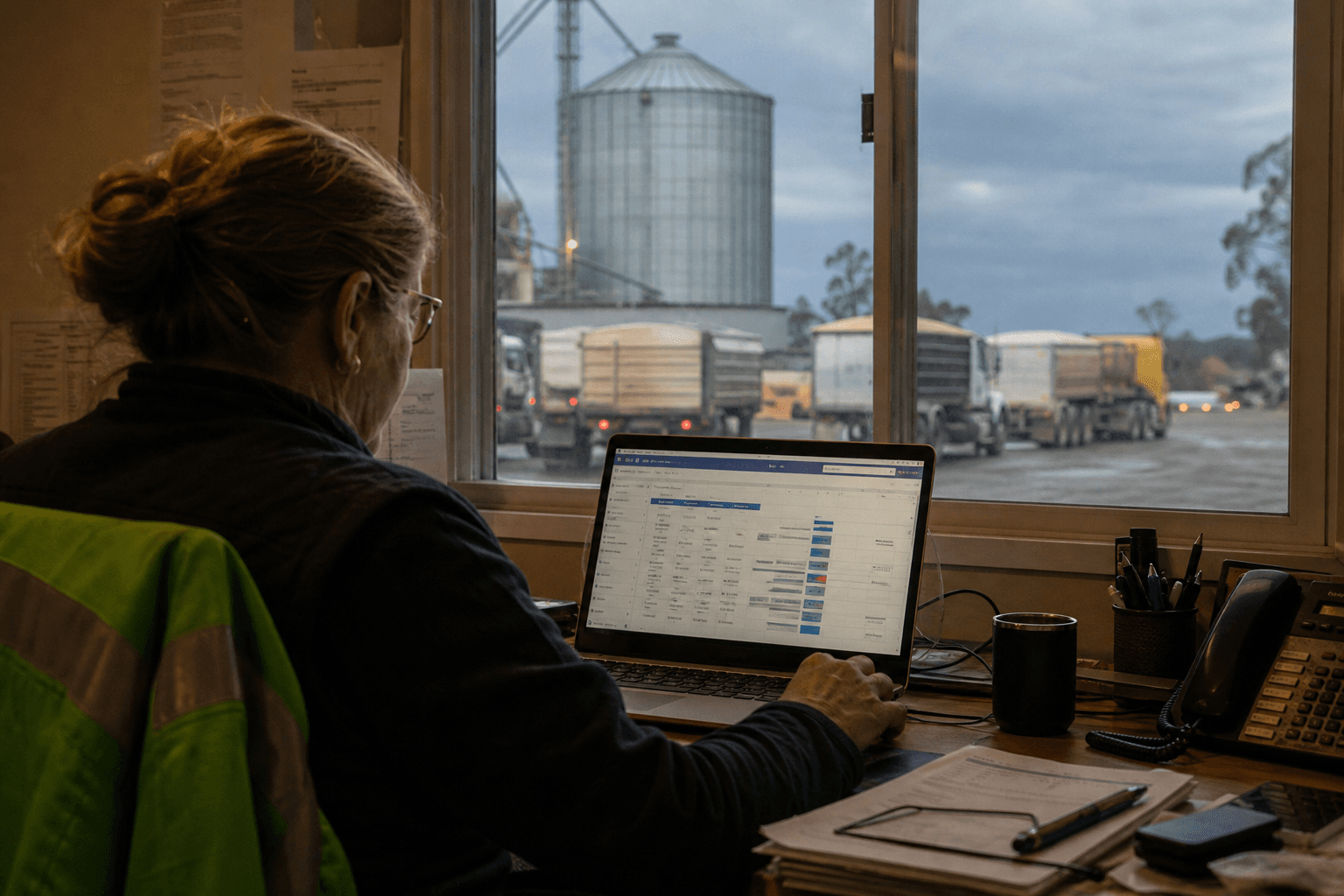
Letters of credit remain a manual, error-prone bottleneck for Australian freight forwarders, with discrepancies between LC terms and shipping documents routinely delaying payment. This article explains how document intelligence can extract and cross-check LC terms against shipping paperwork to catch discrepancies earlier.
What Is Slowing Down Letter of Credit Processing for Freight Forwarders?
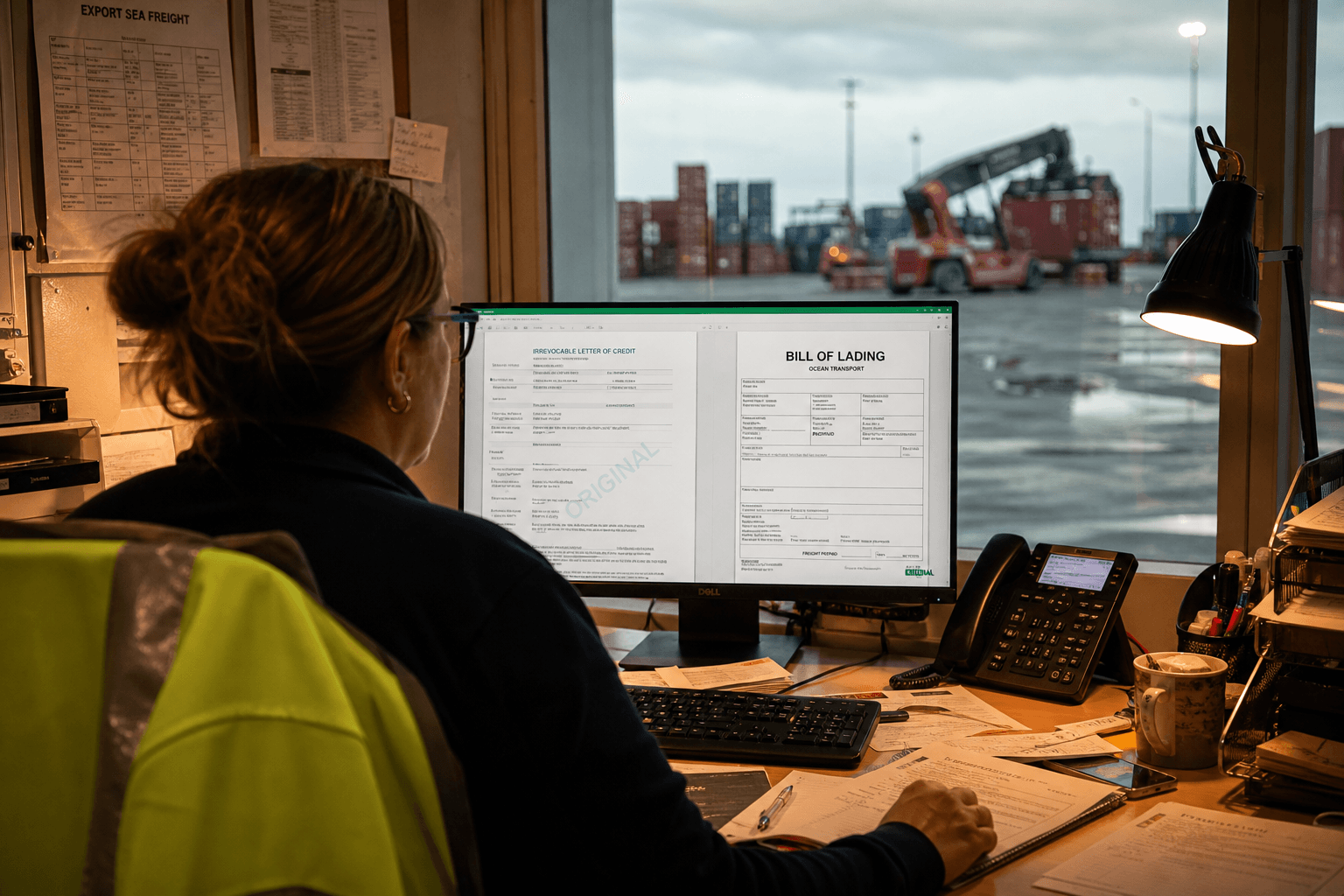
Letter of credit (LC) processing is slow because it depends on manually matching dozens of data points across a bill of lading, commercial invoice, packing list, certificate of origin and insurance certificate against the exact wording of the credit itself. A single mismatched date, weight figure or shipping mark can trigger a discrepancy notice from the bank, delaying payment and tying up working capital for exporters and the forwarders coordinating on their behalf.
For Australian freight forwarders handling international shipments — particularly to markets with strict documentary trade finance requirements such as parts of Asia and the Middle East — this isn't a back-office inconvenience. It's a recurring operational cost. Staff spend hours cross-referencing documents by eye, discrepancies get found late in the cycle, and amendments or re-presentations add days to a transaction that was already running on tight shipping and payment timelines.
What Is a Letter of Credit, and Why Do Discrepancies Cause Delays?
A letter of credit is a payment undertaking issued by a bank on behalf of a buyer, guaranteeing payment to the seller provided the seller presents documents that comply exactly with the terms stated in the credit. This is known as the doctrine of strict compliance, and it's codified in the International Chamber of Commerce's Uniform Customs and Practice for Documentary Credits (UCP 600), the rulebook most Australian trade finance transactions reference.
Because banks examine documents — not goods — a discrepancy is any inconsistency between what the LC requires and what the presented documents actually show. Common examples include incorrect shipment dates, inconsistent descriptions of goods between the invoice and bill of lading, missing endorsements, or late presentation beyond the credit's expiry. Under UCP 600, a bank is entitled to refuse payment on a non-compliant presentation, which means the exporter doesn't get paid on time and the forwarder is often the one fielding calls from an anxious client.
Where Do Freight Forwarders Sit in the LC Documentation Process?
Freight forwarders typically generate or handle several of the core shipping documents an LC requires — the bill of lading, certificate of origin, and sometimes insurance or inspection certificates — which puts them at the centre of discrepancy risk even though they rarely control the underlying LC terms. Forwarders are usually working from a PDF or scanned copy of the credit, re-keying terms into internal systems, and manually checking their own paperwork against it before it goes to the bank.
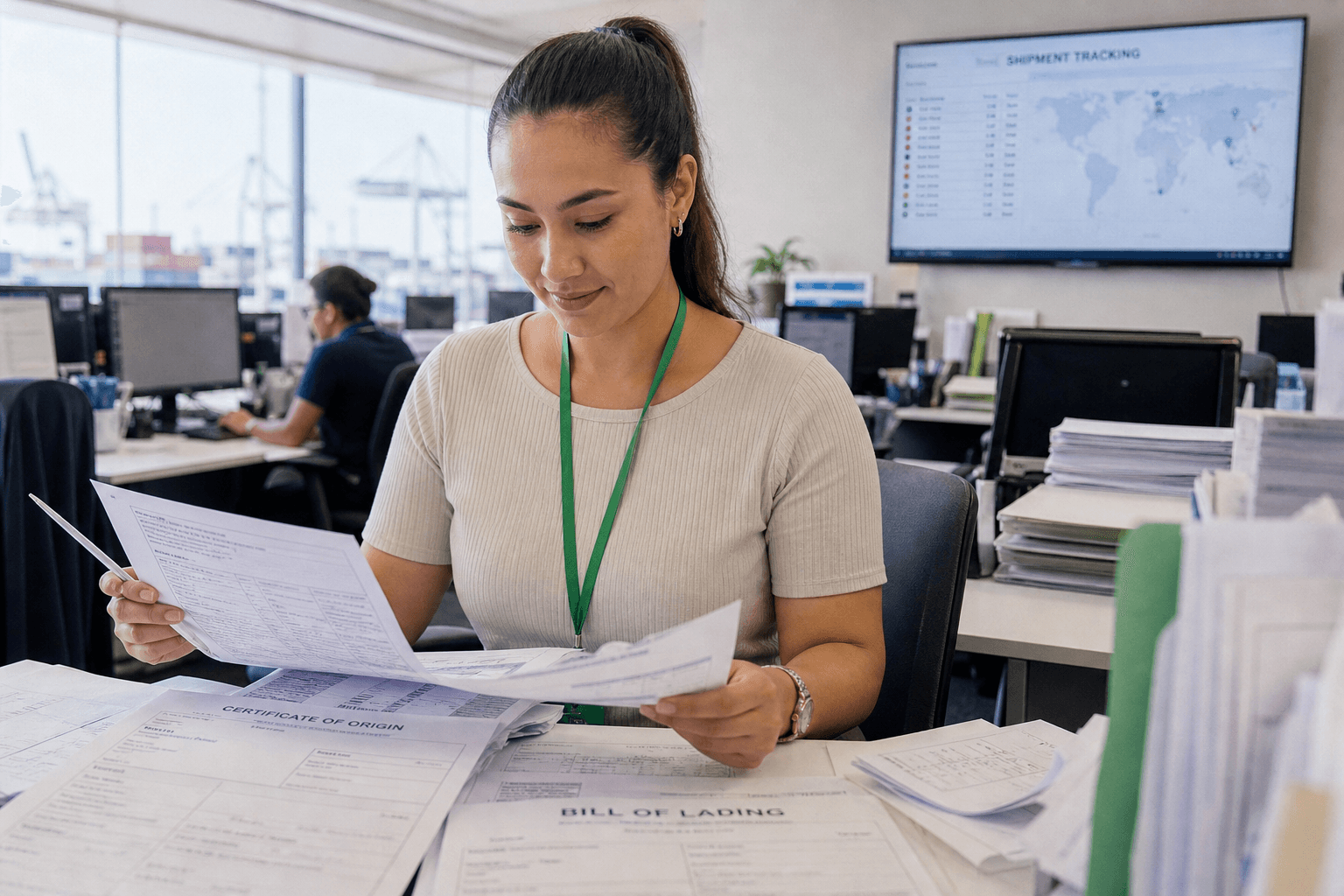
This is manual, repetitive, and easy to get wrong when staff are juggling multiple shipments, multiple banks' documentary requirements, and differing formats from each exporter client. It's also a process that rarely has a clear audit trail — if a discrepancy does occur, tracing exactly where the mismatch originated can take as long as resolving it.
How Can Document Intelligence Reduce LC Discrepancy Delays?
Document intelligence is the application of machine learning and natural language processing to automatically extract structured data from unstructured documents — PDFs, scans, faxes, and even handwritten annotations — and compare that data against a defined set of rules or reference terms. Applied to trade finance, this means extracting the specific terms of an LC (shipment deadlines, required document types, tolerances on quantity and value, named consignees) and automatically cross-checking them against the bill of lading, invoice, and packing list as they're generated.
Rather than replacing the trade finance or operations team, the technology does the first-pass reconciliation: flagging where a date, figure, or description doesn't match before the documents are presented to the bank. This shifts discrepancy detection earlier in the process — at the point documents are drafted, not after a bank examiner has already rejected the presentation. It also creates a consistent, logged record of what was checked and when, which matters if a dispute arises later.
This is the same category of capability we build for forwarders and 3PLs extracting data out of ageing TMS and WMS systems — the underlying problem (messy, inconsistent documents that need to be read, structured, and validated) is the same, whether the source is a freight manifest or a documentary credit. Our document-intelligence work for logistics operators is built on that same extraction-and-validation approach.
Manual Review vs AI-Assisted Cross-Checking
| Aspect | Manual document review | AI-assisted document intelligence |
|---|---|---|
| Speed of initial cross-check | Slower — depends on staff availability and shipment volume | Faster — automated extraction runs as documents are produced |
| Consistency across staff/shifts | Variable — depends on individual experience with UCP 600 | Consistent — same rules applied every time |
| Audit trail of checks performed | Often informal or undocumented | Logged and traceable |
| Ability to handle high shipment volume | Strained during peak periods | Scales without proportional headcount increase |
| Judgement on ambiguous/complex terms | Stronger — human expertise still required | Limited — flags for human review, doesn't replace it |
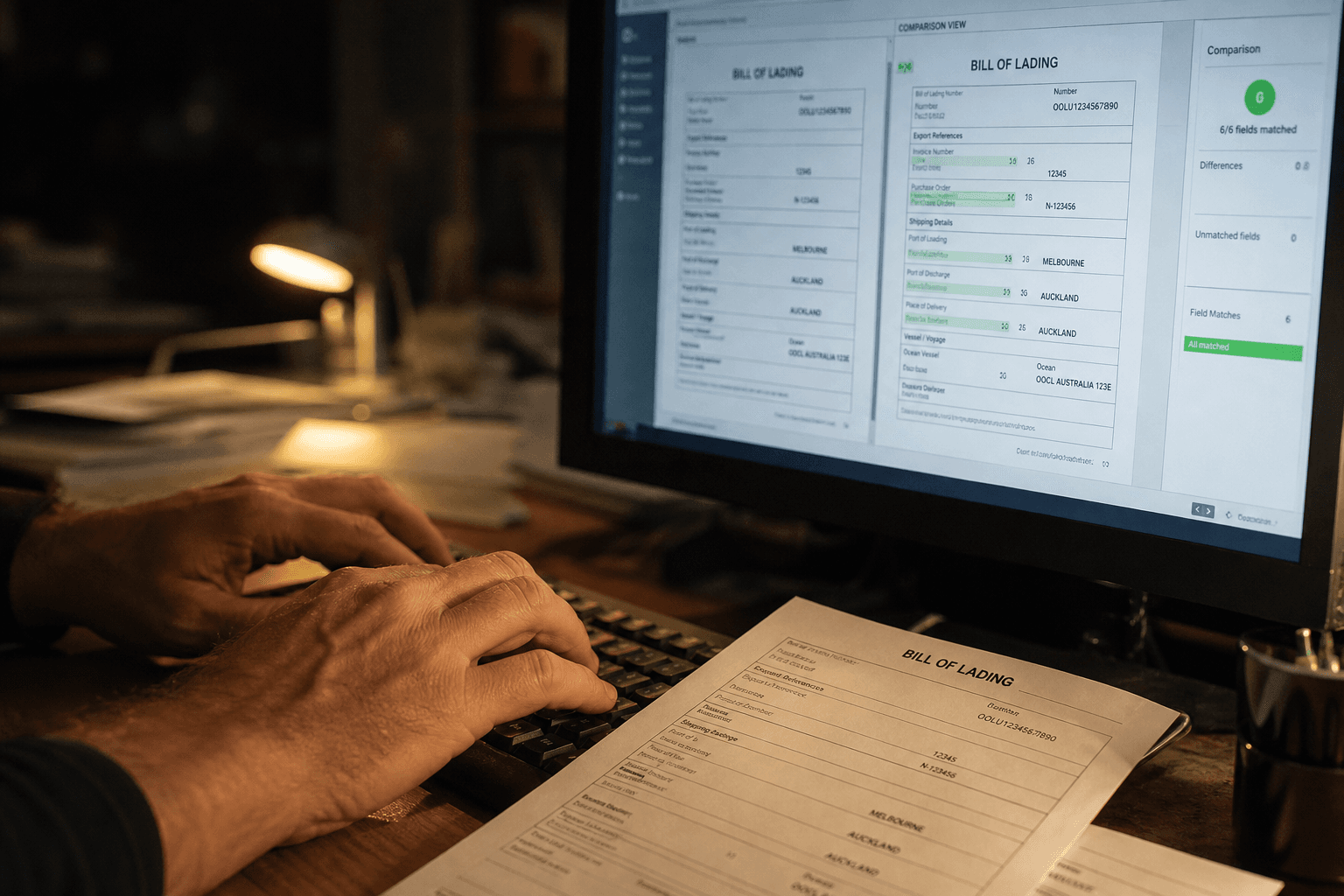
The realistic model for most forwarders isn't full automation — it's AI handling the repetitive extraction and matching work, with trade finance staff reviewing flagged exceptions and making the final call on anything ambiguous.
Is This Worth Investing In for a Mid-Market Forwarder?
Whether this is worth pursuing depends on shipment volume, the proportion of trade that moves under documentary credit (rather than open account or bank guarantee), and how often discrepancies are currently causing payment delays. Forwarders handling frequent LC-backed shipments to markets where documentary strictness is high are the ones most likely to see a meaningful reduction in rework and delay.
This isn't a decision to make on a hunch. An AI Readiness Assessment looks at your current document volumes, systems, and manual workflow before recommending whether a document intelligence build makes sense — and what scope would actually move the needle, rather than adding another system nobody uses.
Where Does This Fit Alongside Broader Digital Transformation?
LC documentation automation sits within a wider pattern we see across Australian logistics: legacy systems and manual, paper-based workflows that were manageable at a smaller scale but become a genuine drag as shipment volume and customer expectations grow. Forwarders modernising their trade finance paperwork are often also dealing with ageing TMS platforms, manual dispatch processes, or customers now demanding EDI and API connectivity.
Treating document intelligence for trade finance as part of a broader digital transformation plan — rather than a one-off fix — tends to produce better outcomes, because the extraction, validation, and audit-trail infrastructure built for LC documents can often be reused for other document-heavy processes in the business. You can read more on how we approach this across the sector in our insights.
Get in Touch
If trade finance paperwork and LC discrepancies are costing your team time and causing payment delays on international shipments, we can help assess whether document intelligence is the right fit for your operation — and what it would take to build.
Zero Footprint
The Zero Footprint team — AI modernisation for Australian logistics.