AI Load Planning and Cube Utilisation for Freight
AI load planning lifts trailer cube utilisation by optimising what goes on a vehicle — a distinct problem from route optimisation. Learn what data it needs, how it layers onto an existing TMS, and how it connects to Scope 3 emissions reporting.
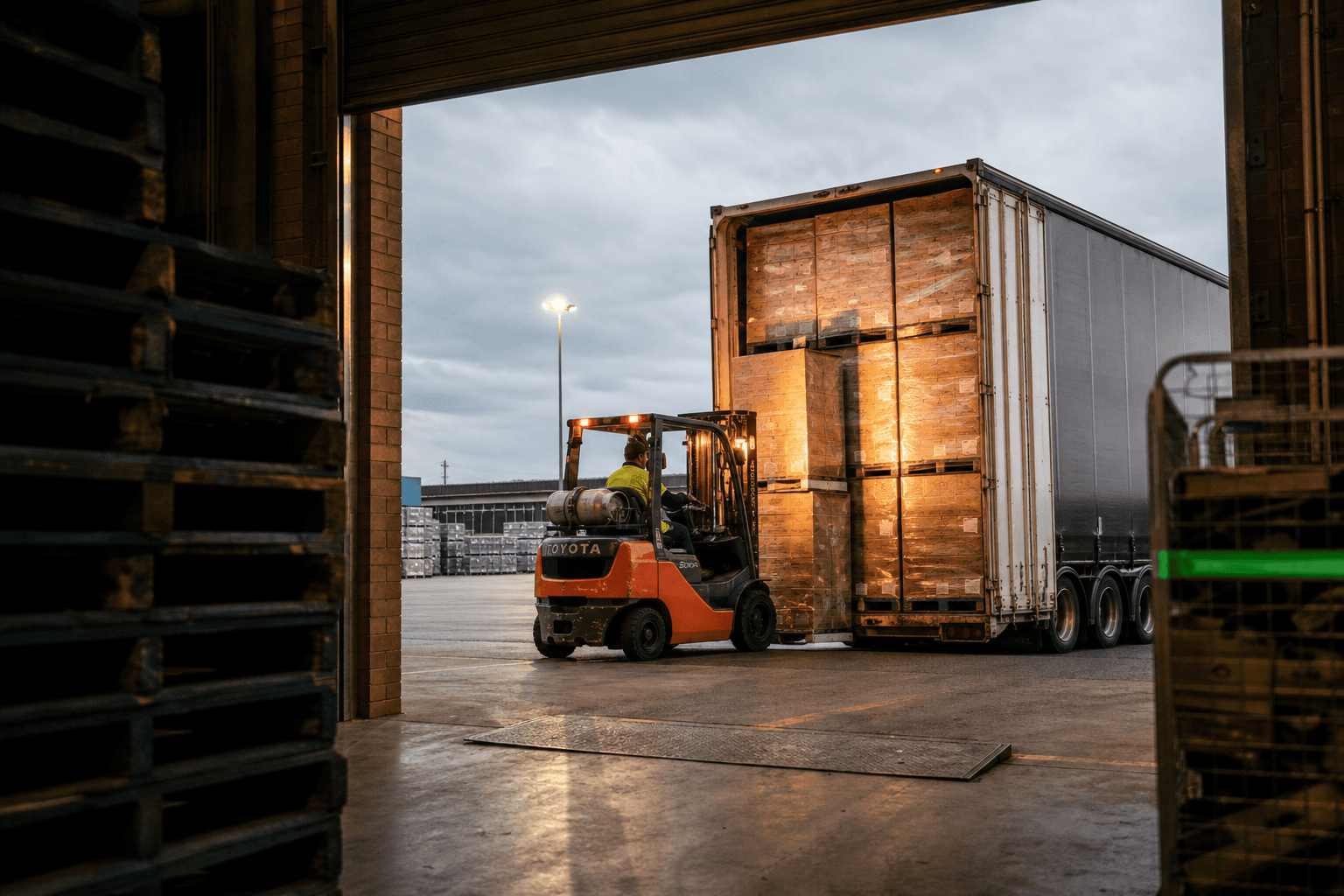
AI load planning is the use of predictive and optimisation models to sequence, group, and assign freight to loads in a way that lifts cube utilisation — the percentage of a trailer or container's available volume or weight capacity that is actually filled by freight. It's a packing and sequencing problem, and it's a genuinely different problem to route optimisation, which decides the best path once a load is already built. For most mid-market Australian freight operators, the gap between theoretical cube capacity and what actually leaves the dock is rarely measured, let alone optimised — pallets get loaded by habit, not by algorithm. This article explains what AI load planning does, how it differs from route optimisation, what data it needs, and where it fits alongside emissions reporting obligations.
What Is AI Load Planning and Cube Utilisation?
Cube utilisation is the percentage of a trailer or container's available volume (or weight capacity, whichever binds first) that is actually filled by freight. AI load planning applies optimisation models to lift this fill rate while respecting real-world constraints — weight limits, delivery sequencing, stackability, and dock scheduling. It doesn't decide where a truck goes; it decides what goes on the truck and in what order, so the load itself supports an efficient run.
How Does Load Planning Differ From Route Optimisation?
Route optimisation decides the best path and stop sequence for a vehicle once its load is known; load planning decides what goes on the vehicle in the first place. They are adjacent capabilities that feed each other — a poorly planned load can force route compromises, and a fixed route can constrain how a load should be built — but they solve different questions and typically draw on different data.
Most mid-market operators treat these as separate problems because they're solved with separate techniques. Route optimisation is a network and scheduling problem, well suited to AI once solid data foundations are in place — this is part of what we cover in route optimisation engagements. Load planning is closer to a three-dimensional bin-packing and constraint-satisfaction problem, and it depends heavily on freight characteristics data that many TMS platforms don't capture in useful detail today — dimensions, weight, stackability, fragility, and delivery order.
What Data Does AI Load Planning Need?
AI load planning is only as good as the freight data feeding it, and this is usually the first gap operators hit. At minimum, you need reliable dimensions and weight per item or pallet, delivery sequence and time windows, handling constraints (stackable, non-stackable, hazardous, temperature-sensitive), and historical load performance to validate what the model recommends against what actually worked on the dock.
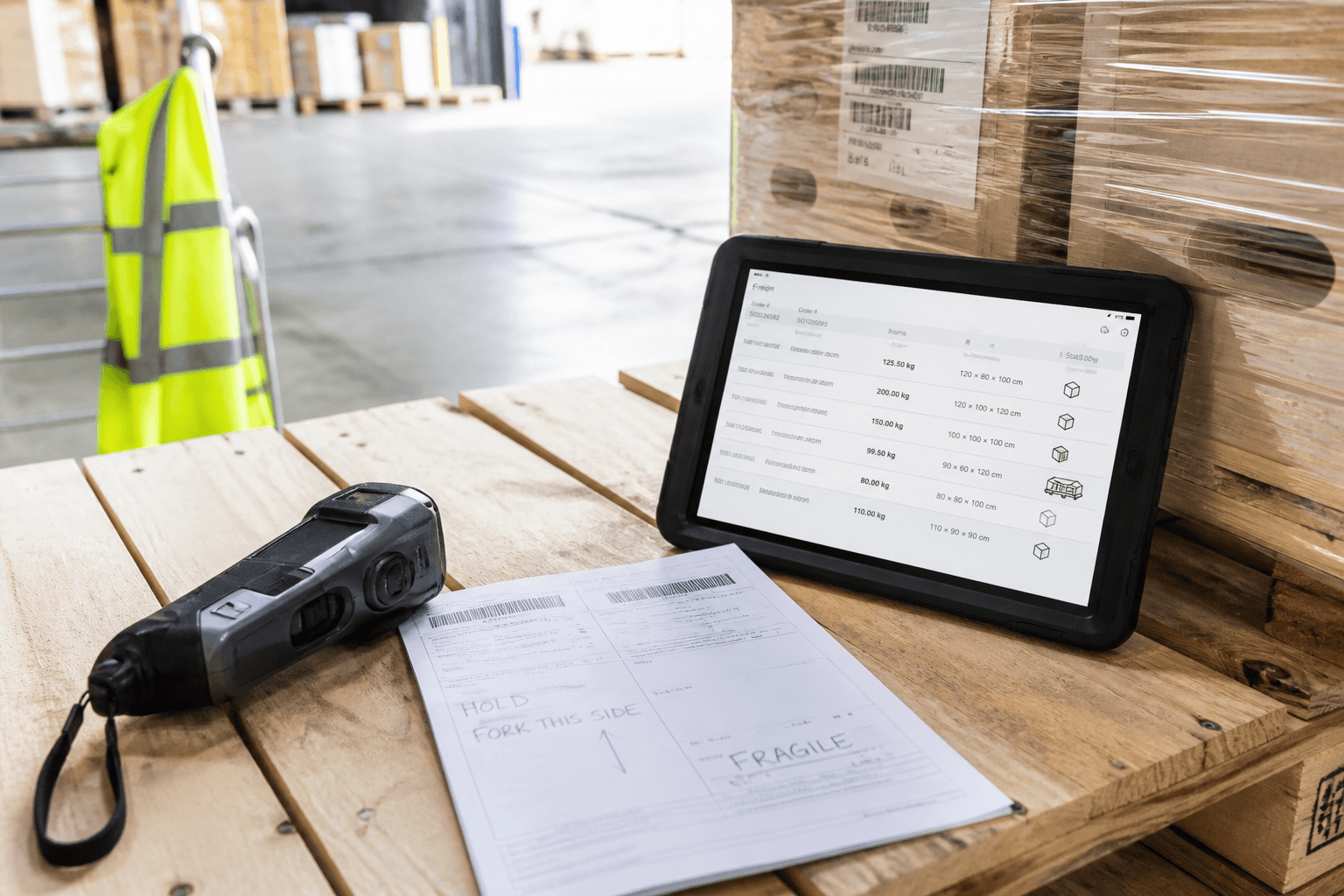
Many Australian mid-market carriers and 3PLs don't hold this data cleanly today. Dimensions get estimated rather than measured, handling notes live in emails or on paper dockets, and load sequencing is decided by an experienced dispatcher rather than a system. This is a data readiness problem before it's an AI problem — which is exactly the kind of gap an ai readiness assessment is designed to surface before you commit budget to a load planning build.
Can You Improve Cube Utilisation Without Replacing Your TMS?
Yes — in most cases, AI load planning can be layered on top of an existing legacy TMS or WMS rather than requiring a full platform replacement. This mirrors a broader pattern across Australian mid-market logistics: AI tooling extracts predictive analytics and automates specific workflow steps, such as dispatch allocation or load sequencing recommendations, without requiring you to rip out the underlying system of record.

Practically, this usually looks like a lightweight optimisation layer that ingests freight and order data from the TMS, runs load-building logic against current constraints, and pushes a recommended load plan back to dispatch — who retains the final call. For operators with a five-plus-year-old TMS and no internal data team, this is a materially lower-risk path than a full system migration, and it's the approach we typically recommend when assessing fit.
Manual vs AI-Assisted Load Planning
| Aspect | Manual Load Planning | AI-Assisted Load Planning |
|---|---|---|
| Basis for decisions | Dispatcher experience and habit | Freight data (dimensions, weight, constraints) plus historical performance |
| Consistency across shifts | Variable, depends on individual dispatcher | More consistent, rules and data applied uniformly |
| Visibility of fill rate | Rarely measured systematically | Trackable as a standing metric |
| Speed to replan on change | Slower, manual rework | Faster, model re-runs with updated constraints |
| System impact | None — works within existing process | Can typically layer on existing TMS/WMS |
This is a qualitative comparison — actual gains depend heavily on your freight mix, data quality, and how disciplined your current manual process already is. Be sceptical of any vendor quoting fixed percentage improvements without reference to your own baseline; industry benchmarks and vendor case studies vary too widely to treat as a guarantee for your operation.
Where Does Load Utilisation Data Fit Into Emissions Reporting?
Load factor and utilisation data isn't just an operational efficiency metric — it's also a recognised input for Scope 3 emissions calculations under frameworks like AASB S2 and NGER reporting. Freight emissions intensity is directly affected by how full your trailers run on each trip, so better load planning data can double as better emissions reporting data, even though the two problems are solved with different tools and answer different operational questions.
For operators facing an AASB S2 compliance timeline, this overlap matters: if you're already capturing dimensions, weight, and load performance for cube utilisation, you're most of the way toward the freight activity data needed for Scope 3 emissions reporting. Building these data foundations once, rather than twice, is generally the more efficient path — and it's worth raising with whoever owns your emissions reporting obligations before you scope a load planning project in isolation.
Getting Started
If your trailers are running under capacity and you don't have a reliable way to measure it, the first step isn't buying load planning software — it's understanding what data you actually have, where the gaps are, and whether your current TMS can support an optimisation layer at all. That's the kind of scoping work we do in an ai readiness assessment, and it applies whether load planning, route optimisation, or emissions reporting is the more urgent problem for your business right now.
For more on how AI is being applied across Australian freight, warehousing, and compliance, see more insights on our blog, or get in touch to talk through where load planning fits for your operation.
Zero Footprint
The Zero Footprint team — AI modernisation for Australian logistics.