AI in Logistics for Regional SA & WA Grain Exporters
AI in logistics helps SA and WA grain exporters forecast harvest capacity bottlenecks, reconcile road-to-rail-to-port handoffs, catch weighbridge anomalies, and capture Scope 3 emissions data for AASB S2. Here's where it realistically applies.
For South Australian and Western Australian grain exporters, AI in logistics is most useful in four specific places: forecasting where harvest capacity will bottleneck before trucks are queued, reconciling consignment data across road-to-rail-to-port handoffs, flagging weighbridge anomalies before they become reconciliation disputes, and automating the Scope 3 emissions data capture now required under AASB S2. None of this is a wholesale technology overhaul — it's targeted augmentation of the legacy transport management systems (TMS) most regional exporters already run.
Grain and bulk agricultural freight doesn't behave like general freight, which is why these four use cases matter more here than elsewhere. Volumes spike hard at harvest, loads move through multiple modes before they reach a vessel, and weighbridge accuracy underpins everything from grower payments to vessel nomination. For regional exporters in SA and WA, these operational pressures are compounding at the same time as new emissions reporting obligations arrive. The rest of this article looks at each of the four areas in more detail — and where the groundwork still needs to be done first.
We'll be upfront: there's no single playbook for grain and bulk ag freight AI yet, and commodity-specific case studies are thin on the ground. What follows draws on how AI is being applied across mid-market Australian freight more broadly — legacy system augmentation, demand forecasting, and emissions data capture — and maps it to the operational realities of SA and WA grain supply chains.
What makes grain and bulk ag freight different from general freight?
Grain and bulk agricultural freight is characterised by extreme seasonal peaks, multi-modal handoffs between road, rail and port, and weighbridge-based accuracy requirements that general parcel or pallet freight doesn't face. A harvest season can compress a year's worth of outbound volume into a matter of weeks, and every tonne has to be weighed, graded and tracked across at least two or three handoff points before it reaches a ship's hold.
This creates a planning problem that's fundamentally different to steady-state freight: capacity needs to be modelled around a peak that might only last six to ten weeks, bin and silo constraints change daily, and road-to-rail-to-port scheduling has to account for receival site congestion, rail path availability and vessel loading windows all at once. Legacy TMS platforms built for linear freight movements often weren't designed for this, which is a common trigger for exporters looking at legacy system modernisation more broadly.
How can AI help with seasonal capacity planning during harvest?
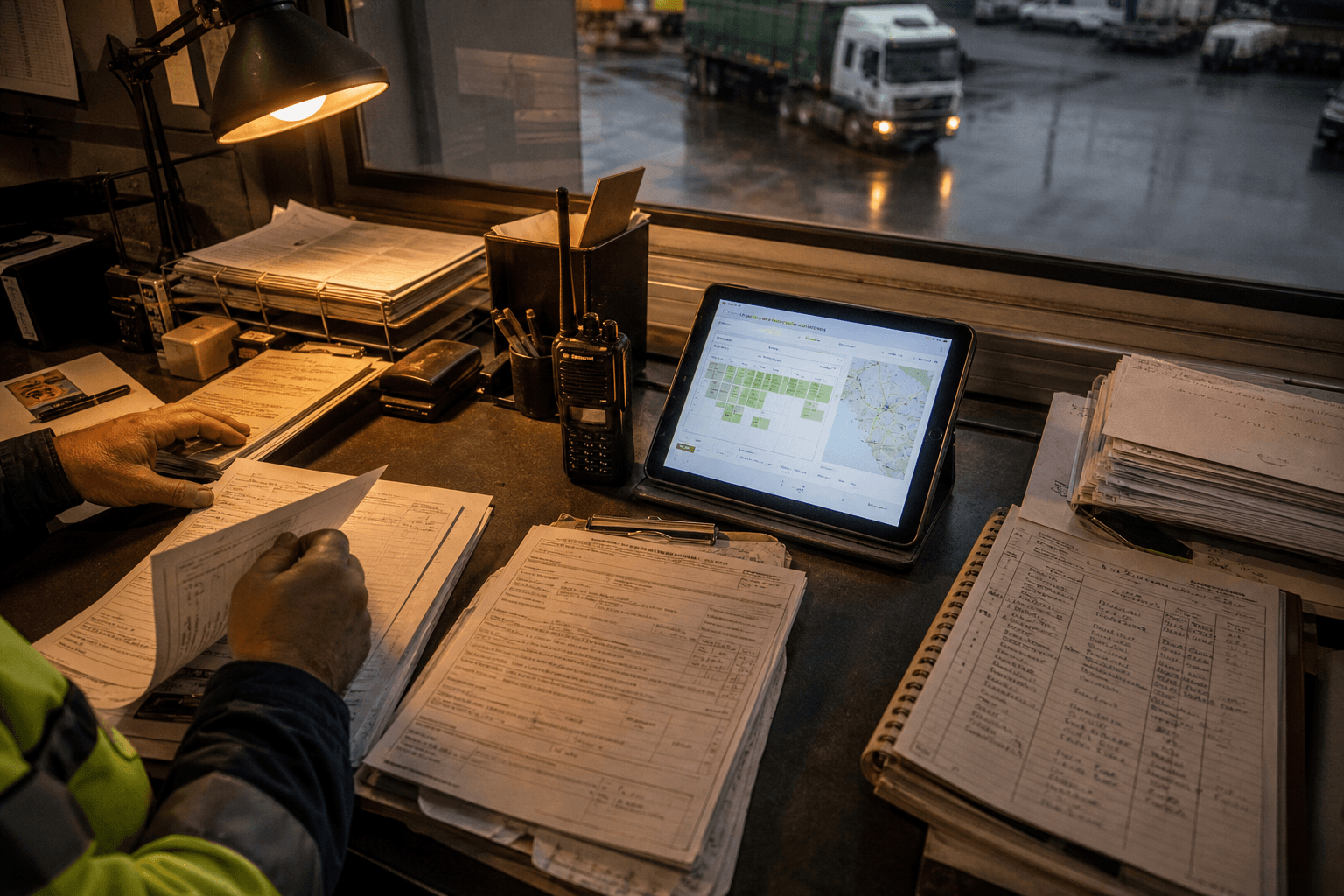
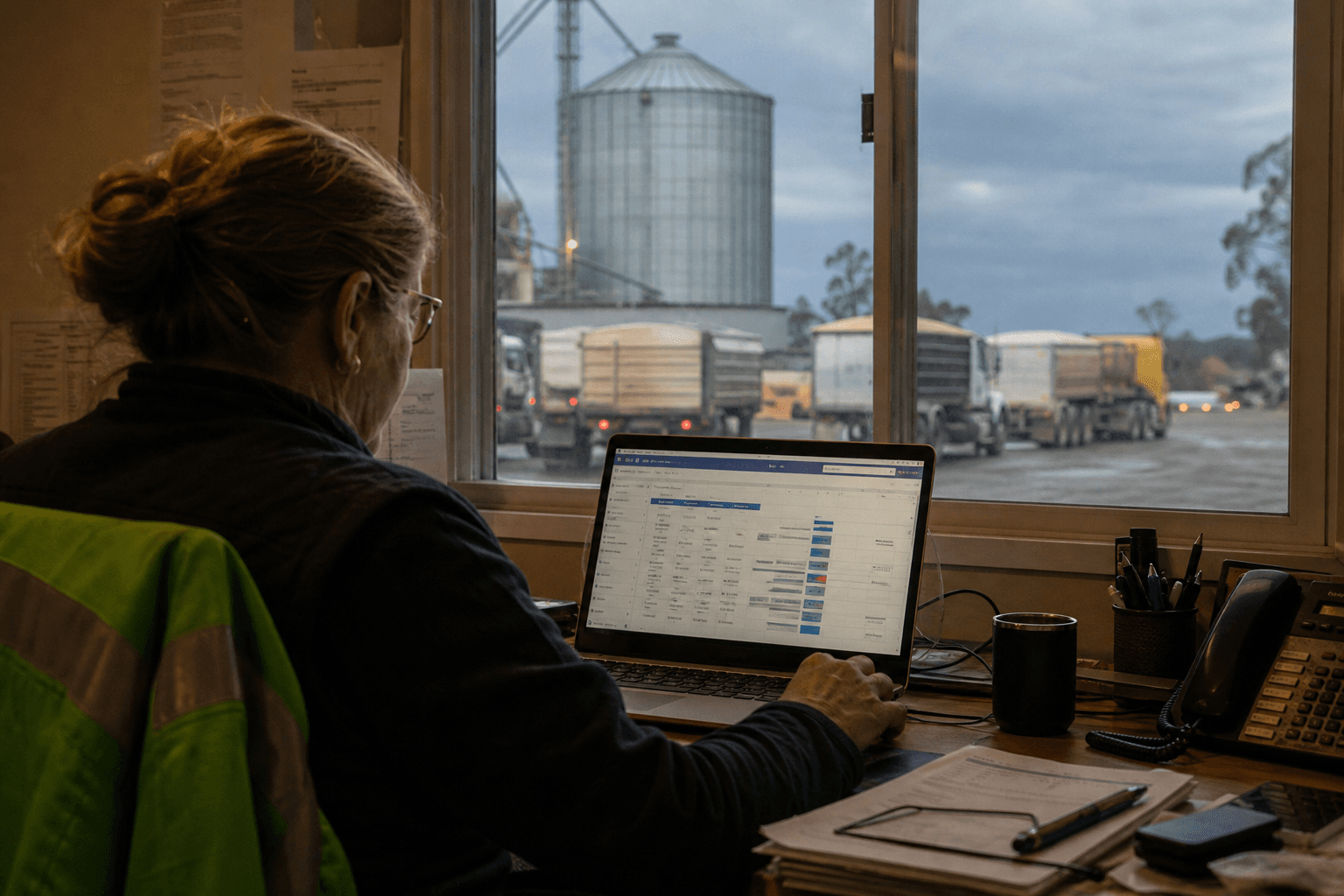
AI-assisted capacity planning works by combining historical movement data, current receival site throughput, and forward bookings to forecast where bottlenecks will form before they happen — rather than reacting to them after trucks are already queued. For an exporter running road cartage into up-country receival sites and then rail or road-to-port legs, this means a planning layer that can flag which sites will hit capacity constraints days ahead, not hours.
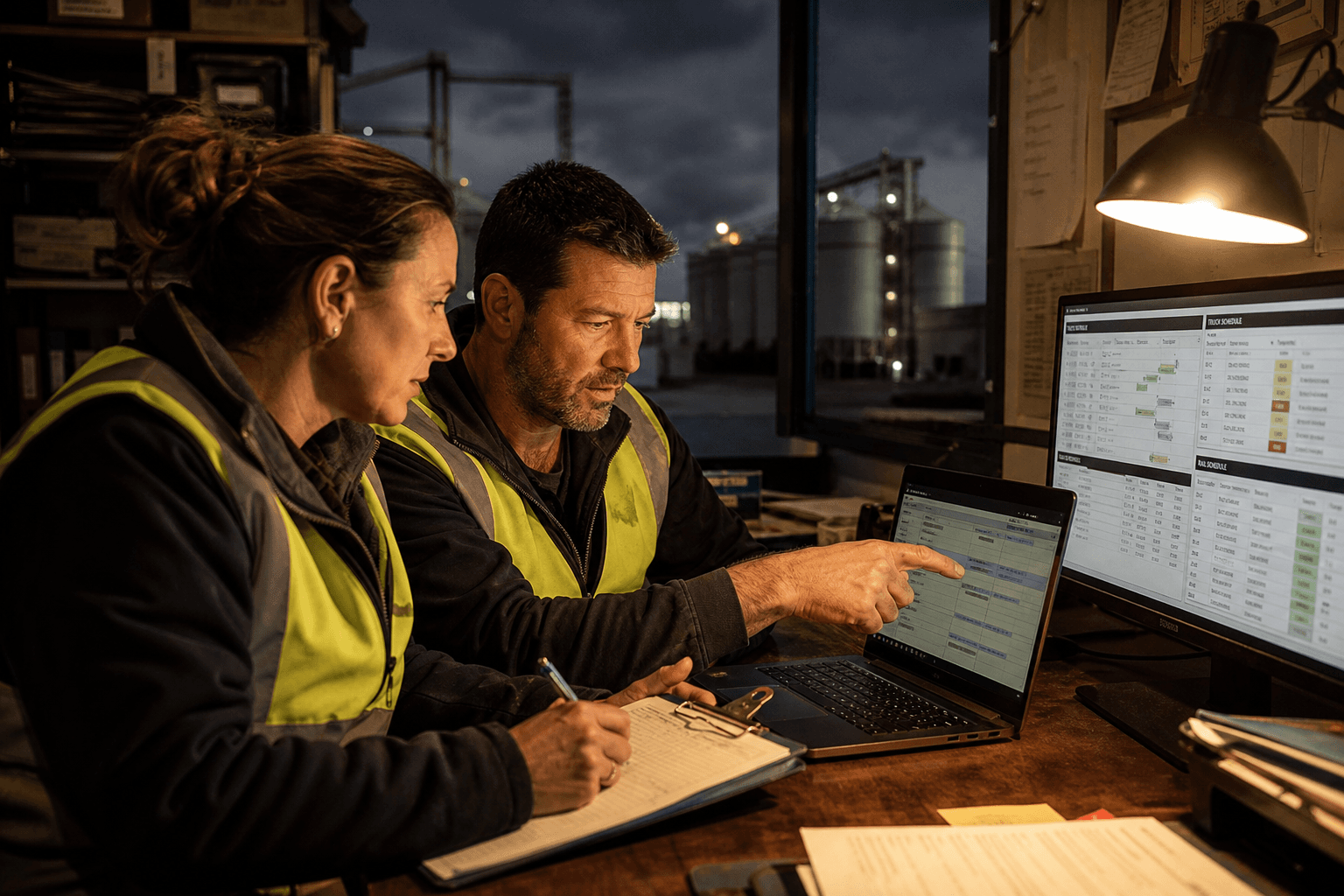
This is the same underlying capability that supports route optimisation in general freight — demand forecasting, dynamic scheduling, and allocation modelling — applied to a harvest curve instead of a daily delivery pattern. The practical value during peak isn't a dramatic overhaul; it's smoother allocation of truck and driver capacity against a demand curve that's notoriously hard to plan manually in a spreadsheet.
What role does AI play in multi-modal road-to-rail-to-port handoffs?
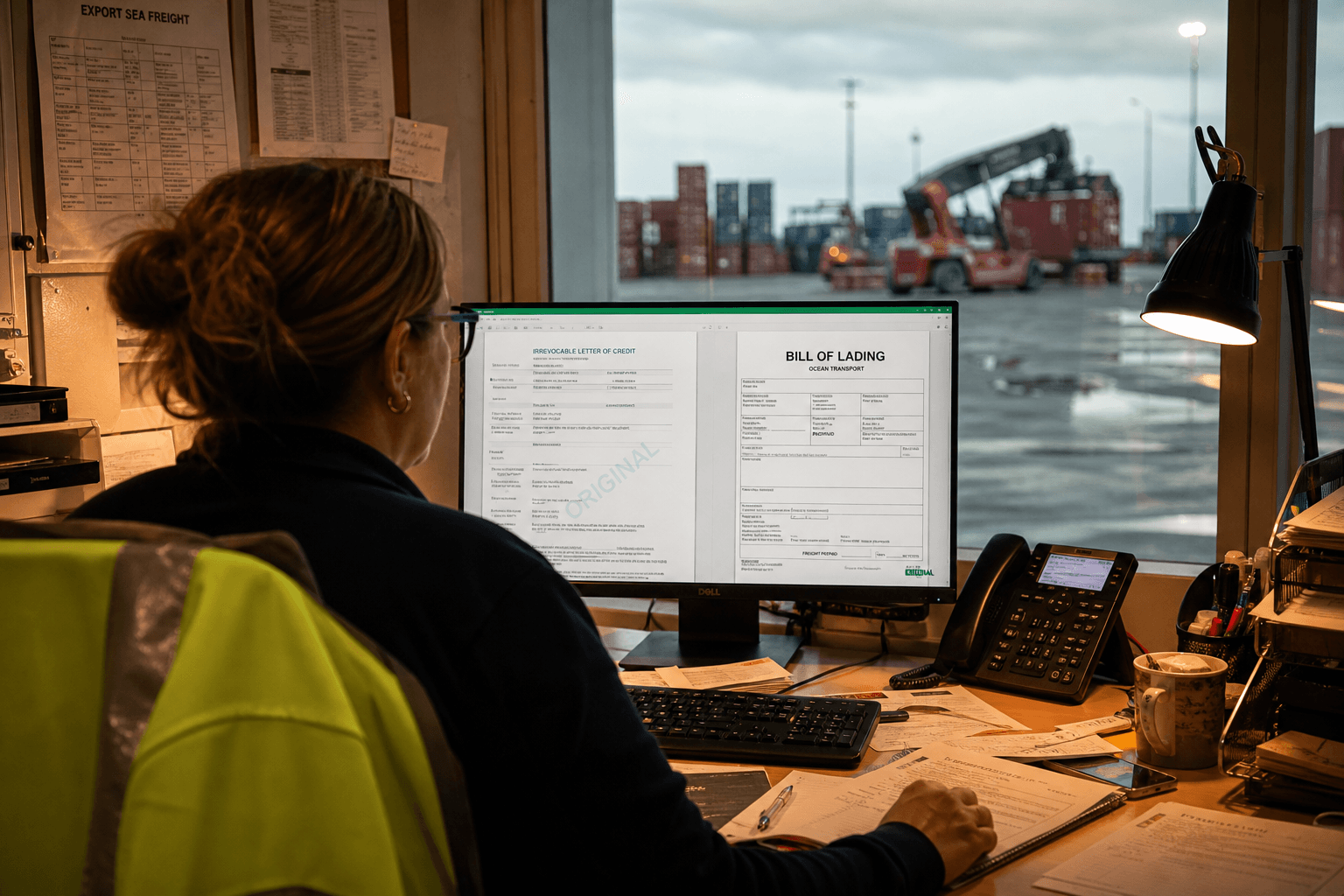
Multi-modal handoff is the point where a load changes custody and mode — typically road to rail, or road/rail to port — and it's historically one of the highest-friction points in bulk grain logistics because it depends on matching paperwork, weights and timing across systems that often don't talk to each other. AI tooling can sit across these handoff points to reconcile consignment data, flag discrepancies between weighbridge records and manifest data, and reduce the manual chasing that currently happens by phone and email.
This is closely related to document intelligence work we do in general freight — extracting and reconciling data from BOLs, weighbridge tickets and rail consignment notes so operations staff aren't manually re-keying the same figures three times across three systems. For exporters evaluating where to start, an ai readiness assessment is usually the right entry point, because it identifies which handoff points are generating the most manual rework before any build begins.
Why does weighbridge accuracy matter so much in this sector?
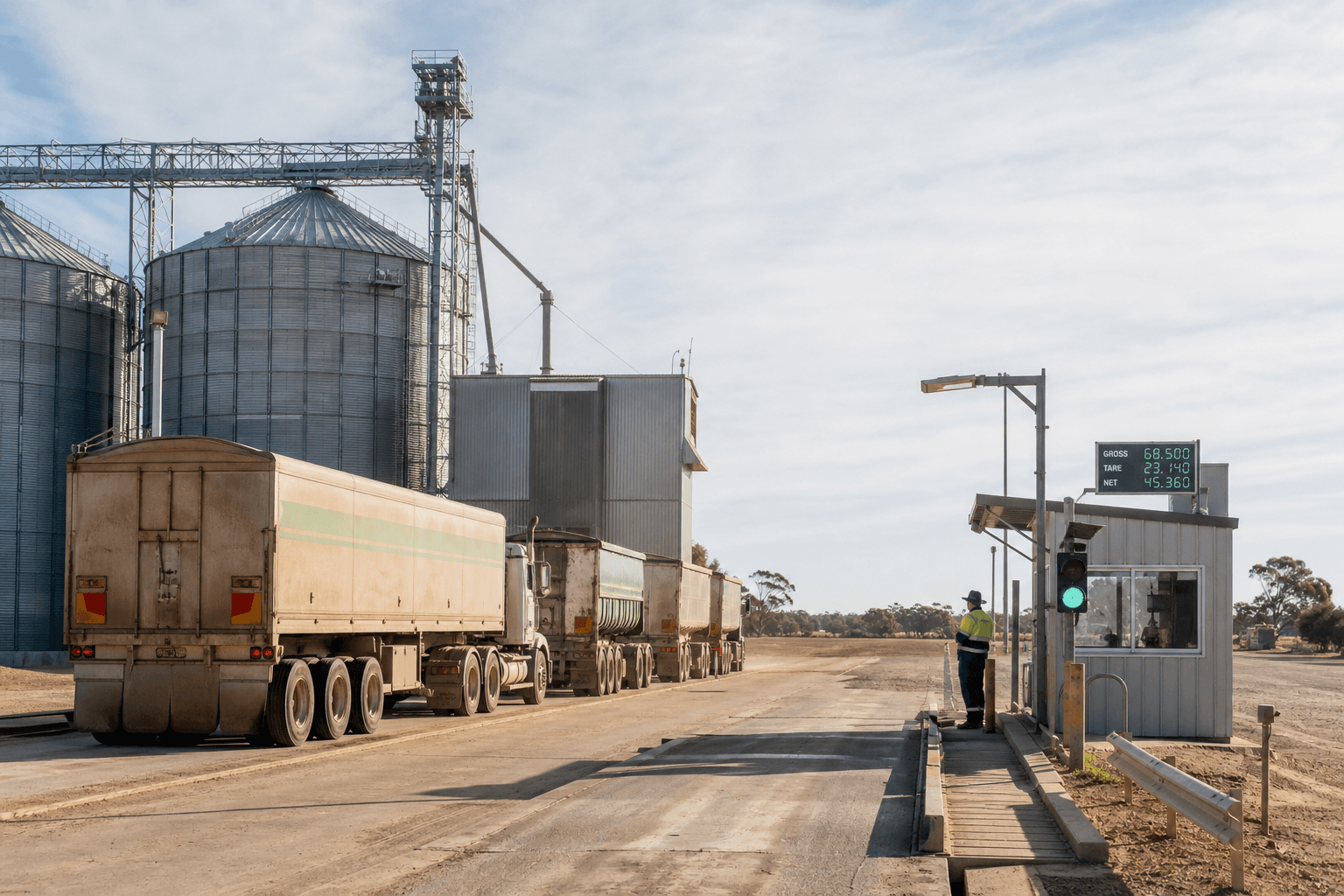
Weighbridge data in grain and bulk ag freight isn't just an operational detail — it determines grower payments, vessel nomination accuracy, and contractual compliance with buyers. A weighbridge measures the gross, tare and net weight of a vehicle and its load, and in bulk grain logistics this figure is often the single source of truth that every downstream system and stakeholder relies on.
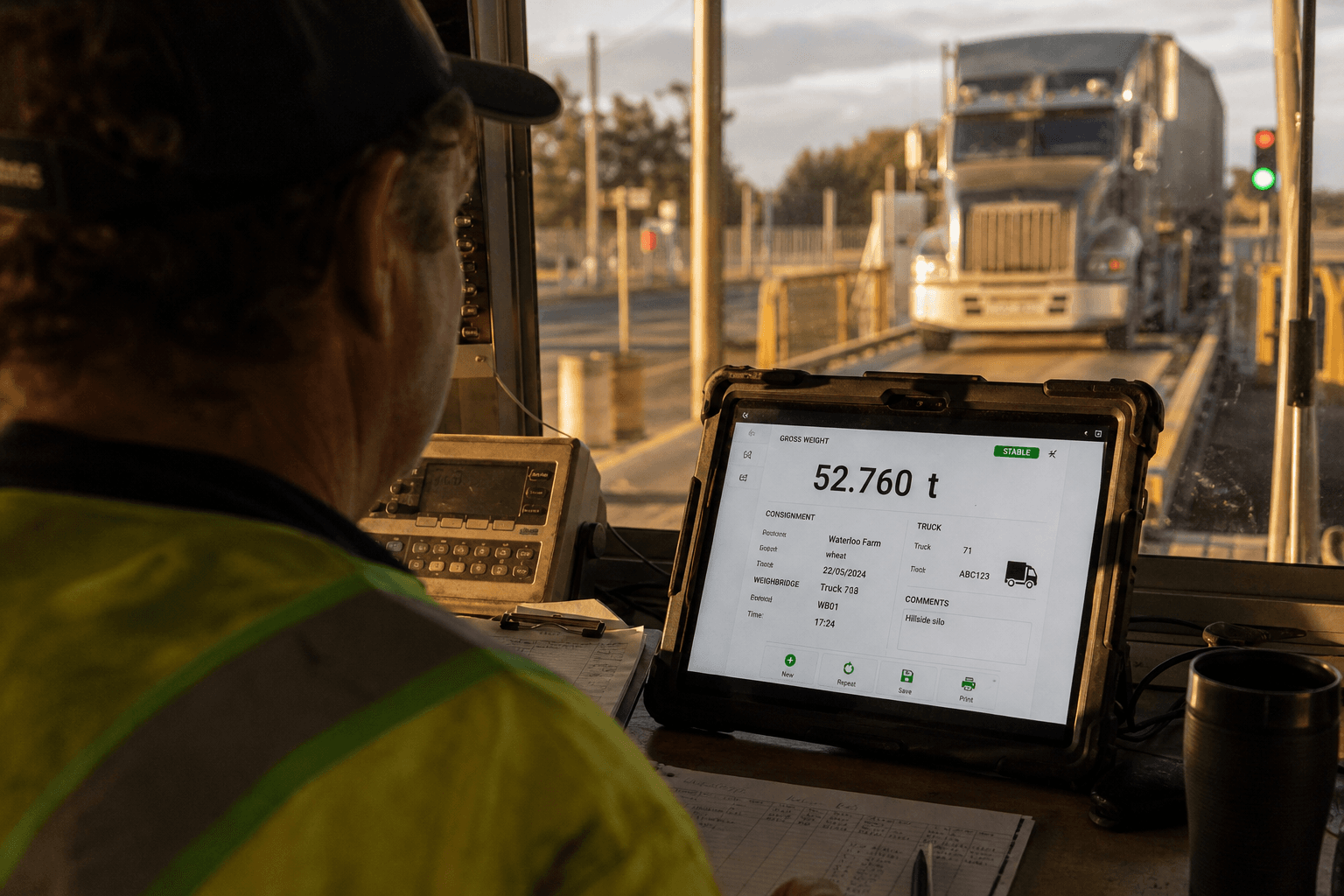
Where AI adds value here isn't in replacing the weighbridge itself, but in catching anomalies — a reading that's inconsistent with a vehicle's known tare weight, or a pattern of discrepancies between weighbridge and manifest data that would otherwise only surface during a reconciliation audit weeks later. Catching these earlier reduces disputes with growers and buyers, and shortens the time it takes to close out a harvest season's reconciliation.
How does AASB S2 and Scope 3 reporting affect grain and bulk exporters?
AASB S2 is Australia's new climate-related financial disclosure standard, administered under the Australian Accounting Standards Board, and it requires reporting entities to disclose Scope 3 emissions — the emissions generated across their value chain, including by subcontracted carriers. For bulk ag exporters, this is a significant practical challenge because grain cartage relies heavily on owner-drivers and subcontracted carriers who typically have no fuel consumption or emissions tracking systems of their own.
This sits alongside existing obligations under the National Greenhouse and Energy Reporting (NGER) scheme for larger operators, and AASB S2's Scope 3 requirements go further than NGER by extending into supply chain and subcontractor emissions. If your business sits above the relevant size thresholds, or if a grain trader, buyer or financier you supply is asking for supply chain emissions data, Scope 3 is likely to be the largest and hardest-to-measure component of your footprint.
This is where emissions reporting tooling becomes useful — not as a reporting dashboard bolted on after the fact, but as a way to systematically capture fuel and distance data from subcontracted carriers who don't currently track it, and build an audit trail that will hold up when a financier, buyer, or auditor asks for it. Industry guidance from bodies like the Clean Energy Regulator and the Australian Sustainable Finance Institute suggests mid-market exporters are generally still in the early stages of building this capability, which means there's no reason to assume you're behind — but there's also no reason to wait until the first reporting deadline is close before starting.
Where should a regional grain or bulk ag exporter start?
Given the lack of commodity-specific case studies, the sensible starting point isn't a full platform build. It's an assessment of where your current manual processes — spreadsheet-based capacity planning, phone-and-email handoff reconciliation, ad hoc weighbridge checks, supplier emissions data chased by email — are creating the most operational risk and cost. That assessment should tell you whether the highest-value first step is capacity planning, document reconciliation, or emissions data capture, rather than assuming one applies more than another.
For more on how this plays out across other parts of Australian freight and warehousing, see more insights on our blog.
If you're running grain or bulk ag freight out of regional SA or WA and want to work out where AI can realistically help your operation first, get in touch — we'll talk through what's actually happening in your business before recommending anything.
Zero Footprint
The Zero Footprint team — AI modernisation for Australian logistics.