AI-Optimised Dock Scheduling and Cross-Docking in Australia
Trailer dwell time and dock congestion are often the tightest bottleneck in a distribution centre — and one of the least talked about. Here's a practical look at how AI-driven sequencing can optimise inbound and outbound dock appointments without a full system overhaul.
What Is Cross-Docking and Why Does Dock Scheduling Matter?
Cross-docking is a distribution method where inbound freight is unloaded, sorted, and reloaded onto outbound trailers with little or no warehouse storage in between. Dock scheduling is the process of sequencing inbound and outbound trailer appointments at a distribution centre's dock doors. Get the sequencing wrong and freight sits, trailers queue in the yard, and labour is wasted waiting rather than working.
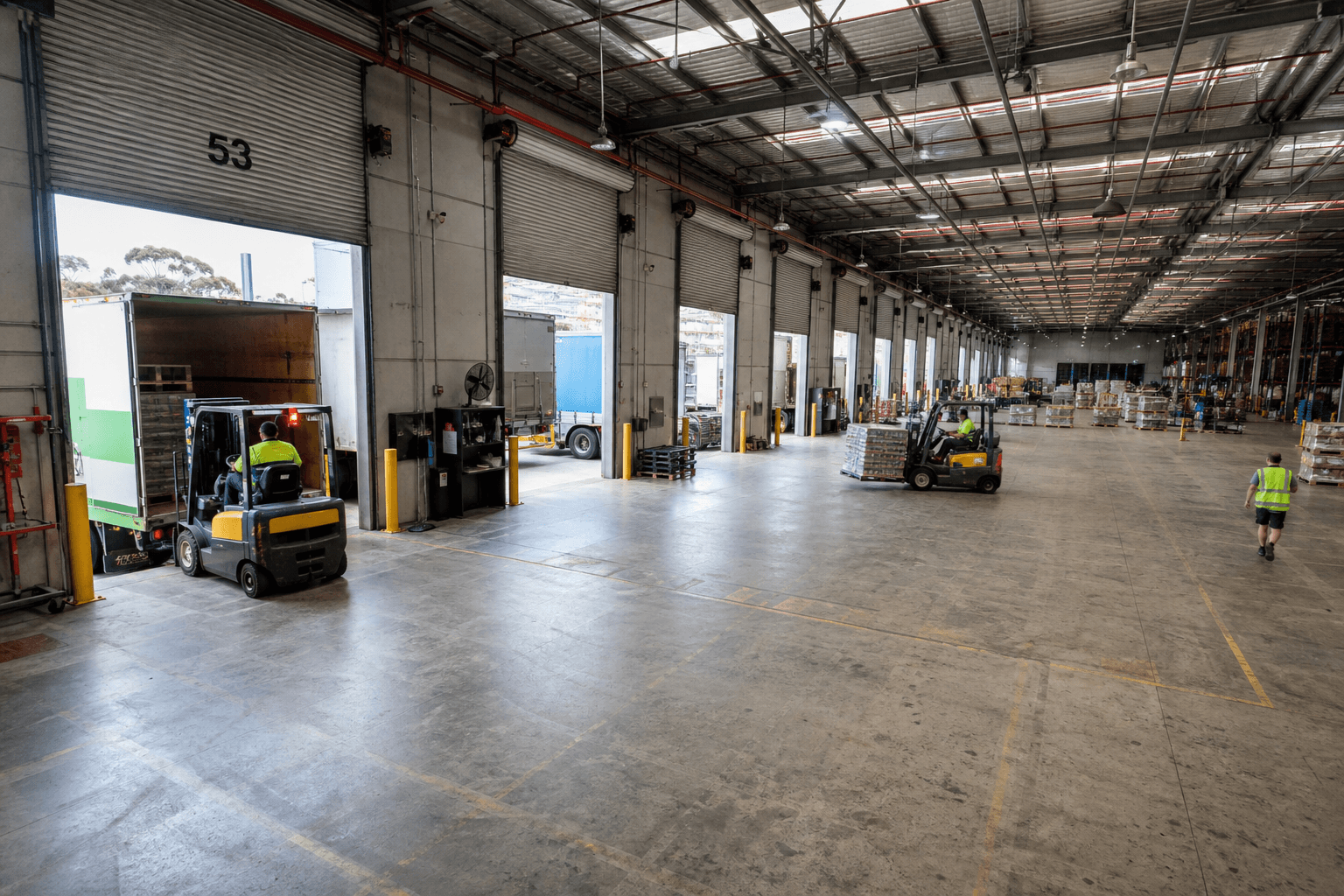
For Australian carriers and 3PLs running cross-dock or transfer operations, the dock is often the tightest bottleneck in the network. Unlike long-haul route planning, dock scheduling is a short-horizon, high-frequency problem — appointments shift by the hour, not the day — which makes it a natural fit for AI-driven sequencing rather than static timetables built in a spreadsheet.
How Does AI Sequence Inbound and Outbound Dock Appointments?
AI-based dock scheduling uses constraint-based optimisation to match arriving trailers to available doors and time slots, factoring in freight type, downstream outbound connections, labour availability, and door compatibility (temperature control, forklift access, trailer height). The goal is to minimise total dwell time across the yard, not just optimise one appointment at a time.
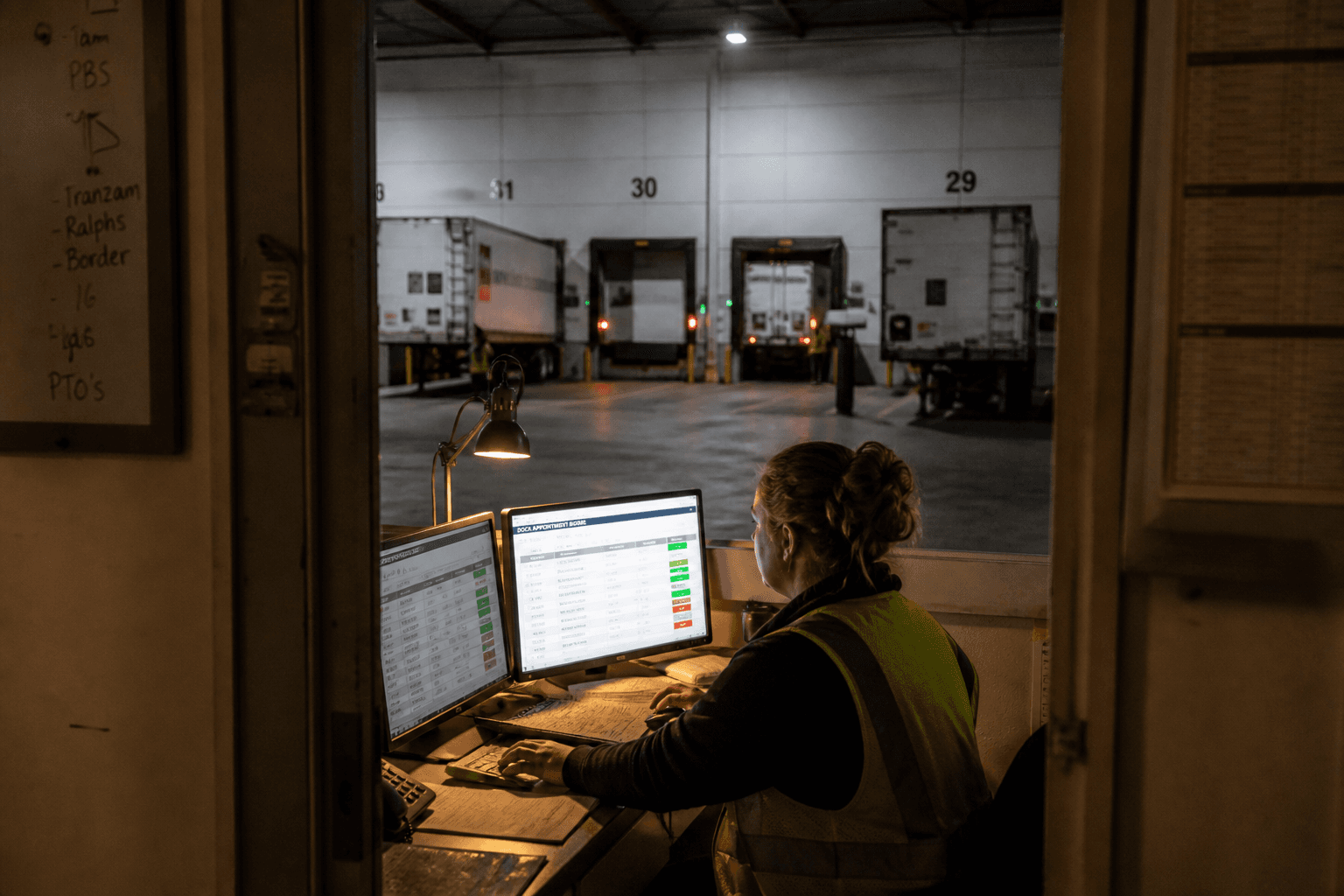
In practice this looks like a scheduling engine that continuously re-sequences the day's appointment board as new information arrives — a delayed inbound service, a driver running early, a sudden spike in outbound volume. Rather than a fixed appointment grid, the system recalculates the best door and time assignment in near real time, similar in principle to how AI-driven route optimisation continuously re-sequences delivery stops as conditions change on the road.
What Causes Trailer Dwell Time and Congestion at Australian DCs?
Trailer dwell time and yard congestion are usually driven by a mismatch between appointment scheduling and actual operational capacity — too many trailers booked into the same window, insufficient dock labour rostered against the appointment board, or no visibility into inbound delays until a trailer is already at the gate. Detention and waiting-time issues at distribution centres have been a long-running concern for the road freight sector, and industry bodies including the Australian Trucking Association have advocated for better visibility and fairer treatment of driver waiting time at customer sites.
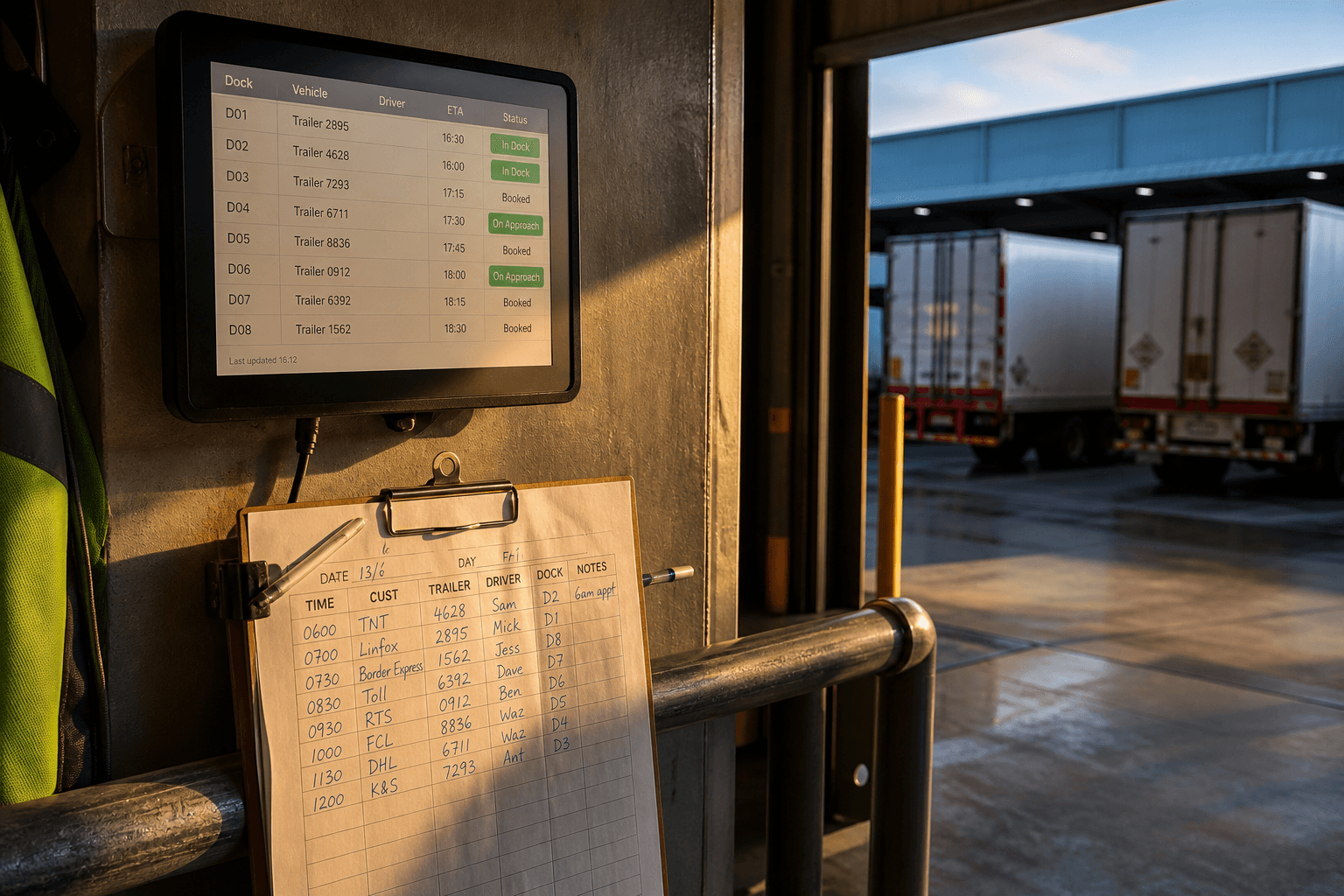
Most mid-market DCs manage this with manual appointment booking — a shared spreadsheet, a phone call, or a basic booking portal with no connection to what's actually happening on the dock floor. That works when volumes are predictable. It breaks down quickly during peak periods, driver shortages, or when multiple customers are booking into the same limited door capacity.
How Does Dock Scheduling Fit With Legacy TMS and WMS Systems?
Dock scheduling doesn't require replacing your existing transport or warehouse management system. Many mid-market Australian operators run TMS and WMS platforms that are five or more years old, lack real-time visibility, and weren't built to integrate with modern APIs or AI tooling. That's a real constraint — but not a blocker.
The practical approach is to layer AI-driven scheduling logic on top of the existing platform, automating the manual steps — like dispatch allocation and appointment booking — that currently happen in spreadsheets or over email, without a full system replacement. This is the same pattern that applies to broader legacy system modernisation challenges across transport and warehouse operations: incremental augmentation, not a rip-and-replace project.
How Does Dock Labour Planning Connect to Dock Scheduling?
Dock labour planning is one part of the broader workforce scheduling problem in logistics, alongside driver rostering and warehouse shift allocation. It needs to be built around the same appointment data driving the dock schedule itself — if the labour roster and the appointment board aren't talking to each other, you'll either overstaff quiet windows or leave a peak inbound wave short-handed.
Getting this right means scheduling data needs to flow between workforce planning tools and the TMS/WMS systems that run day-to-day operations, rather than being managed as three separate processes. This is one of the clearer connection points between dock scheduling and the wider operational stack, and it's worth mapping before investing in any new scheduling tooling.
Manual vs AI-Assisted Dock Scheduling: What Changes?
The table below compares how dock scheduling typically operates under a manual, spreadsheet-driven process versus an AI-assisted approach layered on existing systems.
| Aspect | Manual Scheduling | AI-Assisted Scheduling |
|---|---|---|
| Appointment adjustments | Re-booked manually by phone or email | Re-sequenced automatically as conditions change |
| Visibility of yard status | Limited, often reactive | Continuous, based on live appointment and door data |
| Labour alignment | Rostered separately from bookings | Informed by the same appointment data |
| Door/trailer matching | Based on staff judgement and habit | Based on constraints (freight type, door compatibility, downstream connections) |
| Scalability during peaks | Degrades under volume pressure | Designed to handle volume and disruption |
This is a qualitative comparison of operating models, not a benchmark of specific outcomes — every DC's dwell time and congestion drivers are different, and results depend on the underlying data quality and system constraints.
What Does an AI-Ready Dock Scheduling Approach Look Like?
An AI-ready approach to dock scheduling starts with an honest assessment of what data actually exists — appointment history, dwell time records, door capacity, labour rosters — before any scheduling engine is built. Most mid-market operators find this data is scattered across spreadsheets, a booking portal, and a legacy WMS that doesn't talk to any of them.
That's why we typically start with an AI Readiness Assessment rather than jumping straight to a scheduling tool. It maps your current TMS/WMS constraints, data quality, and manual workflows, and identifies where AI-driven sequencing can be layered in without disrupting operations that are already working. For operators dealing with high volumes of inbound paperwork alongside dock congestion — BOLs, ASNs, freight manifests — there's often an adjacent opportunity in document intelligence to reduce the manual handling that slows down check-in at the dock in the first place.
Dock scheduling and cross-docking optimisation is a genuinely under-served area in Australian logistics technology — most conversations focus on route optimisation or warehouse automation broadly, and the dock itself gets treated as a fixed constraint rather than something that can be actively managed. For more on how AI applies across logistics operations, see our insights.
If you're dealing with trailer congestion, dwell time blowouts, or a dock appointment process that's outgrown the spreadsheet it runs on, we can help work out where AI-driven scheduling fits into your operation.
Zero Footprint
The Zero Footprint team — AI modernisation for Australian logistics.