AI-Powered Cold Chain Monitoring for Australian Logistics
AI is increasingly layered onto existing cold chain sensors and telematics to catch temperature anomalies earlier and automate compliance documentation. Here's how it works for Australian refrigerated freight and cold storage operators.
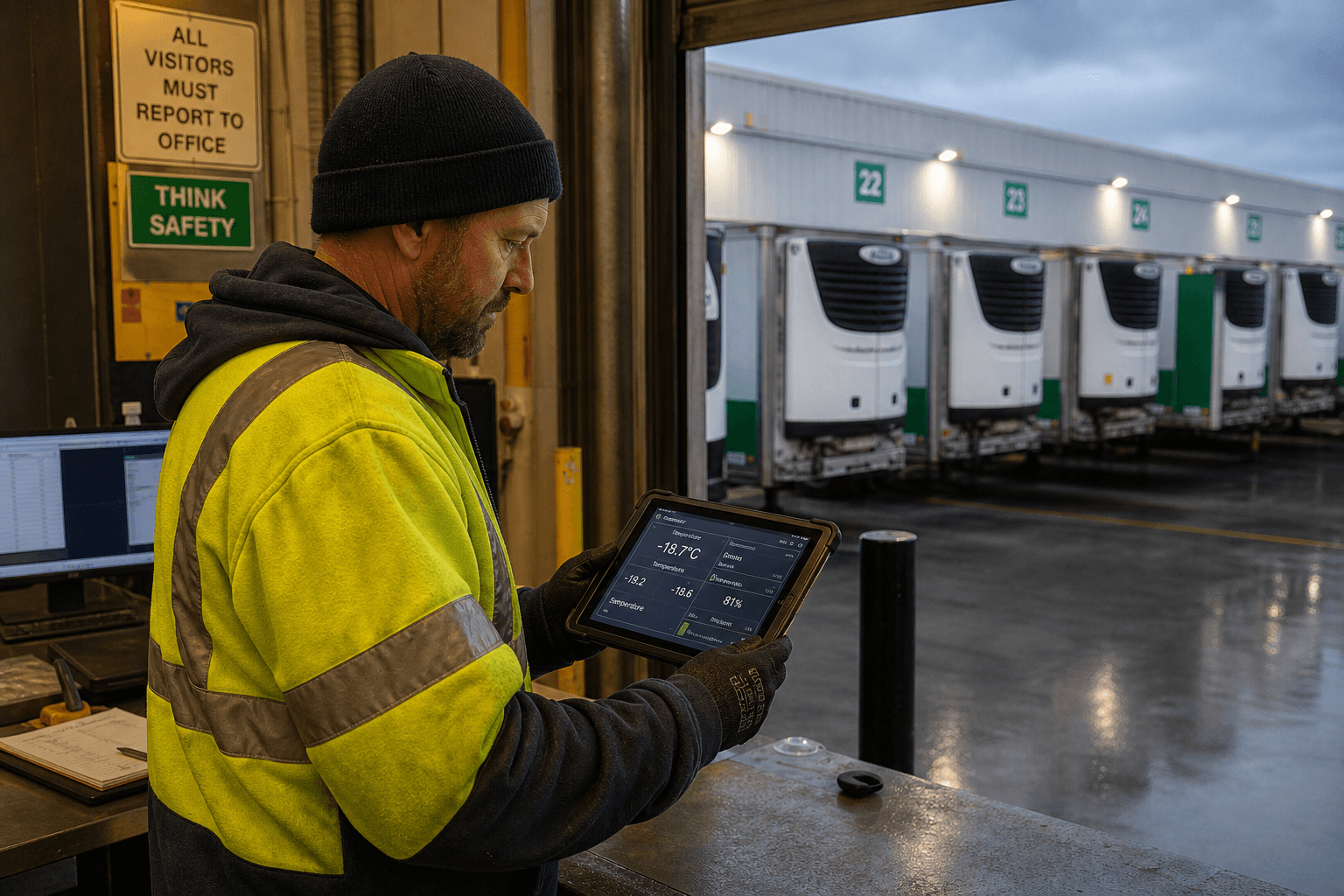
Temperature-controlled freight is unforgiving. A refrigeration unit fault, a delayed handover, or a few hours outside the required temperature band can spoil a shipment, breach a customer contract, or trigger a food safety incident. For Australian cold chain operators — from cold storage 3PLs to refrigerated carriers moving produce, pharmaceuticals, and dairy — AI is increasingly being layered onto existing sensor and telematics infrastructure to catch problems earlier and document compliance more reliably.
What Is AI-Powered Cold Chain Monitoring?
AI-powered cold chain monitoring is the use of machine learning models applied to temperature, humidity, and location data — typically already captured by IoT sensors, telematics devices, and refrigeration unit controllers — to detect anomalies, predict equipment failures, and automate compliance reporting. Rather than replacing existing sensors, AI sits on top of them, turning raw readings into flagged exceptions and audit-ready records.
This builds on a broader capability logistics businesses are adopting more widely: real-time supply chain visibility. Tracking the live location, status, and condition of freight as it moves through the network — using telematics, GPS, ELD data, and carrier APIs — is the foundation cold chain monitoring sits on top of. For temperature-sensitive freight, condition monitoring is the layer that matters most.
How Does AI Detect Anomalies in Refrigerated Freight?
AI models learn what "normal" looks like for a given route, product type, or reefer unit — accounting for door-opening events, ambient conditions, and load size — and flag deviations that a fixed threshold alarm would miss or over-trigger on. This reduces false alarms while catching genuine excursions earlier.
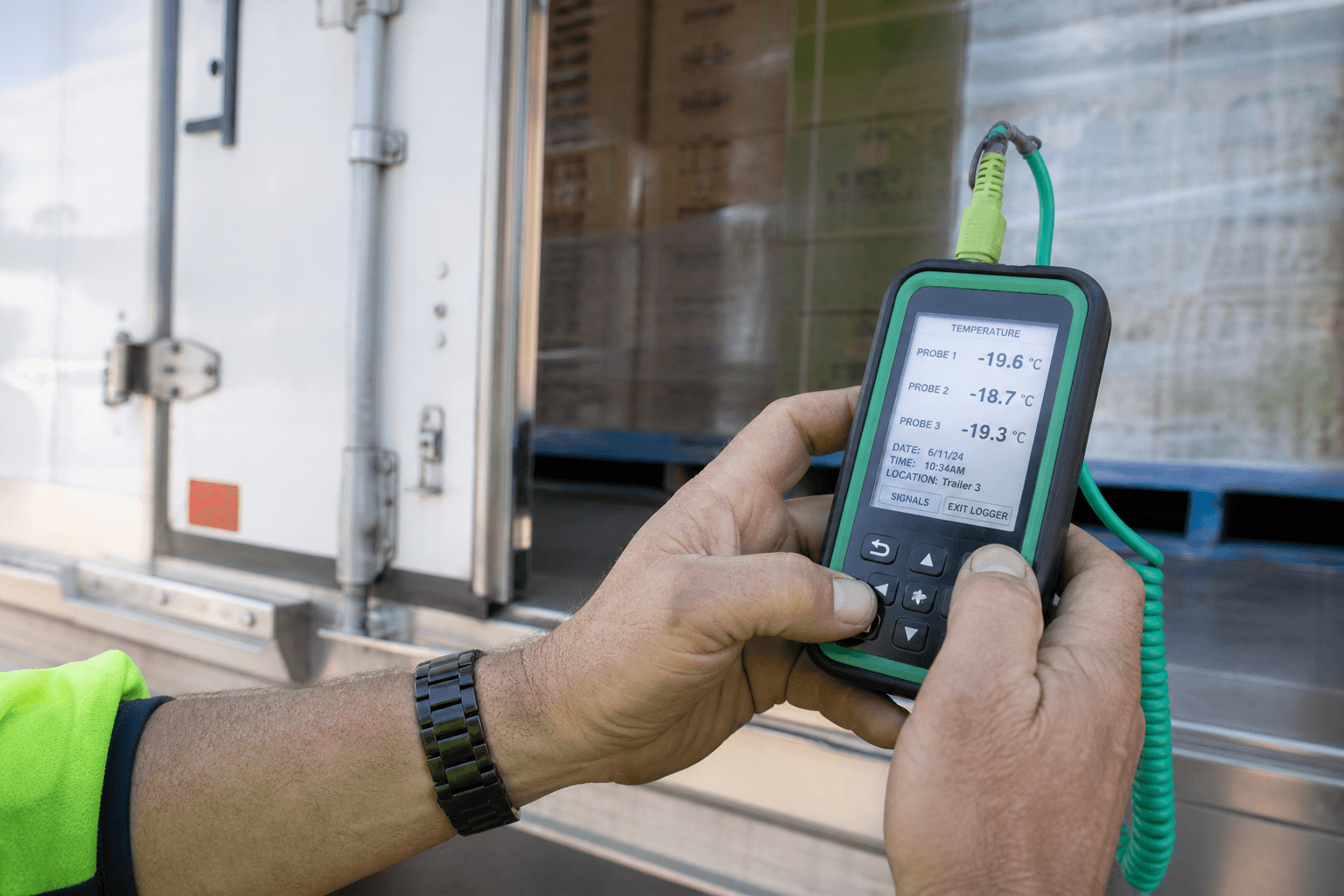
Traditional cold chain monitoring relies on fixed thresholds: if temperature exceeds X degrees for Y minutes, an alert fires. This catches obvious failures but generates noise around normal events (a door opening at a distribution point, a brief compressor cycle) and can miss slow degradation — a unit that's drifting warmer over days rather than failing suddenly. Pattern-based anomaly detection is better suited to distinguishing a genuine excursion from routine operational variation, and to surfacing early warning signs of equipment degradation before a full failure occurs mid-transit.
What Compliance Documentation Does This Support?
Australian cold chain operators carrying food, pharmaceuticals, or other regulated goods need to demonstrate that products stayed within required temperature bands, in line with obligations under Food Standards Australia New Zealand (FSANZ) requirements, HACCP-based food safety systems, and relevant state health regulations. AI-generated monitoring logs can automatically compile continuous temperature records into the audit-ready format these frameworks require, rather than relying on manual log review after the fact.
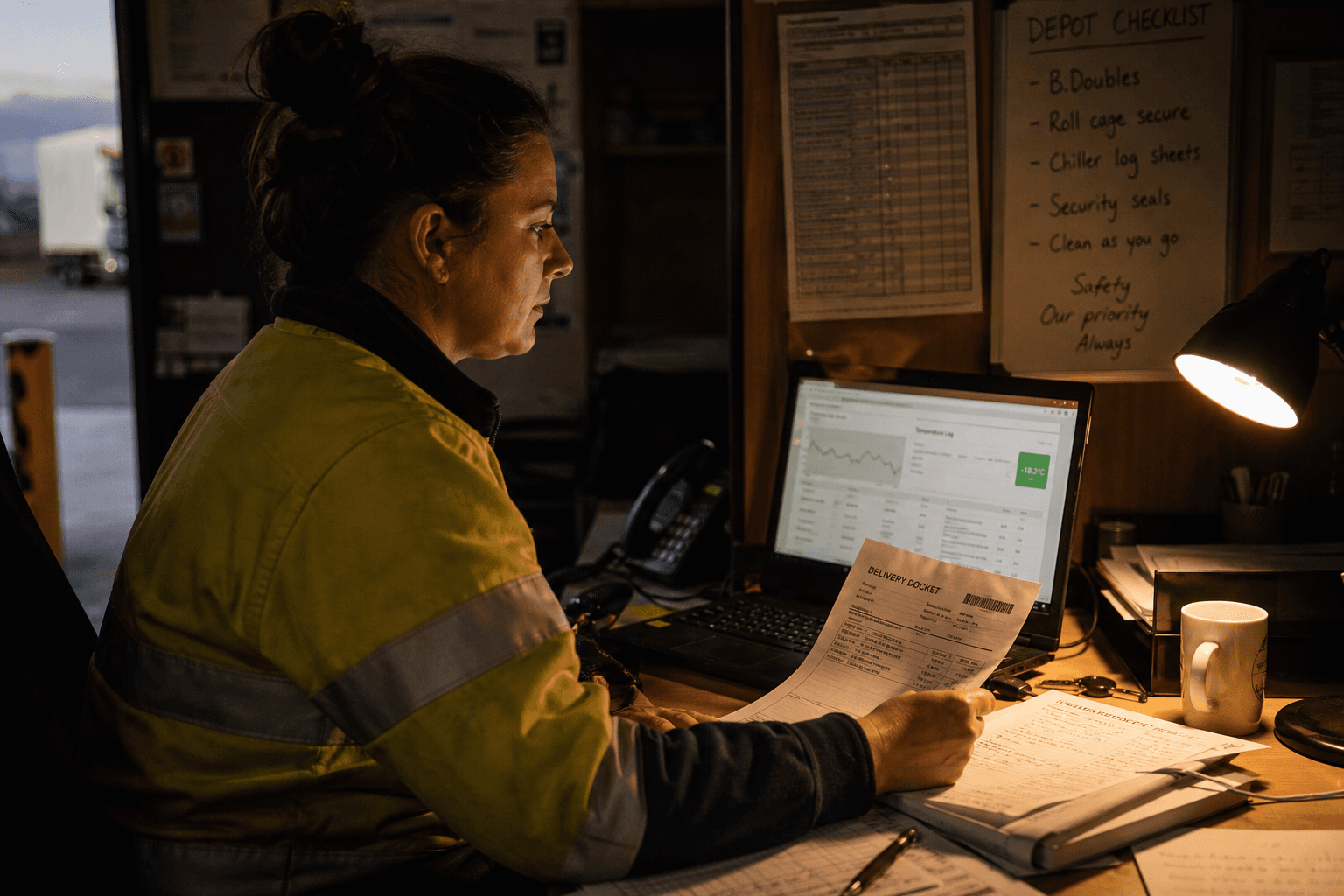
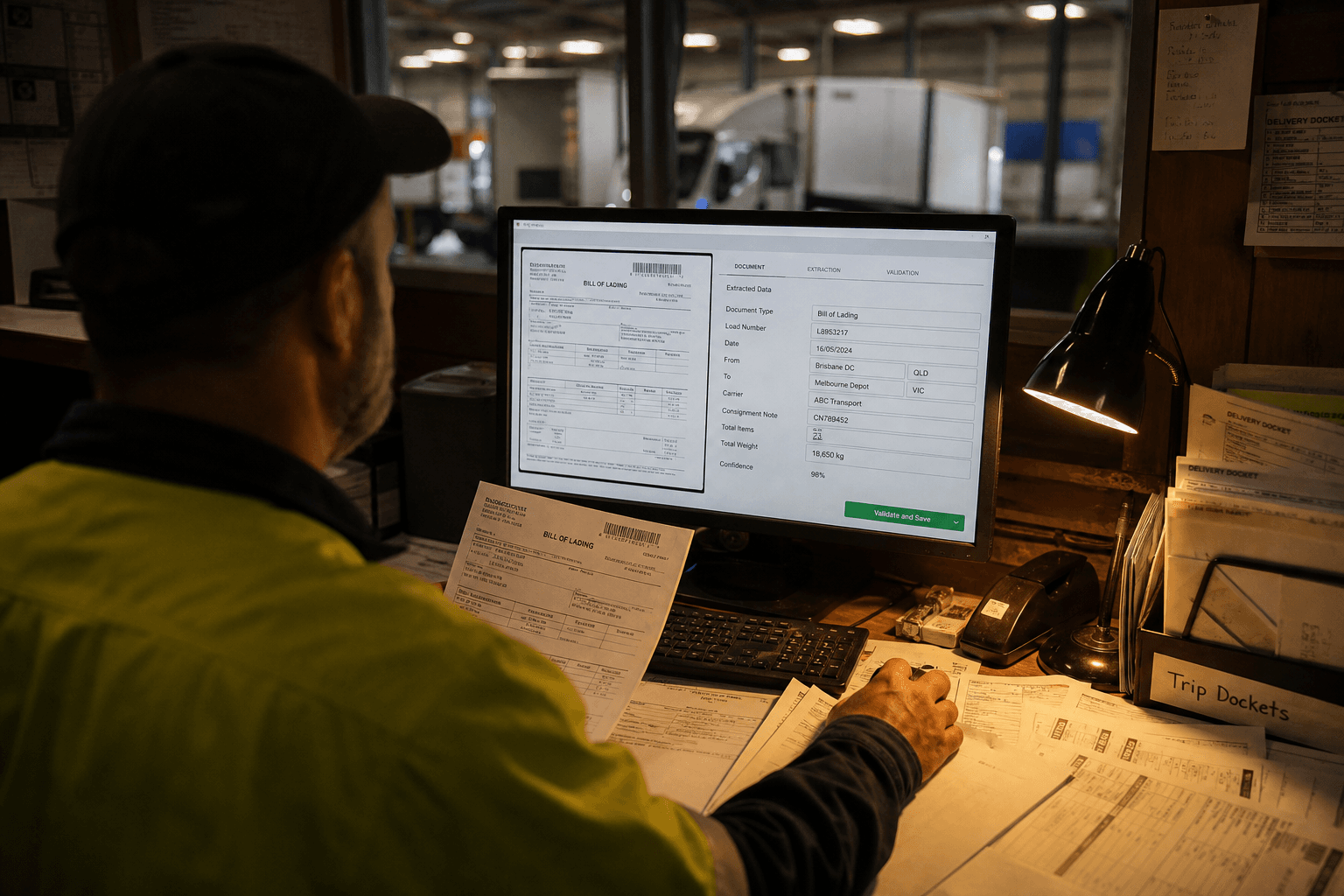
This is where AI-assisted document handling becomes useful beyond the sensor data itself. Compliance evidence for cold chain shipments typically involves reconciling temperature logs against delivery dockets, bills of lading, and customer contracts — a manual, error-prone task when done across paper or disconnected systems. Our document-intelligence work looks specifically at automating this kind of document reconciliation for logistics operators, which pairs naturally with condition-monitoring data when building an audit trail.
How Does AI Integrate With Existing IoT and Sensor Systems?
AI monitoring layers integrate with the telematics and IoT infrastructure most cold chain operators already have — reefer unit controllers, standalone temperature loggers, and fleet telematics platforms — rather than requiring a hardware rip-and-replace. Integration typically happens via existing carrier APIs, telematics data feeds, or middleware that consolidates sensor readings into a single monitoring layer.
For operators running legacy telematics or a mix of vendor systems (common in mid-market fleets that have grown through acquisition or incremental fleet renewal), the practical question isn't whether to add more sensors — it's whether the data those sensors already produce can be consolidated and made useful. This is a common finding in our ai-readiness-assessment engagements: most of the raw data needed for better monitoring already exists, but it's fragmented across systems that were never designed to talk to each other.
Manual vs AI-Augmented Cold Chain Monitoring
| Aspect | Manual / Threshold-Based Monitoring | AI-Augmented Monitoring |
|---|---|---|
| Anomaly detection | Fixed alarm thresholds | Pattern-based, context-aware detection |
| False alarm rate | Higher (triggers on routine events) | Lower (learns normal operational variation) |
| Early warning of equipment drift | Limited — catches failures after threshold breach | Earlier — can flag gradual degradation |
| Compliance documentation | Manual log compilation and reconciliation | Automated, continuous audit trail |
| Integration effort | N/A | Layers onto existing sensors/telematics, no hardware replacement required |
This is a qualitative comparison based on how these approaches typically function — the right fit depends on your existing sensor estate, product mix, and current failure/incident rates.
Where Does This Fit for Australian Cold Chain Operators?
Cold chain and temperature-controlled logistics is one of several freight segments where condition monitoring carries real commercial weight — a spoiled load isn't just a cost, it's a customer relationship and, in food and pharma, a regulatory exposure. Operators facing a legacy telematics platform nearing end-of-life, a customer demanding better tracking visibility, or recent audit findings around temperature record-keeping are typically the ones for whom this becomes a priority rather than a nice-to-have.
It's worth being upfront: cold chain monitoring is a specific application of broader supply chain visibility and resilience capabilities, rather than a separate discipline. If your business is also dealing with route inefficiencies alongside temperature compliance, it's often worth looking at route-optimisation alongside condition monitoring, since reefer run time and route efficiency are closely linked.
For more on how AI applies across logistics operations more broadly, see our insights.
Get in Touch
If you're exploring how AI could support temperature-controlled freight monitoring or compliance documentation in your operation, we can help. We start with an assessment of what data you already have — sensors, telematics, existing logs — before recommending what's worth building.
Zero Footprint
The Zero Footprint team — AI modernisation for Australian logistics.