AI-Powered Freight Audit: Catching Billing Errors Automatically
Freight audit errors cost Australian logistics companies significant money through overcharges and billing discrepancies. AI-powered freight audit systems automatically detect these issues while eliminating manual review processes.
AI-Powered Freight Audit: Catching Billing Errors Automatically
Freight audit errors cost Australian logistics companies substantial amounts annually through overcharges, duplicate invoices, and contract non-compliance. AI-powered freight audit systems automatically detect these billing discrepancies, helping recover costs while eliminating time-consuming manual review processes.
How AI Freight Audit Systems Work
AI freight audit systems use machine learning algorithms to analyse freight invoices simultaneously, comparing charges against contracted rates, delivery confirmations, and historical patterns. These systems process invoices continuously, flagging discrepancies that would typically require significant manual effort to identify.
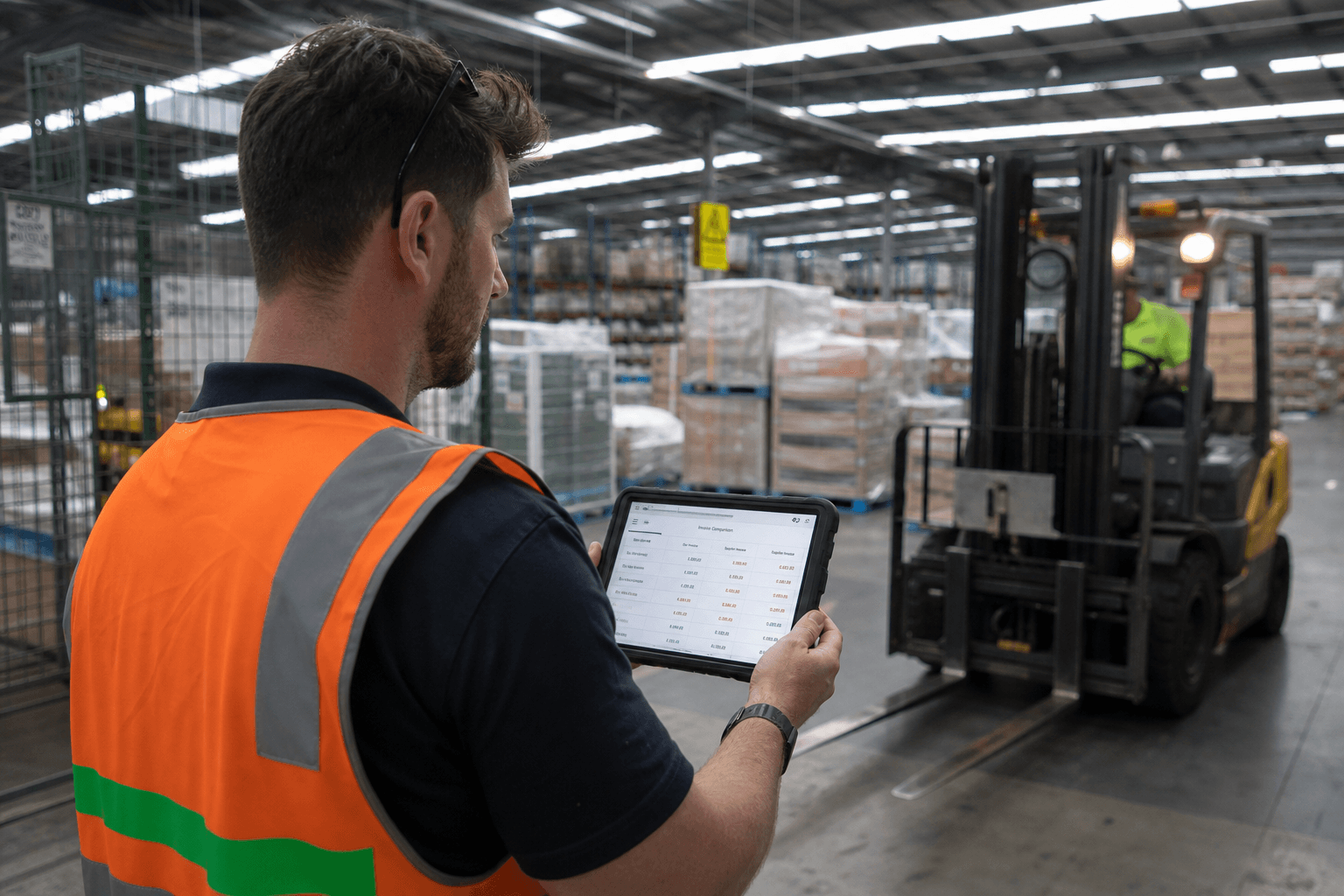
The core technology combines optical character recognition (OCR) to extract data from invoices, natural language processing to interpret contract terms, and pattern recognition to identify anomalies. This creates an automated audit trail that integrates directly with existing freight payment workflows.
For Australian logistics operators dealing with multiple carriers and complex pricing structures, this technology addresses a critical operational challenge. Manual freight auditing often becomes a bottleneck, with finance teams struggling to review every invoice thoroughly while maintaining payment schedules.
Common Billing Errors AI Systems Detect
Overcharges and Rate Discrepancies

AI systems compare invoiced rates against contracted pricing matrices, automatically flagging charges that exceed agreed rates. The technology accounts for fuel surcharges, accessorial fees, and volume discounts, ensuring every line item aligns with contractual terms.
Rate validation algorithms cross-reference invoice data with shipment details, delivery zones, and service levels. This catches errors like incorrect distance calculations, wrong service classifications, or unauthorised surcharge applications that commonly slip through manual processes.
In the Australian market, where fuel costs and distance-based pricing significantly impact freight rates, these validation capabilities prove particularly valuable for identifying discrepancies.
Duplicate Invoice Detection
Duplicate invoicing occurs when carriers submit the same charges multiple times, often across different billing periods. AI matching algorithms compare invoice metadata, shipment references, and charge amounts to identify potential duplicates with improved accuracy over manual methods.
The system flags exact matches and near-duplicates, accounting for minor variations in formatting or data entry. This prevents double-payment while reducing false positives that can slow down payment processing workflows.
Contract Non-Compliance Issues
AI systems continuously monitor freight invoices against contract terms, identifying violations like unauthorised rate increases, missing volume discounts, or incorrect accessorial charges. The technology interprets contract language and applies business rules automatically.
Compliance monitoring extends to service level agreements, payment terms, and performance metrics. This ensures carriers meet contractual obligations while providing audit evidence for dispute resolution processes.
For Australian logistics companies managing multiple carrier relationships, this automated compliance checking helps maintain contract discipline without requiring dedicated audit staff.
AI Matching Algorithms and Process
Three-Way Matching Capabilities
Modern AI freight audit systems perform three-way matching between purchase orders, proof of delivery, and invoices. Machine learning algorithms identify discrepancies in weights, distances, service types, and delivery confirmations.
The algorithms learn from historical data patterns, improving detection capabilities over time while reducing false positive rates that can burden finance teams with unnecessary reviews. This continuous learning approach helps the system adapt to specific operational patterns and carrier behaviours.
Exception Handling and Workflow Management
When AI systems identify potential errors, they route exceptions through intelligent workflows based on error type, dollar amount, and confidence levels. High-confidence discrepancies can trigger automatic holds, while borderline cases require human review.
Exception handling includes automated dispute initiation, carrier notification, and tracking of resolution timelines. This creates an auditable process that supports recovery efforts while maintaining supplier relationships—critical for Australian logistics operators who rely on strong carrier partnerships.
Integration with Australian Business Systems
ERP and Financial System Connectivity
AI freight audit systems integrate with popular Australian ERP platforms including SAP, Oracle, and MYOB through standard APIs. This enables seamless data flow between freight audit, accounts payable, and financial reporting systems.
Integration capabilities extend to freight payment platforms commonly used by Australian carriers, creating end-to-end automation from invoice receipt to payment approval. The systems support various file formats and communication protocols standard in the Australian logistics market.
Banking and Payment Processing
Modern freight audit systems connect with Australian banking platforms to automate payment processing while maintaining audit controls. Integration with major bank systems enables straight-through processing for approved invoices.
Payment integration includes support for BPAY, direct debit, and electronic funds transfer methods preferred by Australian freight providers. This reduces payment processing time while maintaining comprehensive audit trails required for financial compliance.
Cost Recovery and Operational Benefits
Recovery Potential
Australian logistics companies implementing AI freight audit systems often see meaningful cost recovery through error identification. Industry experience suggests that freight audit errors are more common than many operators realise, particularly in complex multi-modal operations or businesses using multiple freight providers.
The technology investment typically pays for itself through identified savings, though specific recovery amounts vary significantly based on freight spend, carrier mix, and existing audit processes.
Process Efficiency Improvements
Beyond direct cost recovery, AI freight audit systems eliminate manual audit processes that typically require substantial staff time for mid-sized operations. This reduces audit processing time from weeks to hours while improving accuracy and compliance.
The automation enables finance teams to focus on strategic activities rather than routine invoice checking. For Australian logistics operators facing labour cost pressures and skill shortages, this efficiency gain can be as valuable as direct cost savings.
Implementing AI Freight Audit in Australia
System Requirements and Integration
Successful AI freight audit implementation requires clean data feeds from existing systems and clear contract terms that can be digitally interpreted. Australian logistics companies should ensure their current TMS or ERP systems can provide necessary invoice and shipment data.
Integration typically takes several weeks, during which the AI system learns from historical data patterns and establishes baseline performance metrics. This learning period is crucial for achieving optimal accuracy rates.
Change Management Considerations
Implementing AI freight audit requires coordination between finance, operations, and carrier management teams. Clear communication about the system's capabilities and limitations helps ensure successful adoption.
Staff training focuses on exception handling and dispute resolution processes, as the AI system handles routine validation automatically. This shift allows team members to focus on higher-value activities while maintaining oversight of the audit process.
For Australian logistics operators considering AI freight audit systems, the technology offers a practical approach to improving financial accuracy while reducing manual workload. The key lies in proper implementation and integration with existing business processes.
To explore how AI freight audit systems could benefit your logistics operation, get in touch with our team. We help Australian logistics companies implement practical AI solutions that deliver measurable results.
Zero Footprint
The Zero Footprint team — AI modernisation for Australian logistics.