AI-Powered WHS Incident Prevention in Warehouses
Computer vision and AI monitoring are giving Australian warehouse operators a way to catch forklift breaches, near-misses, and unsafe manual handling before they become WorkSafe claims. Here's how it works and what it means for insurance premiums and compliance.
What Is AI-Powered WHS Incident Prevention?
AI-powered WHS incident prevention is the use of computer vision and machine learning to continuously monitor warehouse floors for unsafe behaviour — forklift breaches, near-misses, and poor manual handling — and alert supervisors before an incident occurs. Instead of relying on periodic audits or worker self-reporting, cameras and sensors already on site generate a constant stream of safety data that operations teams can act on in real time.
For Australian warehouse operators, this matters beyond compliance. Manual handling injuries and vehicle-related incidents remain among the most common causes of workplace injury claims in warehousing and logistics, according to data published by Safe Work Australia. Every claim carries a direct cost — in WorkCover premiums, lost productivity, and management time — on top of the human cost of someone getting hurt.
Why Isn't Manual Safety Auditing Enough Anymore?
Manual safety audits capture a snapshot in time, usually a few hours a month, in a facility that operates sixteen or more hours a day. The gap between audits is where most near-misses happen unnoticed, and by the time a pattern shows up in incident reports, it has often already caused a lost-time injury.
Most mid-market warehouses in Victoria, NSW, and Queensland still rely on toolbox talks, spot checks, and incident reports filed after the fact. This is reactive by design — it tells you what already went wrong, not what's about to. Operators with 10,000+ sqm of warehouse floor and shift-based labour simply can't have a safety officer watching every aisle, every forklift, every pallet lift, around the clock. That's the gap computer vision is built to close — not replacing your WHS team, but giving them eyes in every zone at once.
How Does Computer Vision Detect Near-Misses and Unsafe Behaviour?
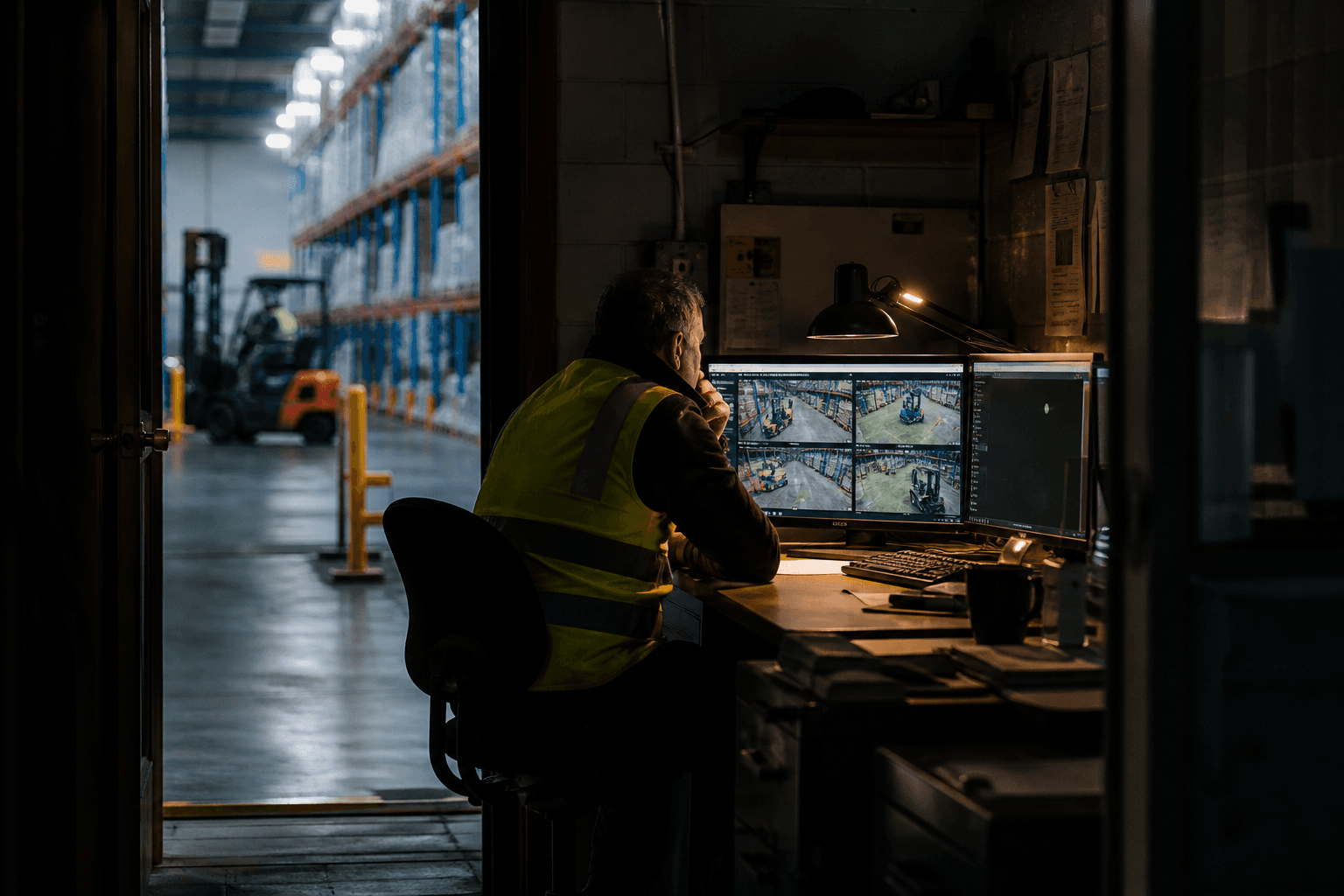
Computer vision is a form of AI that interprets video feeds in real time, identifying objects, people, and vehicles, then flagging predefined unsafe conditions as they happen. In a warehouse, this typically means detecting when a pedestrian enters a forklift's path, when someone lifts a load without correct technique, or when a vehicle exceeds a safe speed in a pedestrian zone.
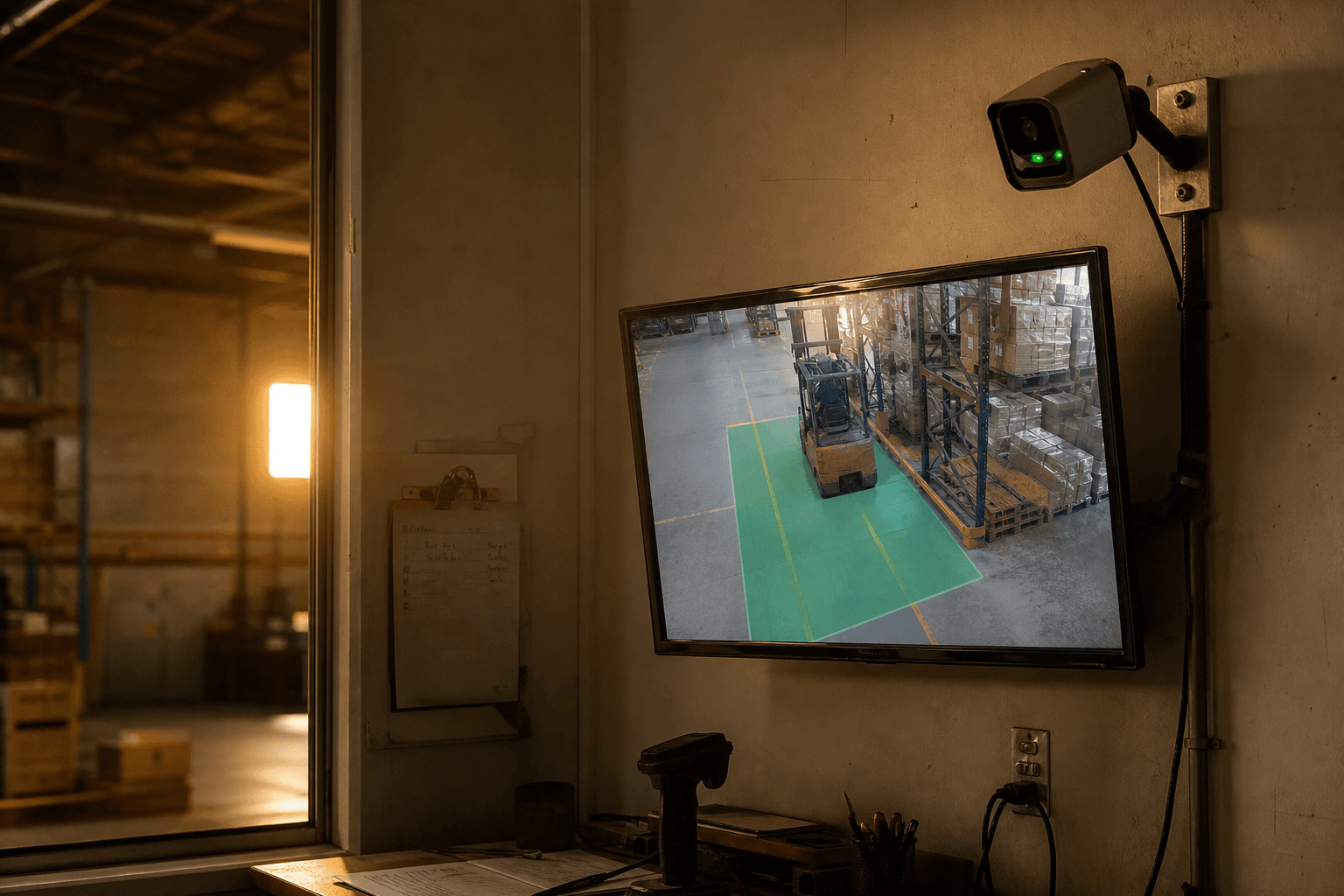
The system doesn't replace existing CCTV or WHS processes — it layers analysis on top of camera feeds that are often already installed. Common detection use cases include:
- Pedestrian-forklift proximity breaches in shared traffic zones
- Missing PPE (hi-vis, hard hats) in designated areas
- Unsafe lifting posture during manual handling tasks
- Blocked emergency exits or fire egress points
- Vehicles exceeding site speed limits or running stop points
Alerts go to supervisors via existing communication channels — a dashboard, SMS, or integration with your incident management system — so the response happens in minutes, not after the next scheduled walk-through.
What Forklift Compliance Breaches Can AI Monitoring Catch?
Forklift-related incidents are consistently among the highest-cost WHS claims in warehousing, and most breaches are behavioural rather than mechanical — speeding, failure to give way, operating without a spotter in blind corners, or carrying loads above safe stacking height. AI monitoring flags these patterns automatically, generating an audit trail that didn't exist before.
This audit trail matters for two reasons. First, it supports coaching conversations with drivers using specific, timestamped footage rather than general reminders. Second, it gives operators defensible evidence during a WorkSafe audit or insurance review, showing a documented, systematic approach to hazard identification — a requirement under the model WHS laws administered by state regulators and referenced in AS/NZS ISO 45001 occupational health and safety management systems.
How Does This Reduce WorkSafe Claims and Insurance Premiums?
Fewer incidents mean fewer claims, and fewer claims is the single biggest lever most warehouse operators have over their WorkCover premium and public liability insurance costs. Insurers increasingly ask about proactive risk controls during renewal — not just historical claims data — and a documented AI monitoring program is tangible evidence of a lower-risk operation.
The compounding effect is what makes this worth pursuing: lower incident frequency reduces premium loading over time, reduces lost-time injury costs, and reduces the administrative burden of claims management. None of this requires guessing — most systems log every flagged event, giving Operations and Finance a shared, auditable record for both safety reviews and insurance renewal conversations.
Traditional Safety Audits vs AI-Powered Monitoring
| Factor | Traditional Manual Audits | AI-Powered Monitoring |
|---|---|---|
| Coverage | Periodic (hours per month) | Continuous (all shifts) |
| Detection speed | After the fact, via reports | Near real-time alerts |
| Evidence for insurers | Limited, anecdotal | Timestamped, auditable |
| Consistency | Varies by auditor | Consistent rule application |
| Staff burden | High (manual walk-throughs) | Lower (automated flagging) |
| Behavioural coaching | General reminders | Specific, footage-backed feedback |
What Does Implementation Look Like for a Mid-Market Warehouse?
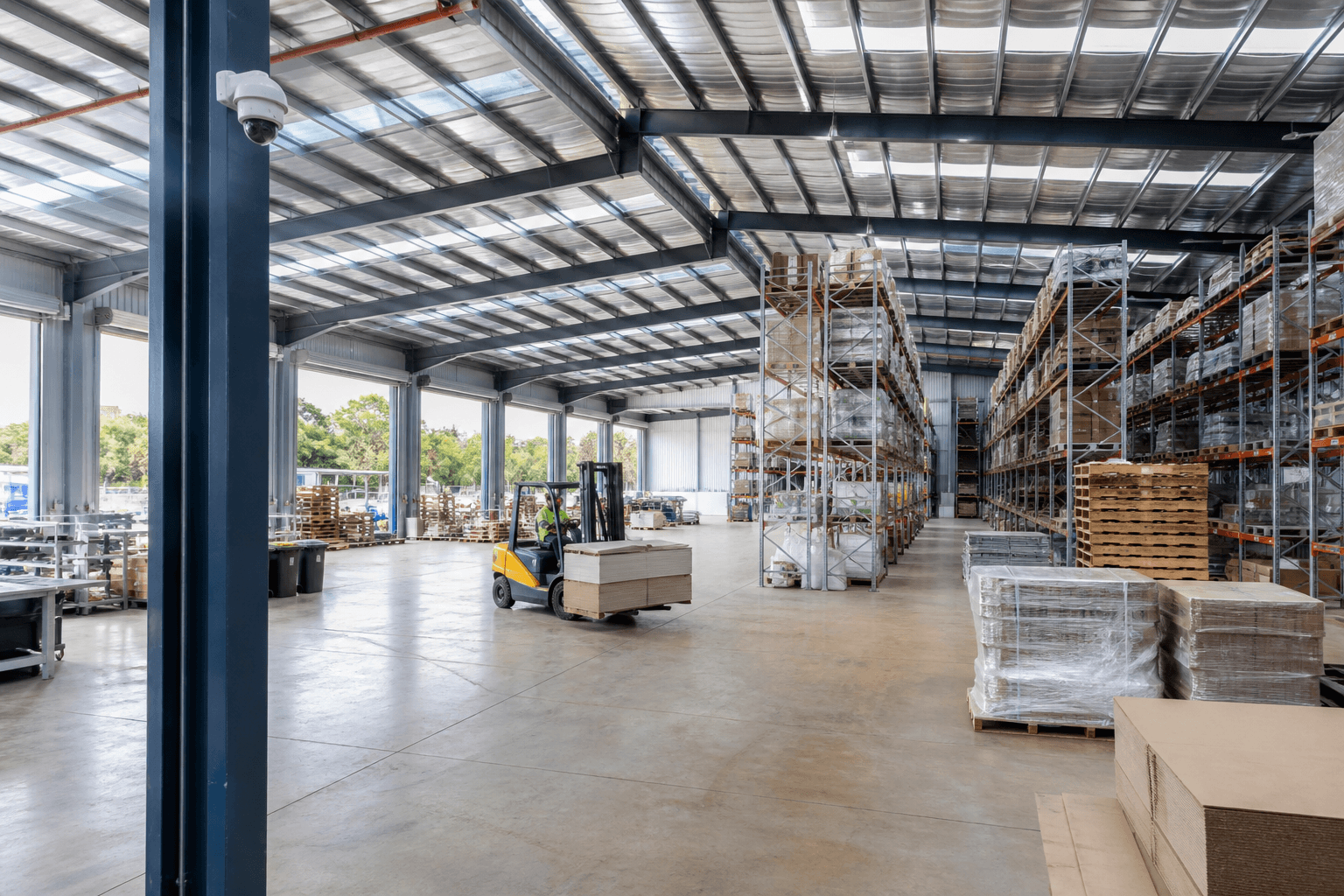
Implementation usually starts with an assessment of your existing camera infrastructure, site layout, and the specific hazards your incident history points to — forklift zones, manual handling stations, or high-traffic loading docks. From there, detection rules are configured for your site rather than applied generically, because a cold storage facility and a parcel cross-dock have very different risk profiles.
This is the same discipline we apply across our work with logistics and warehouse operators: understand how the site actually runs before recommending a solution. If you're not sure where to start, our ai-readiness-assessment is designed to map your current data, systems, and risk areas in two to four weeks, giving you a clear view of what's feasible before you commit to a build. It's the same groundwork we use when assessing document-heavy processes through our document-intelligence work — understanding the real operational data before automating around it.
Is This Worth It for a Facility Our Size?
If your warehouse runs 10,000+ sqm, operates multiple shifts, or has had WorkSafe audit findings or rising insurance premiums, AI-powered monitoring is worth evaluating. The investment case isn't abstract — it's measured against your current claims frequency, premium trajectory, and the cost of lost-time injuries you're already tracking internally.
It's not a fit for every site. Facilities with very low traffic density or minimal vehicle-pedestrian interaction may get more value from other areas of digital transformation first. That's exactly why an initial assessment matters — to confirm fit before spending on a build.
For more on how Australian operators are approaching AI adoption across operations, not just safety, browse our insights.
If you're exploring how AI monitoring could reduce incidents, claims, or premium costs at your site, we can help — starting with a straightforward conversation about what your facility actually needs.
Zero Footprint
The Zero Footprint team — AI modernisation for Australian logistics.