Zero Footprint AI Readiness Framework: 5 Dimensions for Logistics
A structured self-assessment framework for logistics operators. Score your operation across 5 dimensions — data maturity, system integration, process digitisation, organisational readiness, and use case clarity.
Why a Framework Matters
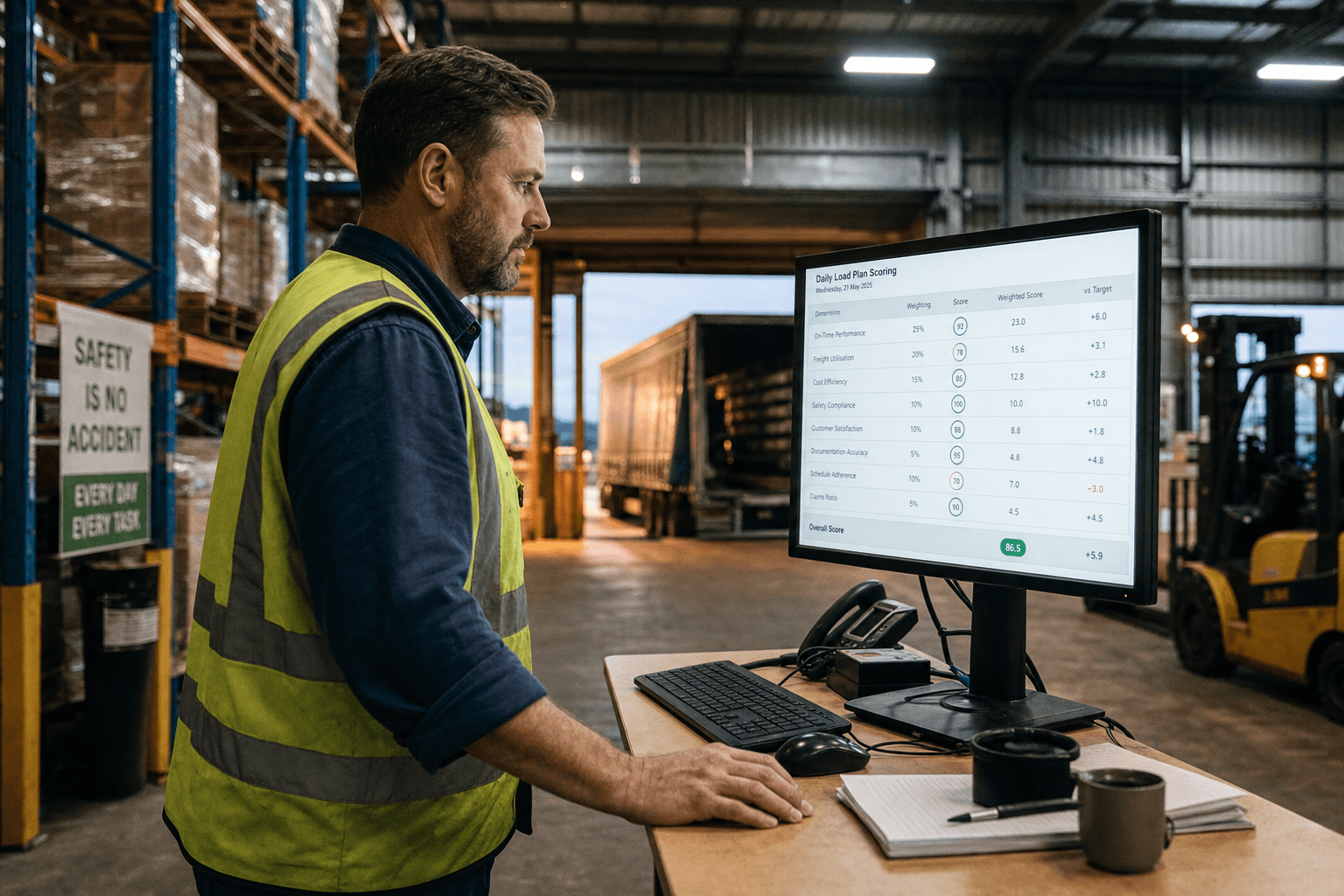
Most logistics operators know AI could help their business. The question isn't "should we?" — it's "are we ready, and where do we start?"
The Zero Footprint AI Readiness Framework gives you a structured way to answer that question. Score your operation across five dimensions, understand where the gaps are, and get a clear picture of what needs to happen before you invest.
The Five Dimensions
Dimension 1: Data Maturity

Can your operation produce the clean, accessible data that AI needs?
| Score | Level | What It Looks Like |
|---|---|---|
| 1 | Paper-based | Operational records are on paper, whiteboards, or in people's heads |
| 2 | Spreadsheets | Data exists digitally but lives in disconnected spreadsheets and email |
| 3 | System-captured | Core data is in a TMS/WMS/ERP but with quality issues (gaps, duplicates, inconsistencies) |
| 4 | Clean and accessible | Operational data is reliable, consistent, and can be exported or queried |
| 5 | Real-time and integrated | Data flows automatically between systems with real-time updates and audit trails |
Where most mid-market operators score: 2-3. Data exists but it's fragmented, inconsistent, or locked in systems with no export capability.
Dimension 2: System Integration
Can your systems share data with each other and with external tools?
| Score | Level | What It Looks Like |
|---|---|---|
| 1 | Completely siloed | Each system is an island. Data moves between them via manual re-keying |
| 2 | File-based bridges | Some systems exchange CSV/Excel files on a schedule |
| 3 | Point-to-point connections | A few critical systems are connected, but integrations are brittle and custom |
| 4 | API-enabled | Core systems have APIs. New connections can be built without custom development |
| 5 | Event-driven architecture | Systems communicate in real-time via events. Adding new integrations is straightforward |
Where most mid-market operators score: 1-2. The TMS, WMS, and ERP don't talk to each other. Humans are the integration layer.
Dimension 3: Process Digitisation
How much of your operational workflow is digital vs manual?
| Score | Level | What It Looks Like |
|---|---|---|
| 1 | Mostly manual | Paper-based workflows, phone calls for dispatch, handwritten PODs |
| 2 | Partially digital | Some processes in software, but manual steps fill the gaps |
| 3 | Core digital | Main workflows (booking, dispatch, invoicing) are in systems, but exceptions are manual |
| 4 | Mostly automated | Standard workflows run with minimal human intervention. Humans handle exceptions |
| 5 | Fully automated | End-to-end digital workflows with automated exception handling and self-service |
Where most mid-market operators score: 2-3. Core booking and dispatch are in the TMS, but everything around them — planning, reporting, customer communication — involves manual steps.
Dimension 4: Organisational Readiness
Does your team have the mindset and capability to adopt AI?
| Score | Level | What It Looks Like |
|---|---|---|
| 1 | Resistant | "We've always done it this way." Leadership doesn't see technology as a priority |
| 2 | Curious but cautious | Interest in AI exists but no budget allocated and no clear sponsor |
| 3 | Committed | Leadership has allocated budget. There's a sponsor. But no internal tech capability |
| 4 | Capable | A technology champion exists internally. Team is open to change. External partner needed for AI |
| 5 | Embedded | Internal data/tech capability exists. AI literacy across the leadership team |
Where most mid-market operators score: 2-3. Leadership is interested but hasn't committed budget or identified a champion.
Dimension 5: Use Case Clarity
Can you name the specific problem AI would solve?
| Score | Level | What It Looks Like |
|---|---|---|
| 1 | Vague | "We should probably do something with AI" |
| 2 | General | "AI could help with our operations" — no specific problem identified |
| 3 | Identified | "We waste $200K/year on manual invoice reconciliation" — problem identified, not quantified rigorously |
| 4 | Quantified | Problem is measured with hard numbers. Cost, time, error rates documented |
| 5 | Prioritised | Multiple use cases identified, quantified, and ranked by ROI |
Where most mid-market operators score: 2-3. There's a general sense of where AI could help, but the problem hasn't been quantified enough to build a business case.
What Your Score Means
Add your five dimension scores for a total between 5 and 25.
Score 5-10: Foundation First
Your operation needs foundational work before AI will deliver value. This isn't a criticism — it's a practical reality. Investing in AI when your data is on spreadsheets and your systems don't talk to each other will waste money.
What to do:
- Start with a data and systems audit (not an AI project)
- Clean up your core data: customer master, product master, operational records
- Build basic system integrations (TMS → WMS, WMS → ERP)
- Digitise your highest-volume manual processes
Timeline to AI readiness: 6-12 months
Score 11-17: Ready for a First Project
You have enough digital infrastructure to support a focused AI project. The key is choosing the right one — high ROI, good data, and a clear success metric.
What to do:
- Pick one use case with the highest ROI and best data availability
- Typical starting points: document intelligence, route optimisation, or invoice auditing
- Run a focused 8-12 week project with a measurable outcome
- Use the results to build the case for further investment
Timeline to first AI value: 3-6 months
Score 18-25: Ready for Platform Investment
Your operation has the data, systems, and organisational maturity to support multi-module AI investment. You can think beyond individual use cases to platform-level capabilities.
What to do:
- Build a 12-month AI roadmap covering multiple use cases
- Invest in a data platform that serves multiple AI applications
- Consider an AI Centre of Excellence or dedicated technology partnership
- Look at predictive capabilities: demand forecasting, predictive maintenance, dynamic pricing
Timeline to enterprise AI capability: 12-18 months
Typical Mid-Market Score Profile
Based on our assessments of Australian logistics operators in the $20M-$500M range:
| Dimension | Typical Score | Common Gap |
|---|---|---|
| Data Maturity | 2.5 | Data exists but fragmented and inconsistent |
| System Integration | 1.5 | Systems don't talk to each other |
| Process Digitisation | 2.5 | Core workflows digital, everything else manual |
| Organisational Readiness | 2.5 | Interest without commitment |
| Use Case Clarity | 2.0 | General awareness, no quantified business case |
| Total | 11.0 | Just crossing into "Ready for a First Project" |
The most common bottleneck is system integration — until your systems can share data, AI has nothing to work with. The fastest win is usually connecting your TMS and WMS, which unlocks data for route optimisation, demand forecasting, and operational reporting.
Before diving into AI implementation, most logistics operators benefit from understanding exactly where they stand across these five dimensions. Our AI readiness assessment provides a structured evaluation of your current capabilities, while our route optimisation and document intelligence services demonstrate practical AI applications once you're ready to move forward.
How to Use This Framework
- Score yourself honestly across all five dimensions
- Identify your lowest dimension — that's your bottleneck
- Match your total score to the readiness band above
- Start with the recommended actions for your band
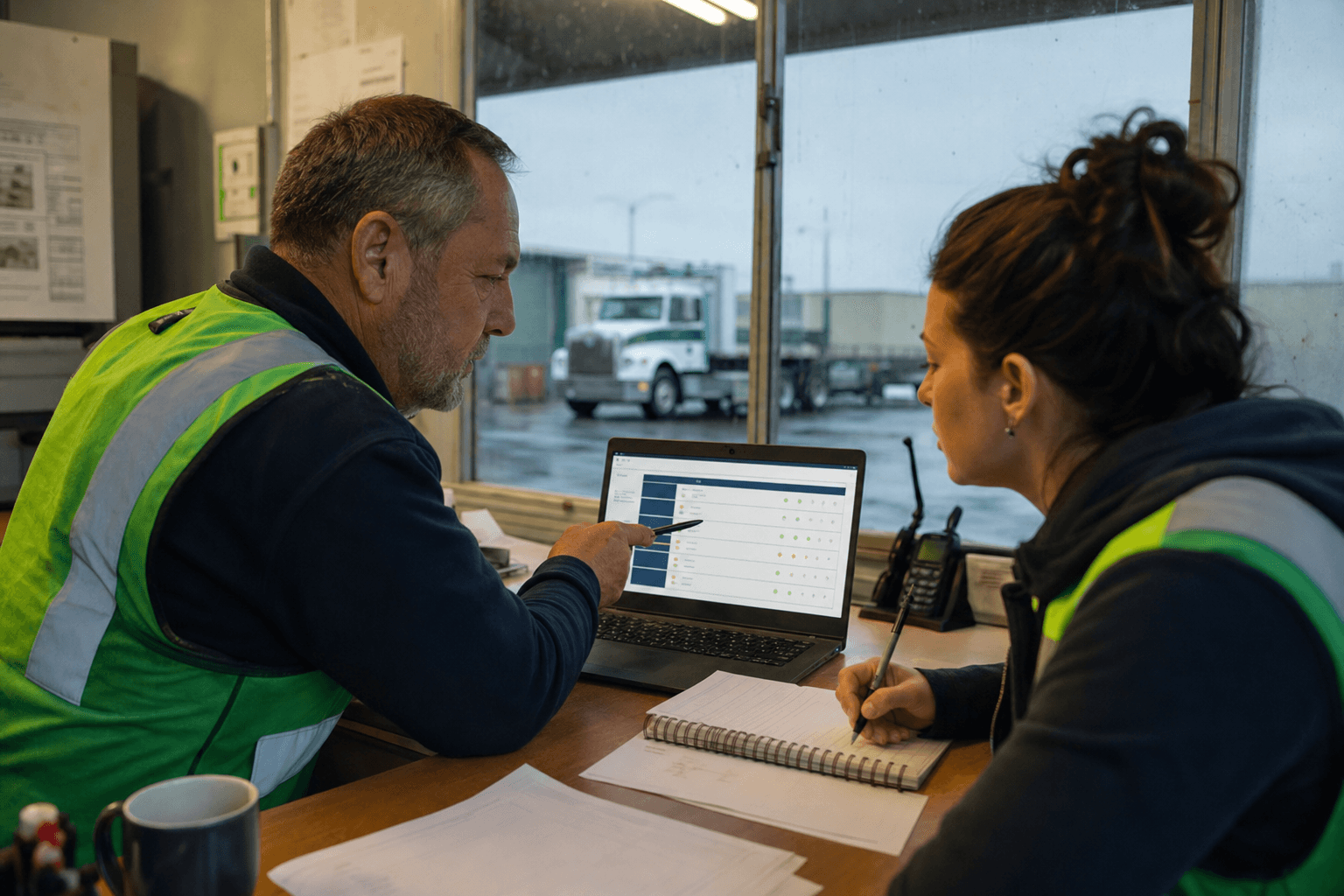
If you're in the 11-17 range, you're in the best position to see fast ROI from a focused first project. If you're below 11, the foundation work will pay for itself in operational efficiency before you even get to AI.
Get a professional AI readiness assessment →
Ready to assess where your logistics operation stands across these five dimensions? Our team can walk you through the complete Zero Footprint AI Readiness Framework and identify your priority areas for improvement. Get in touch to schedule your assessment.
Zero Footprint
The Zero Footprint team — AI modernisation for Australian logistics.