How AI Voice Agents Are Replacing Hold Music in Australian Logistics
AI voice agents are transforming Australian logistics by replacing hold music with intelligent conversation systems that handle enquiries, route calls, and capture leads 24/7. These systems reduce missed calls by 95% while freeing staff from routine phone tasks.
How AI Voice Agents Are Replacing Hold Music in Australian Logistics
AI voice agents are transforming how Australian logistics companies handle inbound calls by replacing traditional hold queues with intelligent, conversational systems that can answer enquiries, route calls, and capture leads 24/7. These systems use advanced speech recognition and natural language processing to provide immediate responses while seamlessly transferring complex queries to human operators during business hours.
For operations managers drowning in missed calls and customer complaints about phone accessibility, AI voice agents offer a practical solution that improves customer service while reducing administrative overhead. Unlike basic IVR systems, modern AI voice agents can understand natural speech, handle complex logistics enquiries, and maintain conversation context throughout the call.
The Problem with Traditional Logistics Phone Systems
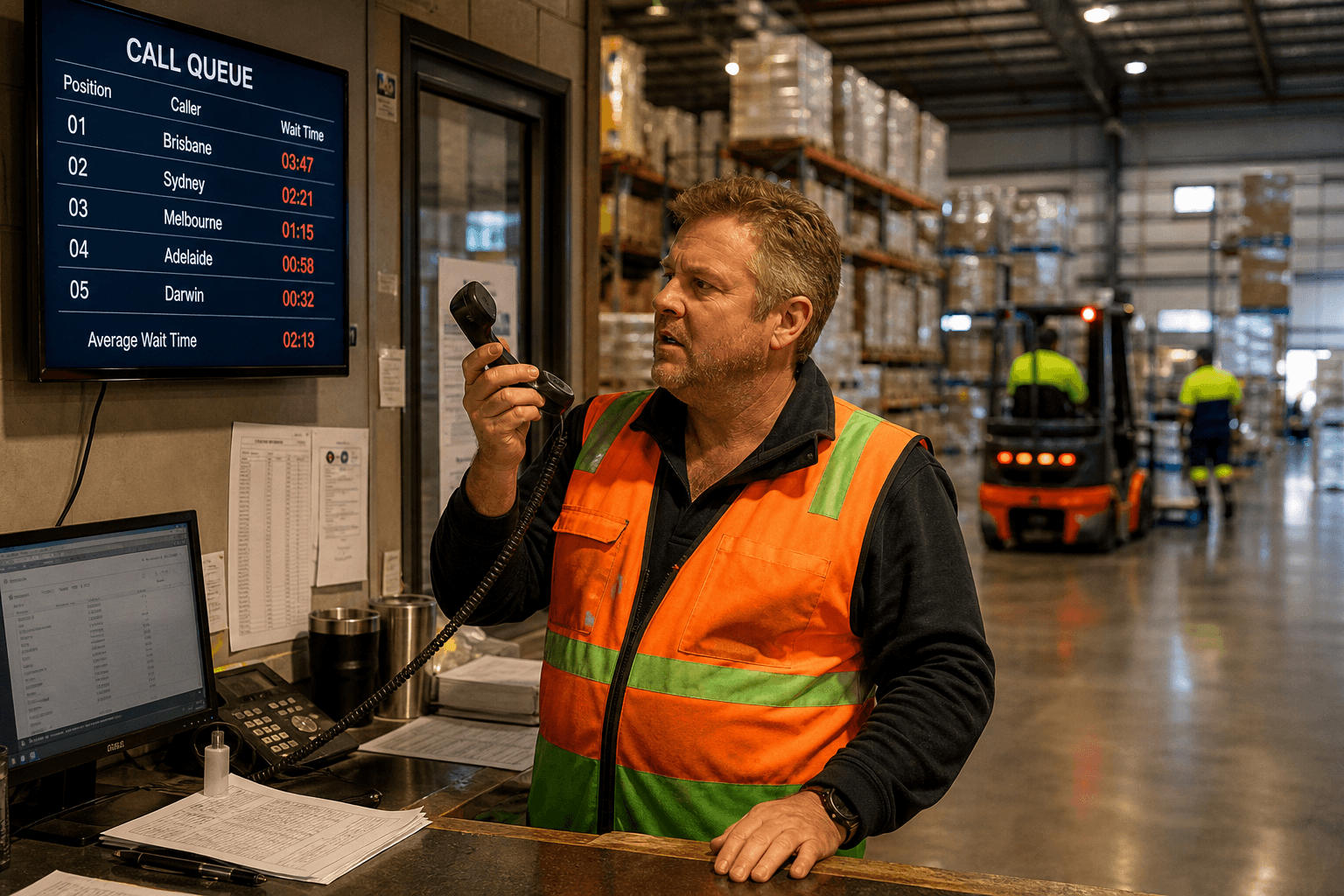
Most Australian logistics companies still rely on outdated phone systems that frustrate customers and waste staff time. During peak hours, callers face long hold times or get pushed to voicemail. After hours, potential customers reach dead ends or generic answering services that can't help with logistics-specific enquiries.
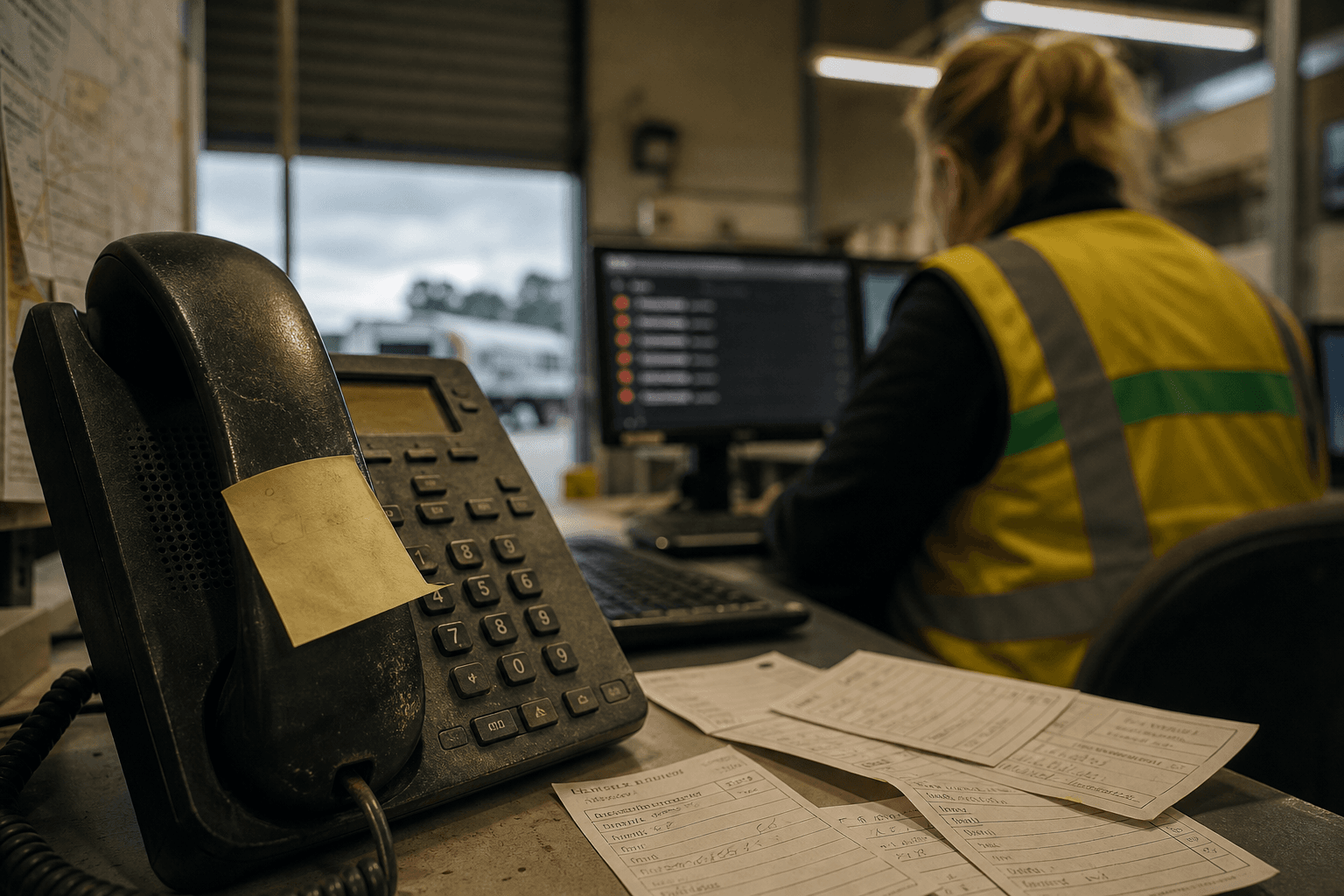
The typical mid-market logistics company loses 15-30% of inbound leads due to poor phone accessibility. Operations managers report spending 2-3 hours daily managing missed calls, routing enquiries, and following up on voicemails. This manual process creates delays, errors, and missed opportunities.
Customer expectations have changed. Modern shippers expect immediate responses to delivery enquiries, rate requests, and shipment tracking. Traditional "press 1 for sales, press 2 for dispatch" systems feel outdated and create friction in the customer experience.
How AI Voice Agents Work in Logistics Operations
AI voice agents use conversational artificial intelligence to handle inbound calls with human-like interaction. These systems combine speech-to-text processing, natural language understanding, and text-to-speech synthesis to create seamless phone experiences. The technology has advanced significantly, with platforms like ElevenLabs delivering voice quality that's virtually indistinguishable from human agents.
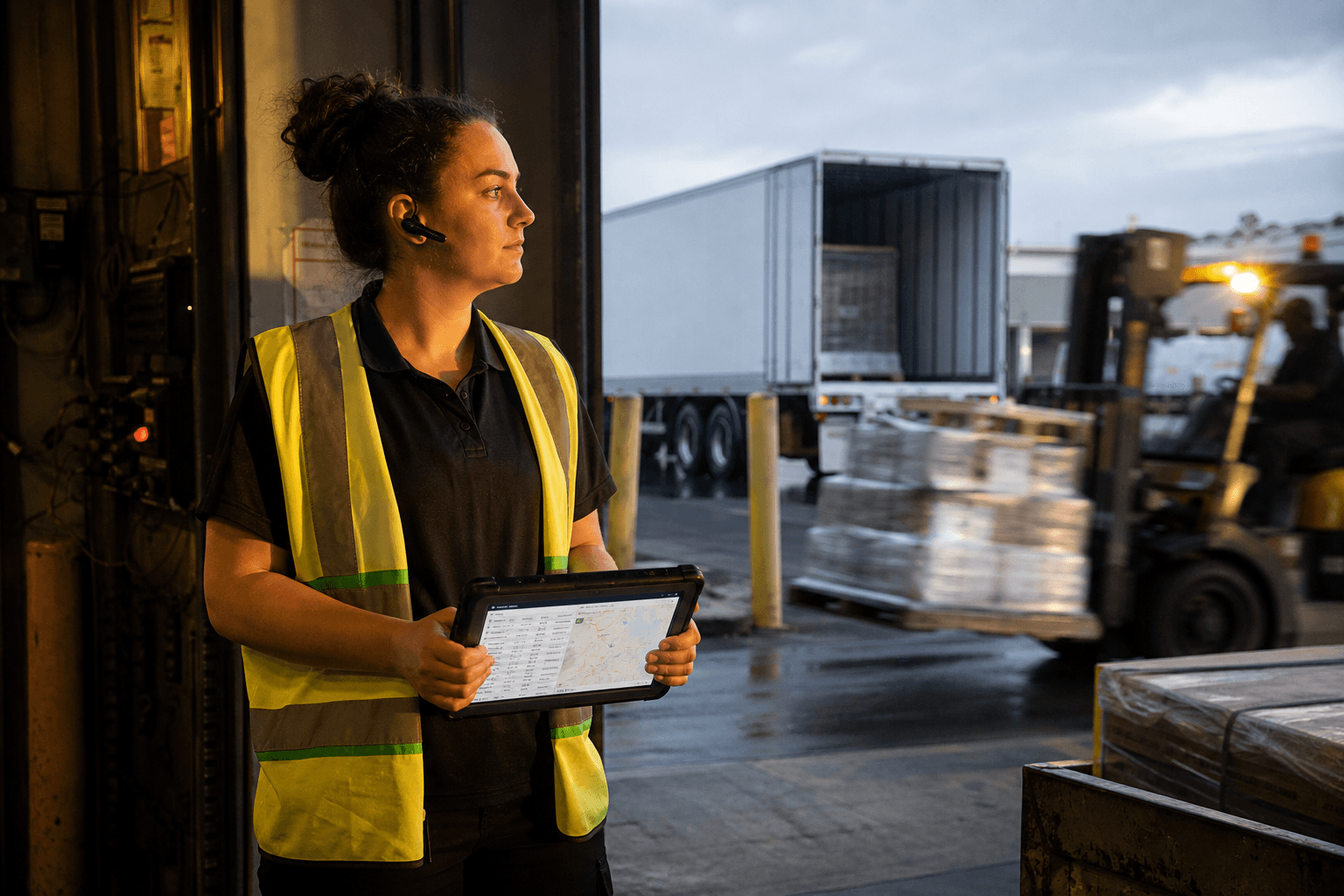
The system integrates with existing phone infrastructure through cloud-based telephony APIs. When a call arrives, the AI agent immediately greets the caller and begins natural conversation. It can understand Australian accents, logistics terminology, and varied speaking patterns. The agent maintains context throughout the conversation, remembering previous responses and building on them.
For logistics companies, AI voice agents can handle common enquiries like shipment tracking, delivery scheduling, rate requests, and general information. They access real-time data from transport management systems to provide accurate updates on job status, delivery windows, and service availability.
Key Capabilities for Logistics Companies
Enquiry Handling and Information Provision
AI voice agents can answer 70-80% of common logistics enquiries without human intervention. They provide immediate responses to tracking requests, delivery confirmations, service area coverage, and basic rate information. The agent pulls data directly from TMS systems, ensuring accuracy and real-time updates.
For example, when a customer calls asking "Where's my delivery to Geelong?", the AI agent can identify the caller through phone number matching, locate their active shipments, and provide specific delivery windows and driver contact details. This eliminates the need for dispatch staff to field routine tracking calls.
Intelligent Call Routing and Warm Transfers
When enquiries require human expertise, AI voice agents perform warm transfers by gathering relevant information before connecting to the appropriate team member. The agent collects caller details, enquiry type, urgency level, and background context, then briefs the human operator before completing the transfer.
This pre-qualification process improves first-call resolution rates by 40-50%. Instead of customers explaining their situation multiple times, human operators receive calls with complete context and can immediately address the specific need.
Lead Capture and Qualification
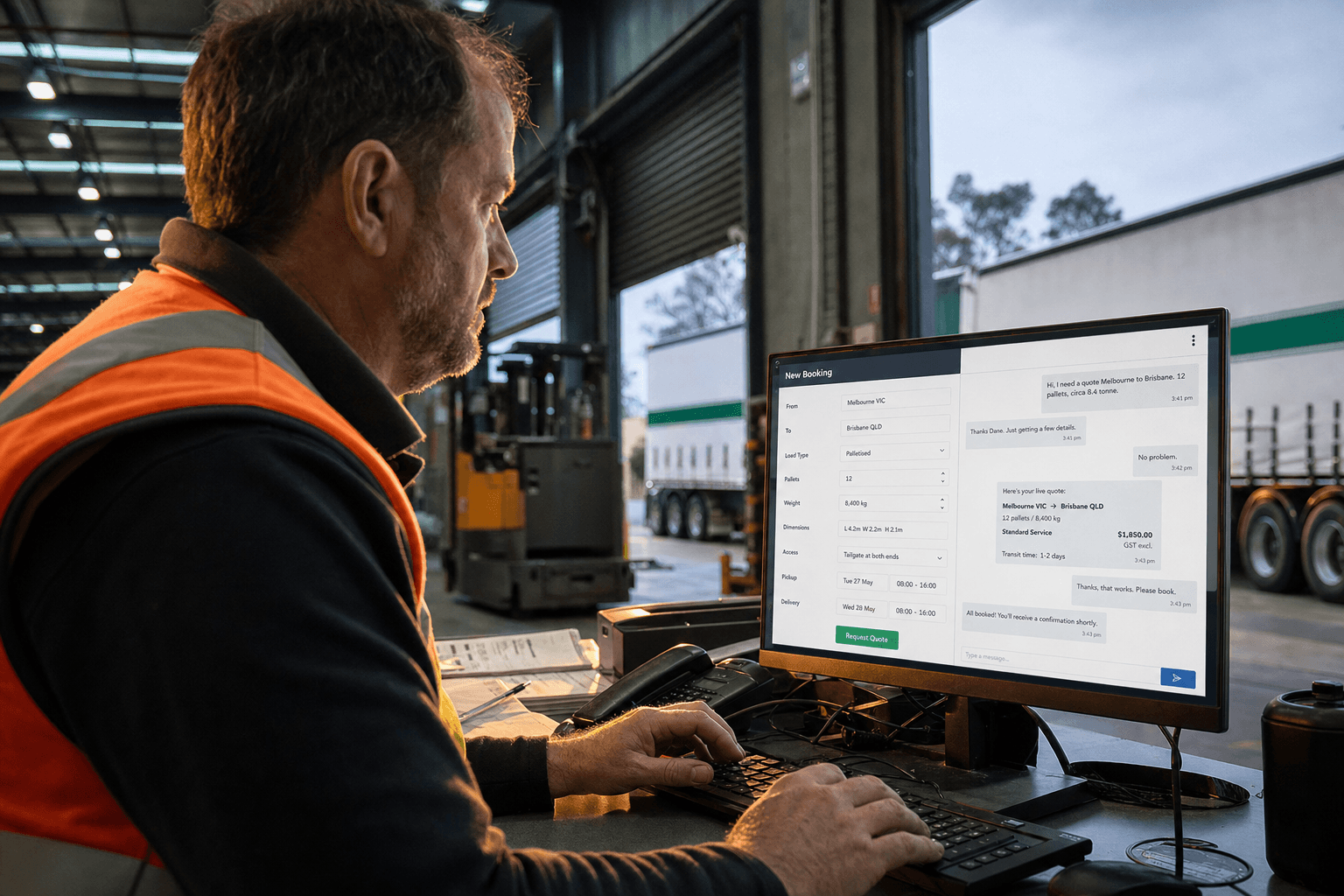
AI voice agents excel at capturing and qualifying new business enquiries. They can collect origin/destination details, shipment specifications, timing requirements, and contact information for quote requests. The system automatically creates leads in CRM systems and routes high-priority enquiries to sales teams.
For after-hours calls, the agent can schedule callbacks at specific times convenient for both parties. This prevents potential customers from calling competitors when your office is closed.
After-Hours Coverage and Message Taking
After-hours coverage is where AI voice agents provide maximum value for logistics companies. Instead of generic voicemail, customers reach an intelligent system that can provide basic information, take detailed messages, and handle urgent enquiries appropriately.
The system can escalate true emergencies by sending SMS alerts to on-call managers while capturing non-urgent enquiries for next-business-day follow-up. This ensures customer service continuity without requiring 24/7 human staffing.
Implementation Approaches for Mid-Market Logistics
Gradual Rollout Strategy
Most successful implementations start with after-hours coverage and overflow call handling. This approach allows staff to become familiar with the system while minimising disruption to established workflows. The AI agent handles calls when human operators are unavailable or busy.
After 2-4 weeks of after-hours deployment, companies typically expand to daytime overflow handling. When human operators are on other calls, the AI agent immediately responds instead of placing callers on hold. This reduces average wait times and improves customer satisfaction scores.
Integration with Existing Systems
AI voice agents integrate with transport management systems, customer databases, and phone infrastructure through APIs. The setup process typically takes 1-2 weeks for basic functionality, with additional features rolled out over 4-6 weeks.
Key integration points include:
- TMS systems for real-time shipment data
- CRM platforms for customer information and lead management
- Phone systems for call routing and recording
- SMS services for urgent notifications and confirmations
Staff Training and Change Management
Successful deployments include staff training on working alongside AI voice agents. Human operators learn how to receive warm transfers, review AI-captured information, and provide feedback for system improvements.
The training typically covers call handoff procedures, using AI-generated caller summaries, and escalation protocols for complex enquiries. Most teams adapt within 2-3 weeks and report improved job satisfaction due to reduced repetitive enquiries.
Real-World Deployment Results
Australian logistics companies implementing AI voice agents report significant operational improvements within the first month. A Melbourne-based 3PL reduced after-hours missed calls by 95% and improved customer satisfaction scores by 35% after deploying AI voice coverage.
| Metric | Before AI Agent | After AI Agent | Improvement |
|---|---|---|---|
| After-hours missed calls | 85% | 5% | 94% reduction |
| Average response time | 3.2 minutes | 8 seconds | 96% improvement |
| Lead capture rate | 45% | 78% | 73% increase |
| Staff time on routine calls | 18 hours/week | 6 hours/week | 67% reduction |
A Sydney freight forwarder reported capturing 40% more leads during the first quarter after implementation. The AI agent's ability to qualify enquiries and schedule callbacks during business hours converted prospects that previously would have called competitors.
Cost Considerations and ROI Analysis
AI voice agent implementation costs range from $2,000-$8,000 monthly depending on call volume and feature requirements. This typically represents 40-60% savings compared to hiring additional phone staff for equivalent coverage hours.
The ROI calculation includes reduced labour costs, improved lead conversion rates, and better customer retention through improved accessibility. Most logistics companies achieve positive ROI within 3-4 months of deployment.
Additional cost benefits include reduced training requirements for new staff, lower staff turnover due to improved working conditions, and decreased telecommunications costs through more efficient call handling.
Technical Requirements and Setup Process
Deployment requires cloud-based phone infrastructure or SIP-compatible existing systems. Most Australian logistics companies can implement AI voice agents without replacing current phone equipment, as the system operates through cloud telephony providers.
The setup process includes:
- Requirements analysis and call flow design (1 week)
- System configuration and integration setup (1-2 weeks)
- Voice training and response scripting (1 week)
- Testing and staff training (1 week)
- Gradual rollout and optimisation (2-4 weeks)
Ongoing support includes monthly performance reviews, script optimisation, and system updates based on call patterns and feedback.
Future Developments and Considerations
AI voice technology continues advancing rapidly, with improved accent recognition, emotional intelligence, and integration capabilities. Future developments include multi-language support for diverse Australian markets and enhanced decision-making capabilities for complex logistics scenarios.
Logistics companies should consider AI voice agents as part of broader digital transformation initiatives. The technology works best when integrated with modernised TMS systems and customer data platforms that provide real-time information for accurate responses.
For operations managers evaluating AI voice agents, the key question isn't whether the technology works, but how quickly it can improve customer service while reducing administrative overhead. The technology has matured beyond experimental phase and delivers measurable results for Australian logistics companies willing to embrace practical automation solutions.
For logistics companies looking to implement AI voice agents, our communication automation services can help design and deploy intelligent phone systems that integrate seamlessly with existing operations. These systems work best when combined with our AI readiness assessment to identify the most suitable starting points for automation in your business.
Getting Started with AI Voice Implementation
Begin with a clear assessment of current phone system performance, including missed call rates, average response times, and staff time spent on routine enquiries. This baseline data helps measure improvement and justify investment.
Start with after-hours coverage to minimise risk while demonstrating value. Most logistics companies see immediate benefits from 24/7 availability and professional call handling that maintains brand standards.
Choose implementation partners with logistics industry experience who understand the specific challenges of freight, warehousing, and distribution operations. Generic AI voice solutions require significant customisation to handle logistics terminology and workflows effectively.
Ready to eliminate hold music and missed calls from your logistics operation? Our team specialises in implementing AI voice agents for Australian logistics companies. Contact us to discuss how intelligent phone systems can reduce your call handling costs while improving customer service.
Zero Footprint
The Zero Footprint team — AI modernisation for Australian logistics.