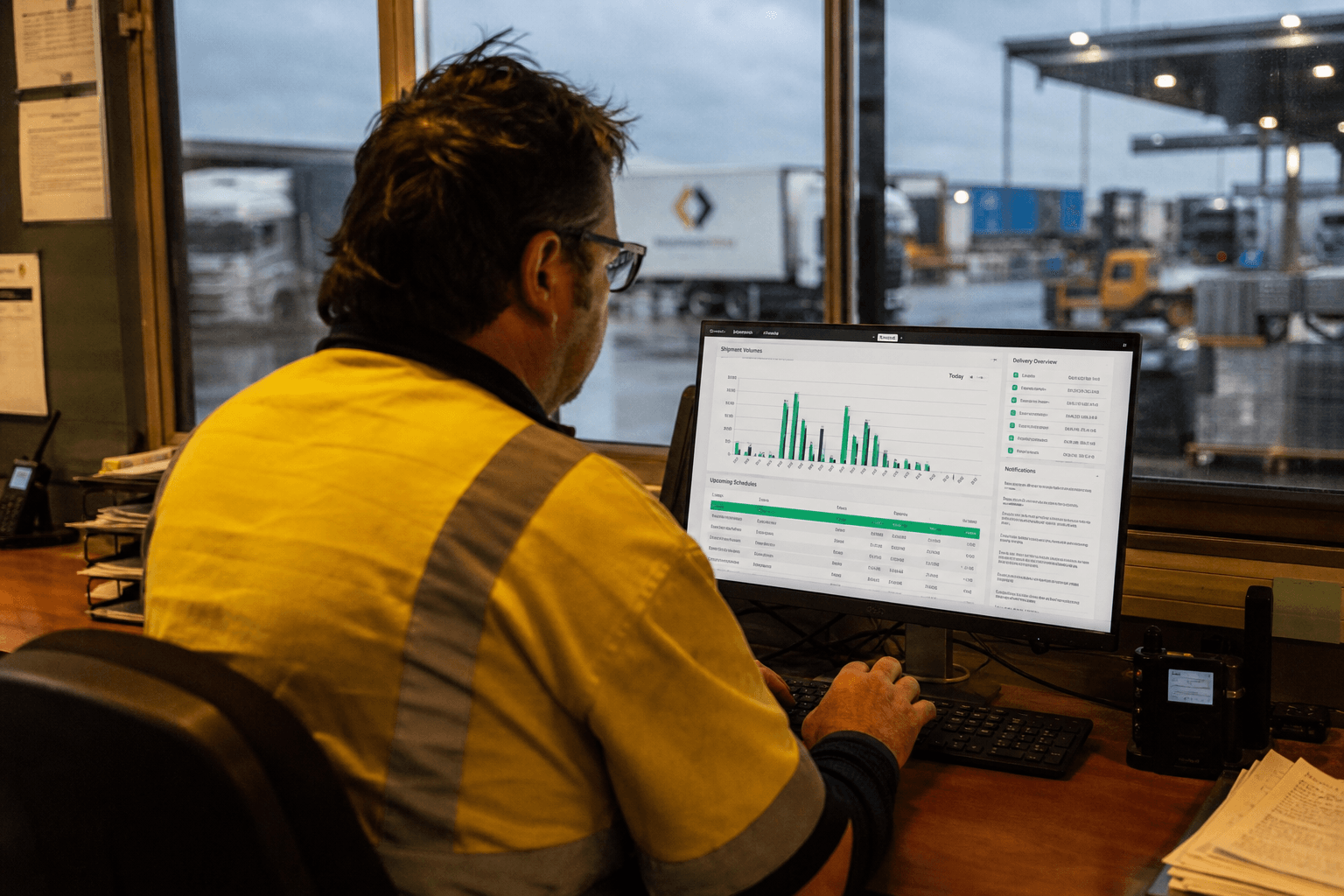
Cold Chain AI: Smart Monitoring Prevents Temperature Breaches
A single temperature breach can destroy $50,000+ in product. AI-powered cold chain monitoring predicts failures before they happen — not just logs them after the fact.
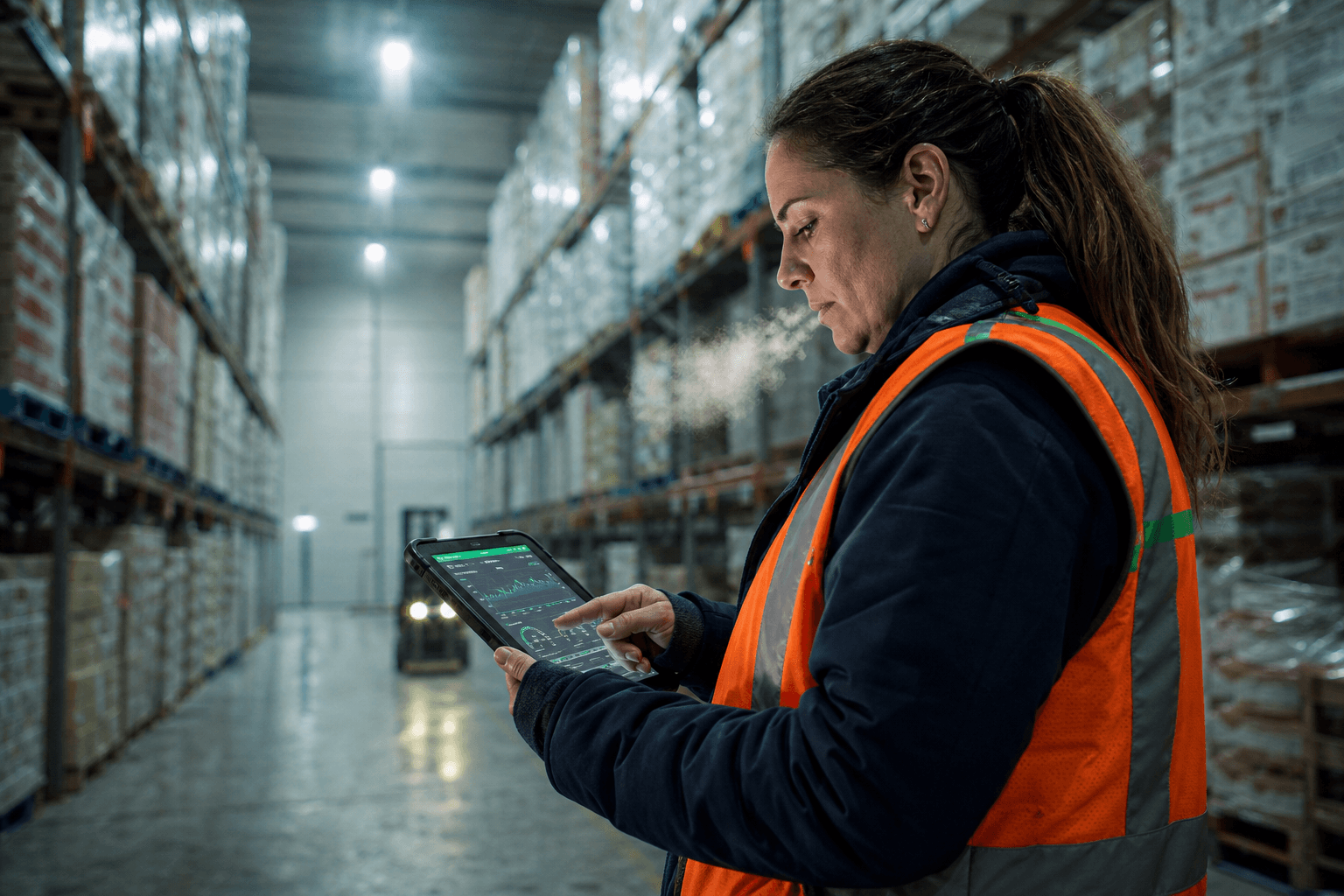
The Cost of a Temperature Breach
Cold chain logistics has zero margin for error. A single temperature excursion can destroy an entire load:
- Pharmaceuticals: $100,000+ per pallet for specialty medicines. Regulatory disposal required.
- Fresh produce: $20,000-$50,000 per truck load. Customer refusal at delivery.
- Frozen food: $10,000-$30,000 per container. Quality degradation even if refrozen.
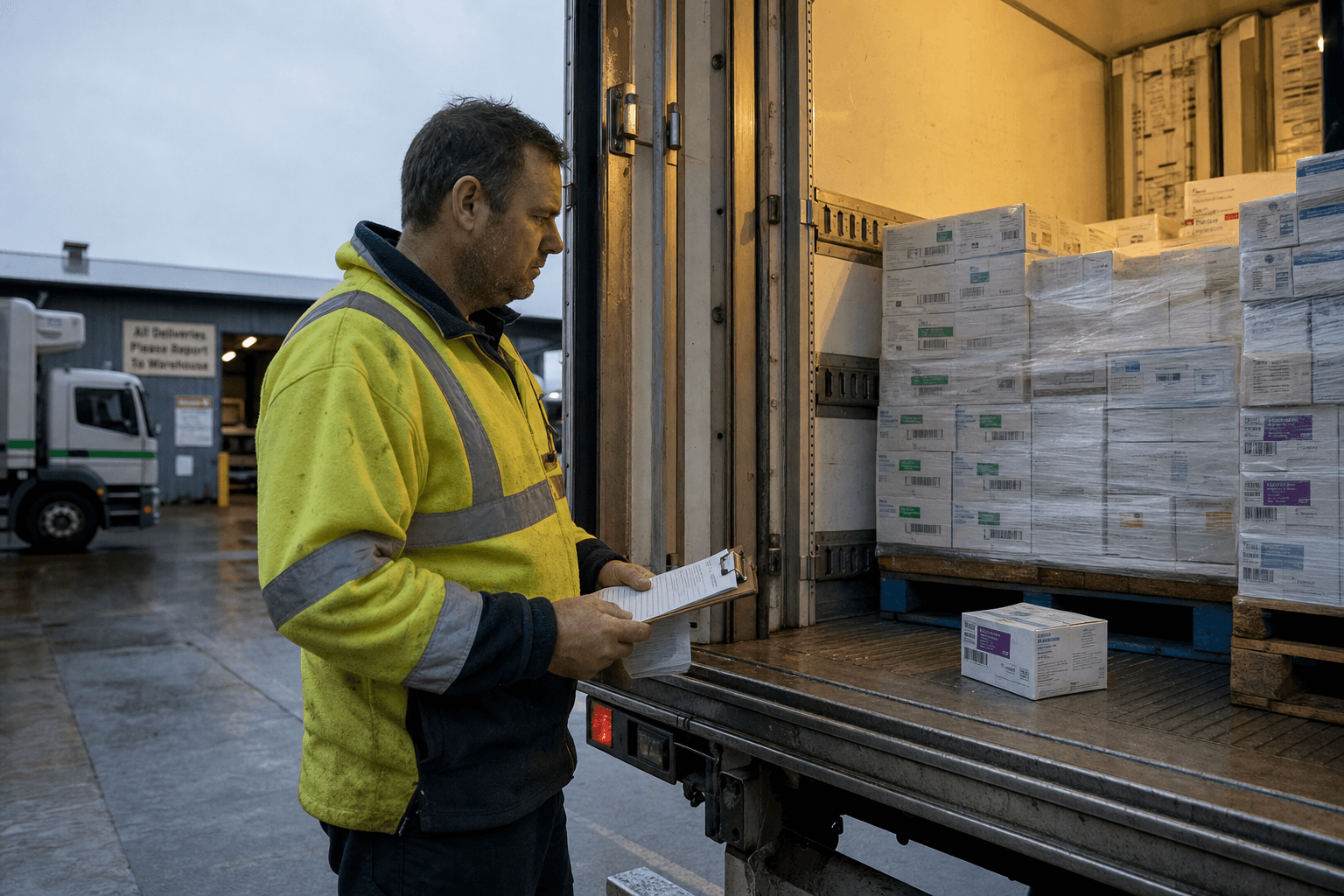
Beyond the direct product loss, temperature breaches trigger insurance claims, regulatory investigations, customer penalties, and — worst case — consumer safety incidents.
The standard approach to cold chain management is reactive: temperature loggers record data, someone checks the logs after delivery, and breaches are discovered after the damage is done.
AI-powered monitoring changes this from reactive to predictive.
From Logging to Predicting
Traditional Monitoring
Temperature sensors record readings every 5-15 minutes. Data is downloaded at the end of the trip or stored in a cloud platform. If a breach occurred, you know about it hours or days later. The product is already compromised.
AI-Powered Monitoring
The same sensors feed data in real time to an AI model that:
Detects anomalies: Not just "is it above threshold?" but "is it trending toward threshold?" A gradual 0.5°C rise per hour in a freezer unit that normally holds ±0.2°C indicates a developing problem — compressor issue, door seal failure, defrost cycle malfunction — even though the current temperature is still within range.
Predicts failures: By correlating temperature patterns with equipment performance data (compressor run time, power consumption, defrost cycles), the system predicts equipment failures 2-24 hours before they cause a temperature breach. That's the difference between a $200 repair and a $50,000 product loss.
Contextual alerting: Not every temperature reading outside normal range is a problem. Opening a cool room door causes a temporary spike that recovers in minutes. The AI system understands context — it alerts on genuine anomalies, not false alarms. This reduces alert fatigue from hundreds of notifications per day to a handful of actionable alerts.
How It Works in Practice
Warehouse Cold Storage
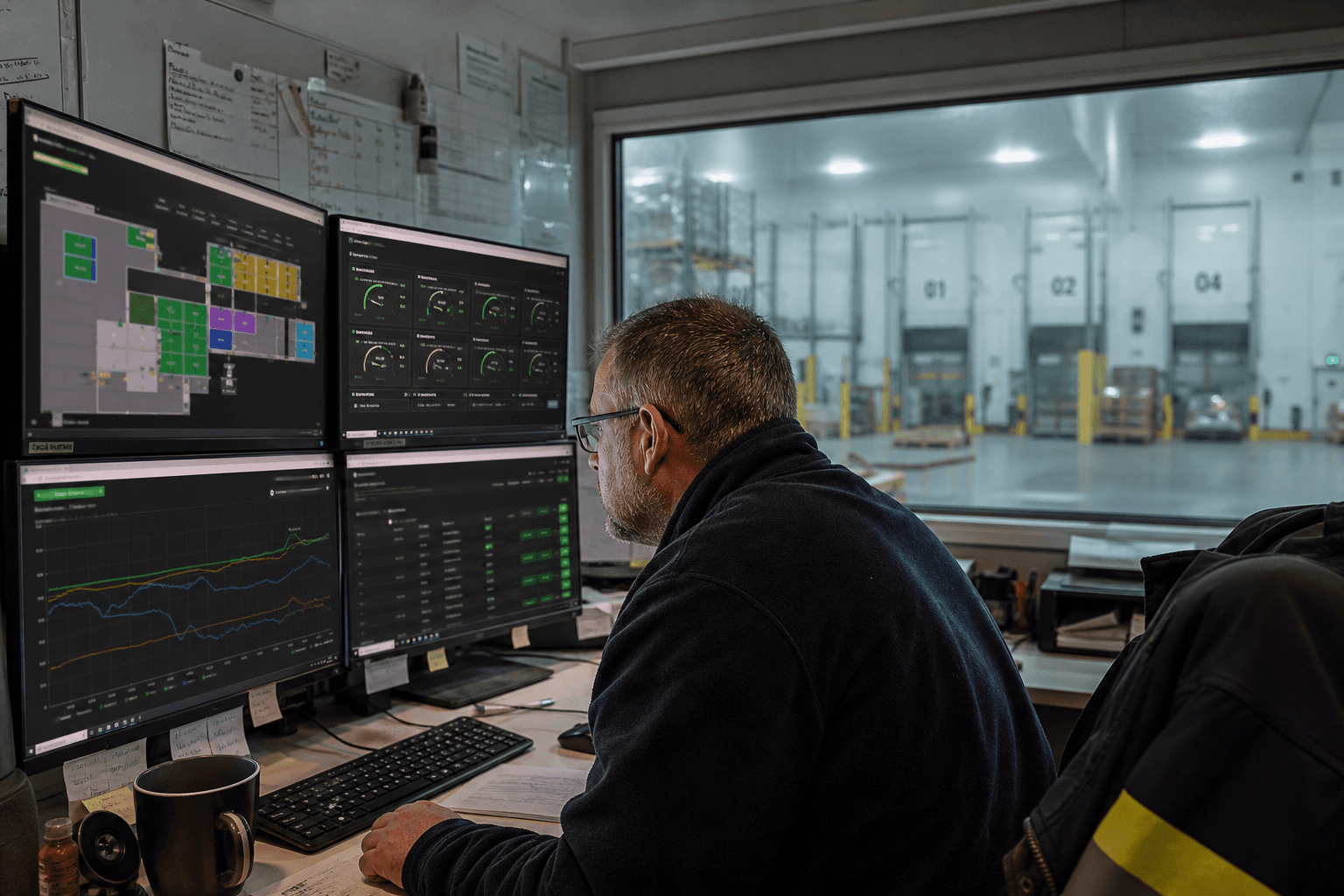
A cold storage facility with 12 chambers (ranging from -25°C to +4°C) generates thousands of temperature readings per day. Traditional monitoring produces a daily compliance report. AI monitoring adds:
- Equipment health scoring: Each refrigeration unit gets a real-time health score based on performance patterns. Score drops below threshold → maintenance alert.
- Energy optimisation: AI adjusts defrost cycles and compressor scheduling to minimise energy consumption while maintaining temperature compliance. Typical energy savings: 10-15%.
- Door management: Correlates temperature spikes with door opening events (from door sensors or inferred from temperature patterns). Identifies excessive or prolonged door openings.
- Predictive maintenance: Compressor vibration patterns, power draw trends, and refrigerant pressure patterns predict failures 24-72 hours ahead.
Transport Cold Chain
In-transit monitoring is harder: connectivity is intermittent, environmental conditions vary, and the vehicle is moving. AI monitoring for transport adds:
- Route-aware thresholds: Expected temperature profiles differ between a Melbourne-Sydney overnight run and a Melbourne CBD multi-drop. The system adjusts thresholds to the route context.
- Pre-cool verification: Confirms the trailer reached target temperature before loading. Prevents the common error of loading product into a unit that hasn't pre-cooled adequately.
- Multi-zone tracking: For multi-temperature trailers, monitors each zone independently and detects thermal transfer between zones.
- ETA-based risk assessment: If a delivery is delayed and the remaining cold chain duration is marginal, the system alerts the operations team to prioritise that delivery.
A Real Example
A cold chain operator running 40 refrigerated vehicles and 3 cold storage facilities:
Before AI monitoring:
- 4-6 temperature breach incidents per quarter
- Average product loss per incident: $35,000
- Quarterly loss: $140,000-$210,000
- Compliance: 94% (customer SLA: 98%)
After AI monitoring:
- 0-1 breach incidents per quarter (prevented by predictive alerts)
- Annual reduction in product loss: $500,000+
- Compliance: 99.2%
- Energy cost reduction: 12% ($45,000/year across all sites)
- Maintenance cost reduction: 20% (fewer emergency repairs)
The system paid for itself in the first month.
Implementation
What You Need
- Temperature sensors: You probably already have them. Most modern sensors can transmit data via cellular, Wi-Fi, or Bluetooth.
- Connectivity: Real-time data transmission from sensors to the AI platform. For warehouses, this is straightforward (Wi-Fi). For vehicles, cellular with offline buffering.
- Historical data: 3-6 months of temperature logs and maintenance records for the AI to learn your facility's normal patterns.
Timeline
- Weeks 1-2: Sensor audit and connectivity setup
- Weeks 3-4: Data integration and baseline establishment
- Weeks 5-8: AI model training on your facility's patterns
- Weeks 9-10: Parallel running (AI alerts alongside existing monitoring)
- Week 11+: Full deployment with predictive alerting
Cost
$60,000-$120,000 for implementation (depending on number of sites and vehicles). Annual running cost: $15,000-$30,000. Typical payback: 2-4 months.
Modern businesses are integrating AI-powered solutions to transform their cold chain operations from reactive to predictive. Our AI readiness assessment helps companies evaluate their current monitoring systems and identify opportunities for intelligent automation that prevents costly temperature failures before they occur.
Beyond Temperature
The same AI monitoring approach extends to other cold chain parameters:
- Humidity: Critical for produce freshness and pharmaceutical storage
- CO2 and ethylene: Fruit ripening management in controlled atmosphere storage
- Door events: Security and contamination risk management
- Power supply: Generator and UPS monitoring for facilities in areas with unreliable grid power
The infrastructure you build for temperature monitoring becomes a platform for comprehensive cold chain intelligence.
Assess your cold chain monitoring opportunity →
Ready to eliminate costly temperature breaches with AI-powered monitoring? Our team specialises in implementing smart cold chain solutions that predict failures before they happen. Contact us to discuss how intelligent monitoring can protect your products and bottom line.
Zero Footprint
The Zero Footprint team — AI modernisation for Australian logistics.