Customs Pre-Clearance AI: Accelerating Border Processing
AI pre-clearance systems validate customs documentation against ABF requirements before goods arrive at Australian borders, reducing clearance delays and improving compliance accuracy. This technology integrates with the Integrated Cargo System (ICS) to automate tariff classification and trade agreement matching.
Customs Pre-Clearance AI: Accelerating Border Processing
Customs pre-clearance AI validates trade documentation and compliance requirements before goods arrive at Australian borders, reducing clearance delays and improving cargo flow efficiency.
For Australian freight forwarders and importers, border processing delays can cascade through entire supply chains. Manual customs documentation review creates bottlenecks that AI systems can eliminate by pre-validating requirements against Australian Border Force (ABF) standards.
How AI Pre-Validates Customs Documentation
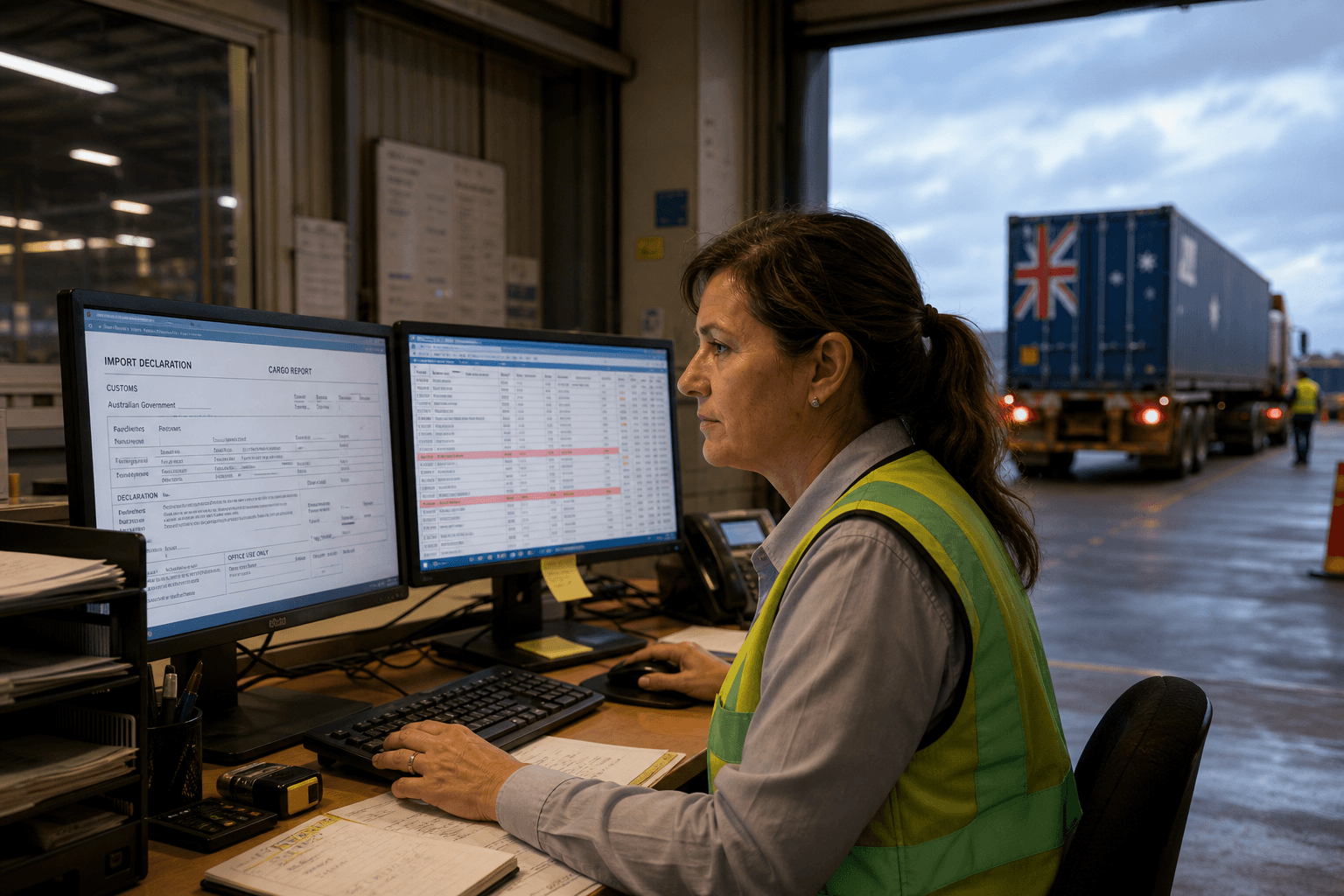
AI document intelligence systems analyse customs declarations, commercial invoices, and shipping manifests against ABF requirements before cargo reaches the border. These systems cross-reference product descriptions, values, and origins with regulatory databases to identify potential issues early.
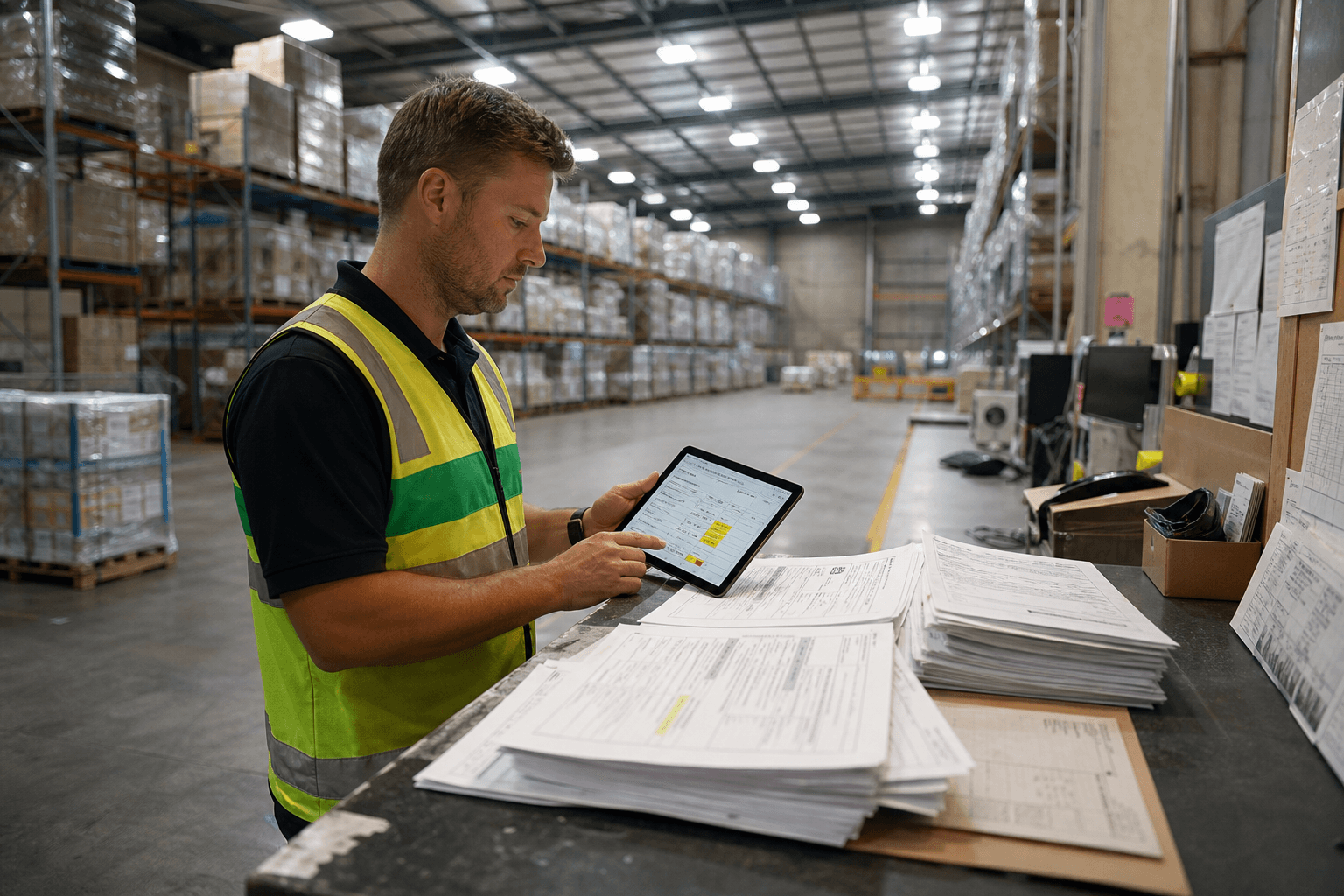
The technology processes structured data from customs forms and unstructured information from commercial documents. Natural language processing interprets product descriptions, whilst machine learning algorithms flag discrepancies between declared values and historical patterns.
Key validation areas include:
- Tariff classification accuracy
- Duty and tax calculations
- Restricted goods identification
- Documentation completeness
- Value declaration consistency
Australian Border Force Requirements and AI Integration
The ABF requires accurate customs declarations under the Customs Act 1901, with penalties for incorrect submissions. AI systems help ensure compliance by validating declarations against current regulations and trade agreements.
AI platforms integrate with the Integrated Cargo System (ICS) to submit pre-validated declarations. This integration allows for automated lodgement of customs entries with reduced manual intervention, whilst maintaining audit trails for compliance purposes.
The technology flags high-risk shipments based on:
- Country of origin risk profiles
- Importer compliance history
- Product category restrictions
- Value thresholds requiring additional scrutiny
Tariff Classification AI for Accurate HS Codes
Tariff classification AI matches product descriptions to Harmonised System (HS) codes using machine learning trained on customs databases and product catalogues. The system analyses technical specifications, materials, and intended use to determine correct classifications.
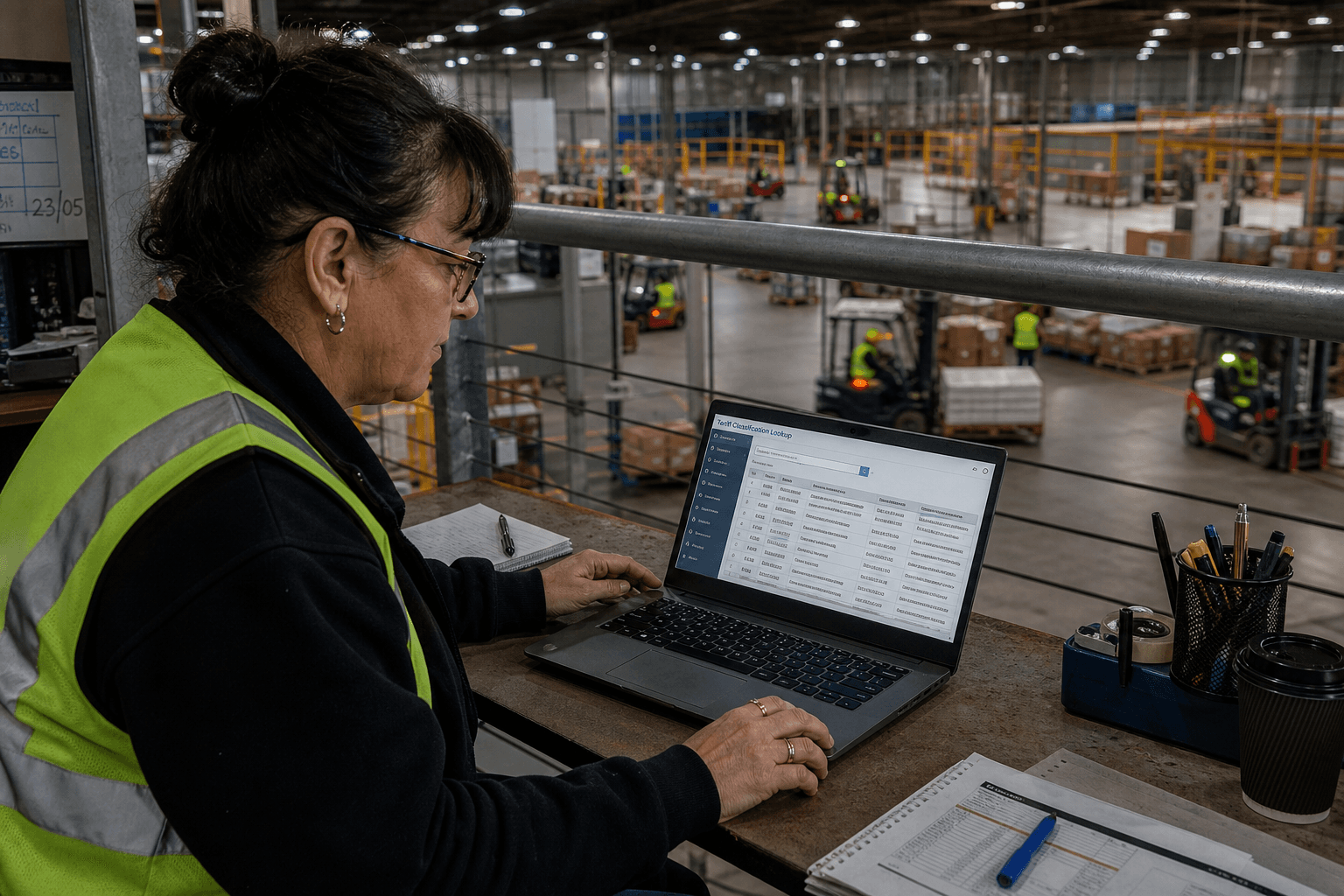
AI algorithms process product descriptions in multiple languages and formats, standardising terminology before classification. This reduces errors from inconsistent product naming and improves accuracy compared to manual lookup processes.
The technology maintains classification consistency across similar products and learns from corrections made during customs review. This creates more accurate classifications over time and reduces the risk of duty miscalculations.
Trade Agreement Rule Matching and Preferential Rates
AI systems match shipments to applicable free trade agreements (FTAs) and preferential trade schemes to optimise duty rates. The technology evaluates rules of origin requirements for agreements like CPTPP, ChAFTA, and KAFTA to determine eligibility for reduced tariffs.
Rule of origin calculations require complex analysis of manufacturing processes, material origins, and value-added thresholds. AI platforms automate these calculations by parsing certificates of origin and supplier declarations against agreement-specific criteria.
The system identifies opportunities for duty savings by:
- Comparing standard rates with preferential options
- Validating origin documentation requirements
- Flagging incomplete origin certifications
- Recommending supplier documentation improvements
Australian Integrated Cargo System (ICS) Integration
The ICS serves as Australia's primary customs processing platform, handling cargo reporting and clearance. AI pre-clearance systems integrate with ICS through established APIs and data exchange protocols.
Integration enables automated submission of Import Declarations (IDs) and Cargo Reports with pre-validated data. This reduces processing time at borders and allows ABF officers to focus on high-risk shipments requiring manual review.
Key integration capabilities include:
- Automated ID lodgement with validated data
- Real-time status updates on clearance progress
- Electronic document attachment and retrieval
- Audit trail maintenance for compliance reporting
Implementation Considerations for Logistics Operators
Successful customs pre-clearance AI implementation requires integration with existing trade management systems and customs broking processes. Organisations need to consider data quality requirements and staff training for new validation workflows.
The technology works most effectively when integrated with document intelligence platforms that can extract data from diverse commercial documents. This creates end-to-end automation from invoice processing through customs lodgement.
Implementation typically involves:
- Data mapping between internal systems and AI platforms
- Validation rule configuration for specific trade lanes
- Integration testing with ICS and ABF systems
- Staff training on exception handling and review processes
Customs pre-clearance AI represents a significant opportunity for Australian logistics operators to improve border processing efficiency whilst maintaining compliance standards. The technology transforms manual validation processes into automated systems that reduce delays and improve supply chain predictability.
If you're exploring customs documentation automation or AI readiness assessment for your logistics operations, we can help evaluate how these technologies might benefit your specific trade processes.
Zero Footprint
The Zero Footprint team — AI modernisation for Australian logistics.