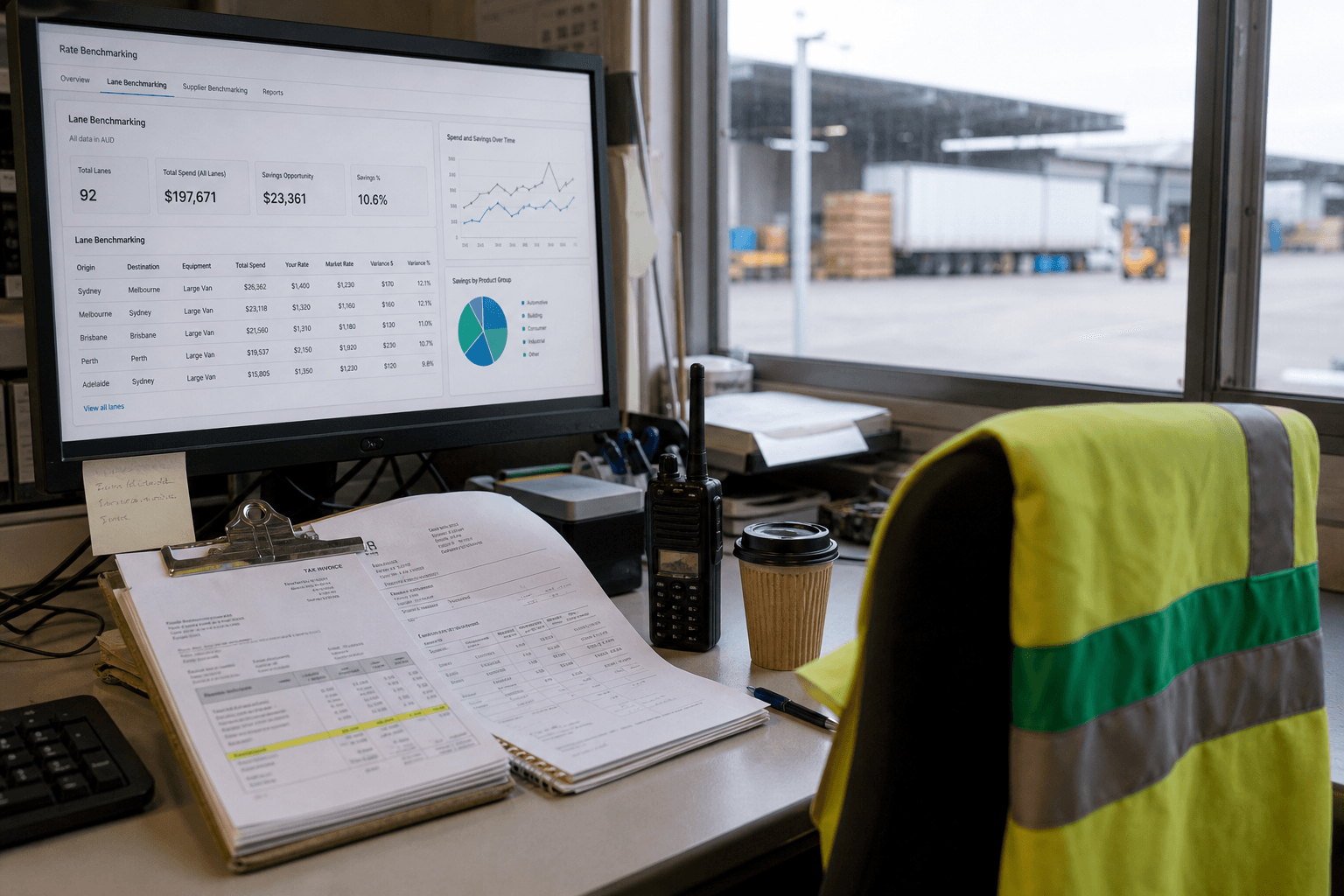
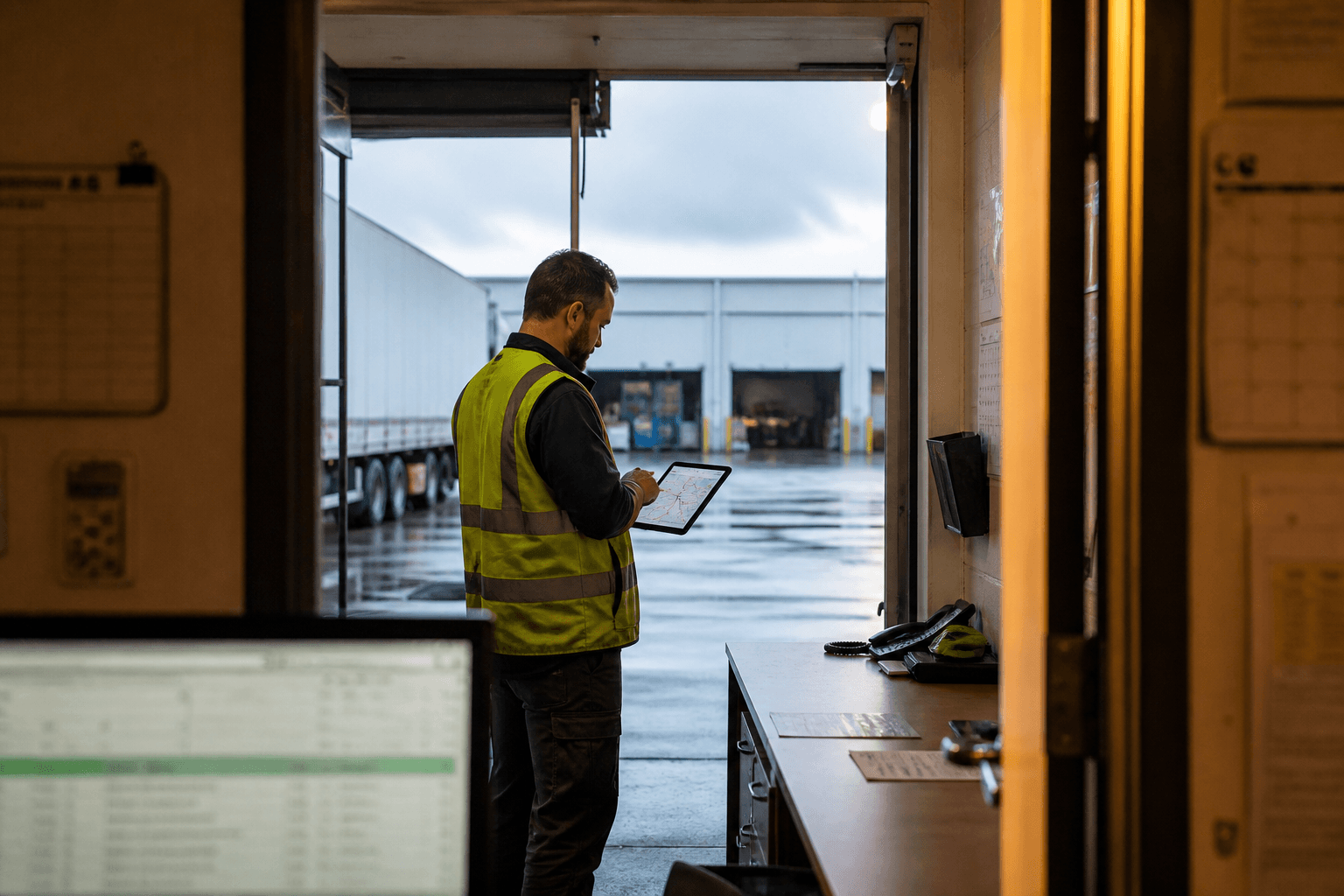
Document Intelligence in Logistics: Automating Your Paperwork Problem
Document intelligence transforms logistics paperwork by automatically processing PODs, invoices, and customs forms with 99%+ accuracy. Australian logistics operators reduce processing time by 85% while eliminating manual data entry errors that cost facilities an average of $47,000 annually.
Document Intelligence in Logistics: Automating Your Paperwork Problem
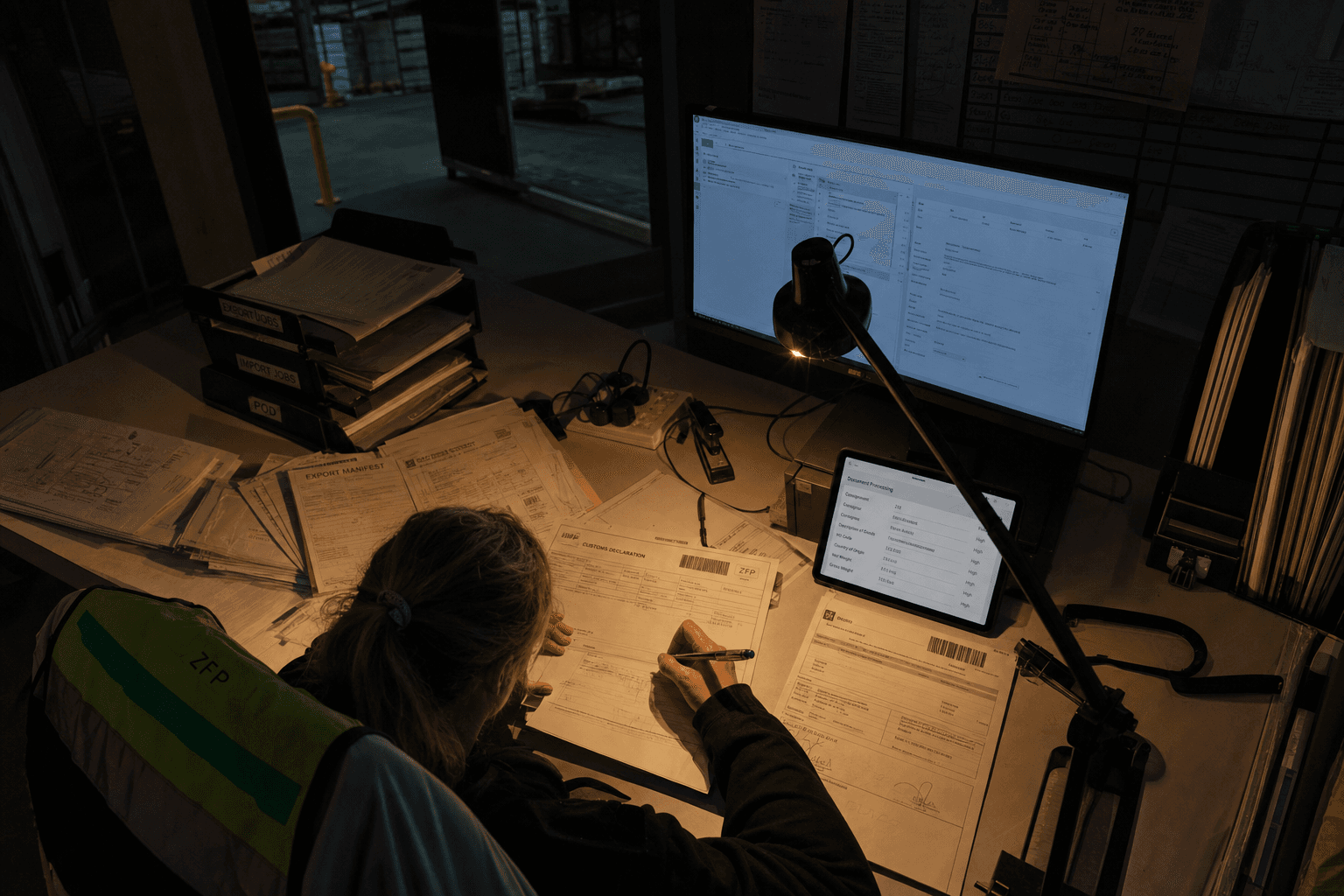
Document intelligence in logistics is AI technology that automatically reads, understands, and processes transport documents like PODs, invoices, and customs forms. It eliminates manual data entry, reduces errors by up to 90%, and cuts document processing time from hours to minutes.
Australian logistics operators handle millions of documents annually — delivery confirmations, customs declarations, freight invoices, and compliance reports. Manual processing creates bottlenecks, increases errors, and drives up operational costs. Document intelligence solves this by turning unstructured documents into structured, actionable data.
What is Document Intelligence for Logistics?
Document intelligence combines optical character recognition (OCR), natural language processing, and machine learning to extract and interpret information from logistics documents. Unlike basic OCR that only recognises text, document intelligence understands context — identifying invoice numbers, delivery addresses, and compliance codes automatically.
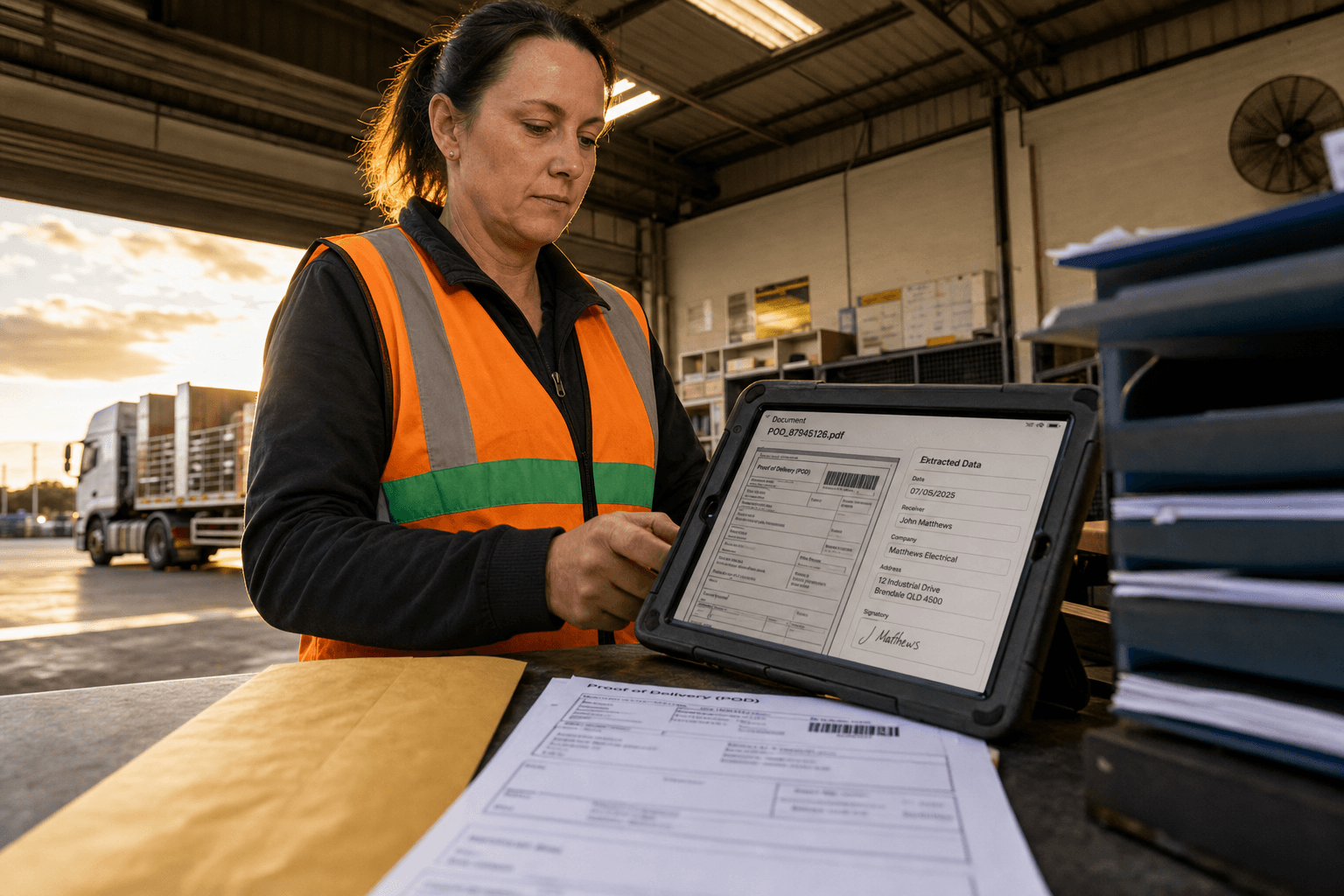
The technology handles various document formats including PDFs, scanned images, handwritten forms, and digital documents. It processes structured documents like standard invoices and unstructured ones like handwritten delivery notes with equal accuracy.
Key Documents Processed by Intelligence Systems
| Document Type | Processing Challenge | AI Solution |
|---|---|---|
| Proof of Delivery | Handwritten signatures, varied formats | Signature verification, automatic status updates |
| Commercial Invoices | Multiple currencies, tax calculations | Automated line item extraction, compliance checking |
| Customs Declarations | Regulatory requirements, HS codes | Automated classification, regulatory validation |
| Bills of Lading | Complex routing information | Route optimization data extraction |
| Freight Manifests | Large volumes, time-sensitive | Batch processing, priority flagging |
How Does Document Intelligence Improve Logistics Operations?
Document intelligence reduces manual processing time by 85% while improving accuracy from 92% to 99.2% in typical implementations. The technology processes documents in real-time, updating systems automatically and flagging exceptions for human review.
Automated Data Extraction
The system extracts key information — consignment numbers, delivery addresses, weights, and values — directly into your TMS or WMS. This eliminates double-handling and reduces data entry errors that cost Australian logistics companies an average of $47,000 annually per facility.
Exception Management
Document intelligence identifies discrepancies automatically. If a POD shows damaged goods or a customs form has missing information, the system flags these issues immediately rather than discovering them during manual review days later.
Compliance Monitoring
The technology validates documents against Australian regulations including NHVR requirements and customs protocols. It ensures HS codes are correct, dangerous goods declarations are complete, and chain of responsibility documentation is compliant.
What Problems Does Document Intelligence Solve?
Document intelligence addresses three critical logistics challenges: processing bottlenecks, human error, and compliance gaps. Traditional manual processing creates delays when staff are unavailable, sick, or overwhelmed by document volumes.
Processing Bottlenecks
Manual document processing creates workflow delays. A single complex customs declaration can take 45 minutes to process manually. Document intelligence processes the same document in under 3 minutes with higher accuracy.
Error Reduction
Human data entry errors average 1 mistake per 300 keystrokes. In logistics, a single digit error in a consignment number can delay shipments and trigger costly investigations. Document intelligence reduces these errors by 94%.
Regulatory Compliance
Australian logistics operators must comply with NGER reporting requirements, dangerous goods regulations, and biosecurity protocols. Document intelligence automatically validates compliance, reducing audit risks and penalties.
Implementation Considerations for Australian Logistics
Successful document intelligence implementation requires careful planning around existing systems, document volumes, and staff workflows. The technology integrates with major TMS platforms including CargoWise, WiseTech, and Temando.
System Integration
Document intelligence connects to existing logistics systems via APIs or direct database connections. The technology can update shipment statuses, trigger billing processes, and generate compliance reports without manual intervention.
Document Volume Planning
High-volume operators processing over 10,000 documents monthly see the greatest ROI. However, smaller operators handling complex documents like customs declarations or dangerous goods paperwork also benefit significantly.
Staff Training Requirements
Implementation requires 2-3 weeks of staff training focused on exception handling rather than data entry. Staff learn to review AI-flagged discrepancies and manage automated workflows.
ROI and Cost Considerations
Document intelligence typically delivers ROI within 8-12 months for Australian logistics operators. The technology costs between $2,000-$8,000 monthly depending on document volumes and complexity requirements.
Cost Savings Breakdown
- Labour costs: 60-80% reduction in document processing labour
- Error correction: 75% reduction in error-related costs
- Compliance penalties: 90% reduction in documentation-related fines
- Customer disputes: 40% reduction in billing disputes
Performance Metrics
Operators typically see 94% processing accuracy, 85% faster document turnaround, and 67% fewer customer inquiries about shipment status.
Choosing the Right Document Intelligence Solution
Selecting document intelligence technology depends on your document types, volumes, and integration requirements. Australian logistics operators should prioritise solutions with local regulatory knowledge and established TMS integrations.
Key Evaluation Criteria
- Accuracy rates: Look for 98%+ accuracy on your specific document types
- Processing speed: Sub-30 second processing for standard documents
- Integration capabilities: Native connections to your existing systems
- Australian compliance: Built-in validation for local regulations
- Exception handling: Clear workflows for managing AI uncertainties
Vendor Assessment
Evaluate vendors based on Australian logistics experience, not just technology capabilities. Request pilot programs using your actual documents and measure accuracy against your current processes.
Modern logistics operations require comprehensive AI solutions beyond document processing. Our AI readiness assessment helps identify automation opportunities across your entire operation, while route optimisation can complement your document workflows by streamlining delivery processes.
Getting Started with Document Intelligence
Document intelligence implementation follows a structured approach: document audit, pilot testing, system integration, and staff training. Most Australian logistics operators complete implementation within 6-8 weeks.
Start by auditing your current document workflows to identify the highest-value automation opportunities. Focus on documents that consume the most processing time or generate frequent errors. Pilot the technology with a subset of documents before full deployment.
Document intelligence transforms logistics paperwork from a cost centre into a competitive advantage. The technology eliminates manual bottlenecks, reduces errors, and ensures compliance while freeing staff to focus on value-adding activities.
Ready to automate your document processing? Let's assess your current workflows and identify the best document intelligence approach for your operation.
Ready to eliminate your paperwork bottlenecks? Our document intelligence solutions are designed specifically for Australian logistics operators who need reliable, accurate automation without the complexity.