Doubling Warehouse Throughput Without Doubling Headcount
Your warehouse is at capacity but adding more people isn't the answer. Here's how AI-driven optimisation, better slotting, and smarter scheduling can double throughput with the team you have.
The Capacity Wall
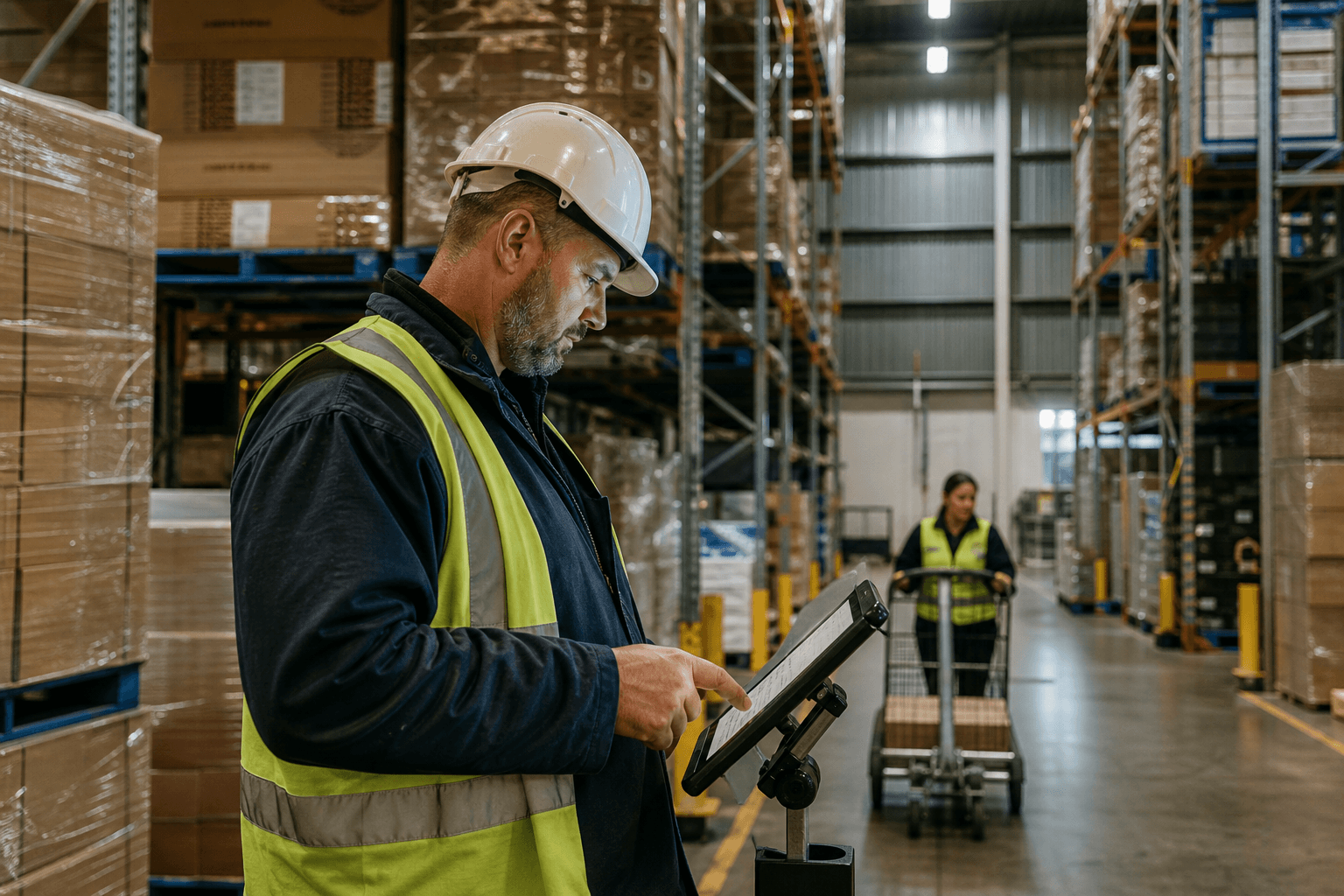
Your warehouse is running at capacity. Orders are up 30% year-on-year. The operations manager is asking for more headcount. The finance team is asking why labour costs keep climbing. And somewhere in the middle, you're wondering: is there a better way?
There usually is.
Most warehouses operate at 40-60% of their theoretical capacity. Not because people aren't working hard — they are — but because the systems, layouts, and processes were designed for a different volume and a different order profile. The gap between actual throughput and potential throughput is where AI makes the biggest difference.
Where the Capacity Hides
Wasted Motion (30-40% of picker time)
In a standard warehouse, pickers spend more time walking than picking. Studies consistently show 50-60% of picker time is travel time. AI pick path optimisation reduces this by 15-25% — which means 15-25% more productive time per picker, per shift.
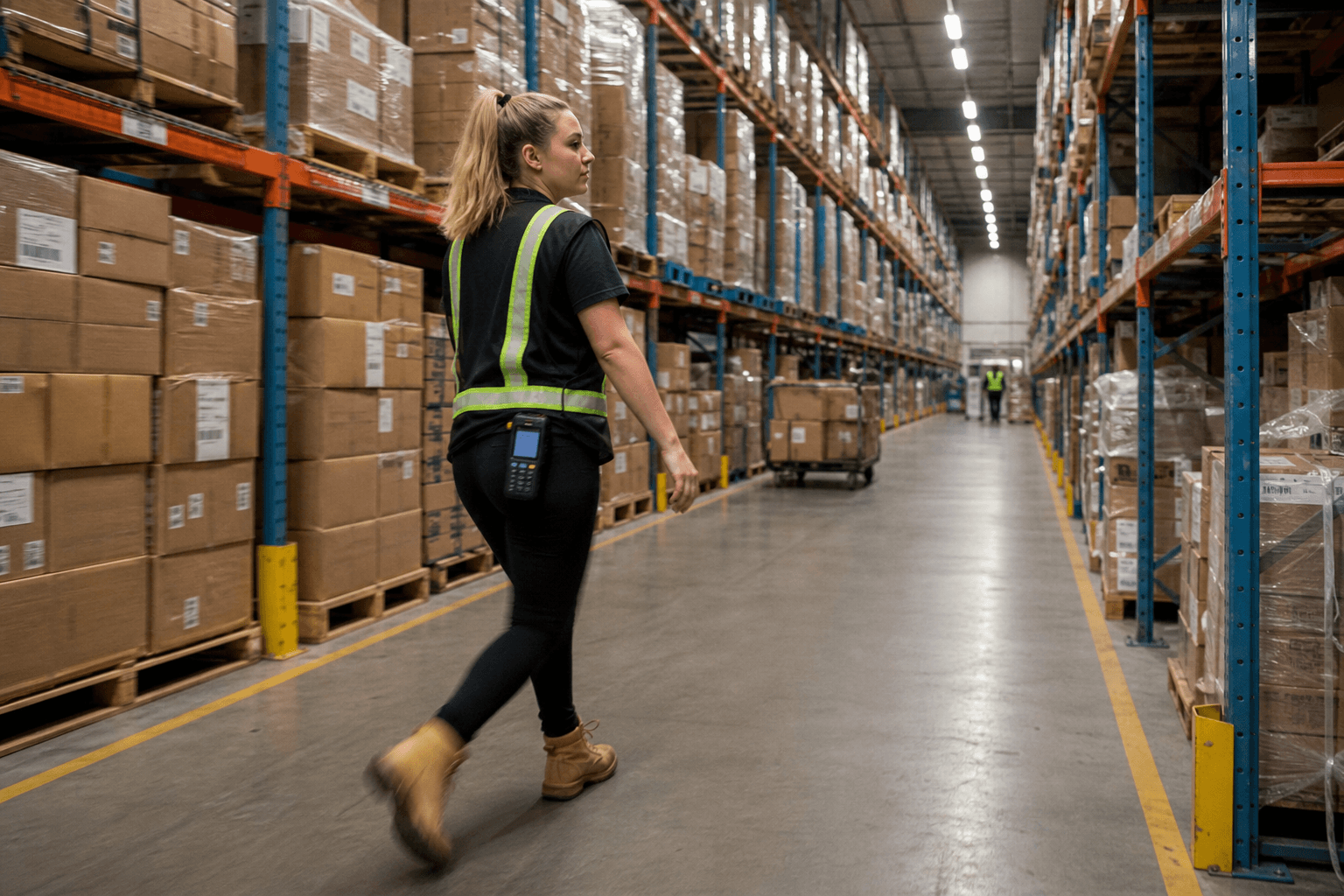
For a warehouse with 20 pickers per shift, a 20% reduction in travel time is equivalent to adding 4 pickers — without hiring anyone.
Suboptimal Layout (15-25% throughput loss)
Fast-moving SKUs in hard-to-reach locations. Frequently co-ordered items on opposite sides of the warehouse. Seasonal stock taking up prime pick faces in the off-season. AI-driven slotting analysis fixes these issues based on actual pick data, not assumptions.
Labour Mismatch (10-20% of labour cost)
Fixed shift schedules don't match variable demand. Monday morning is understaffed. Wednesday afternoon is overstaffed. AI labour planning matches staffing to expected demand by hour, reducing both overtime and idle time.
Process Bottlenecks (Variable)
Receiving bottlenecks, packing bottlenecks, shipping bottlenecks. These shift as volume changes and often aren't where you think they are. Data analysis identifies the actual constraint — which is often different from what the team believes.
The Playbook
Phase 1: Measure (Weeks 1-3)
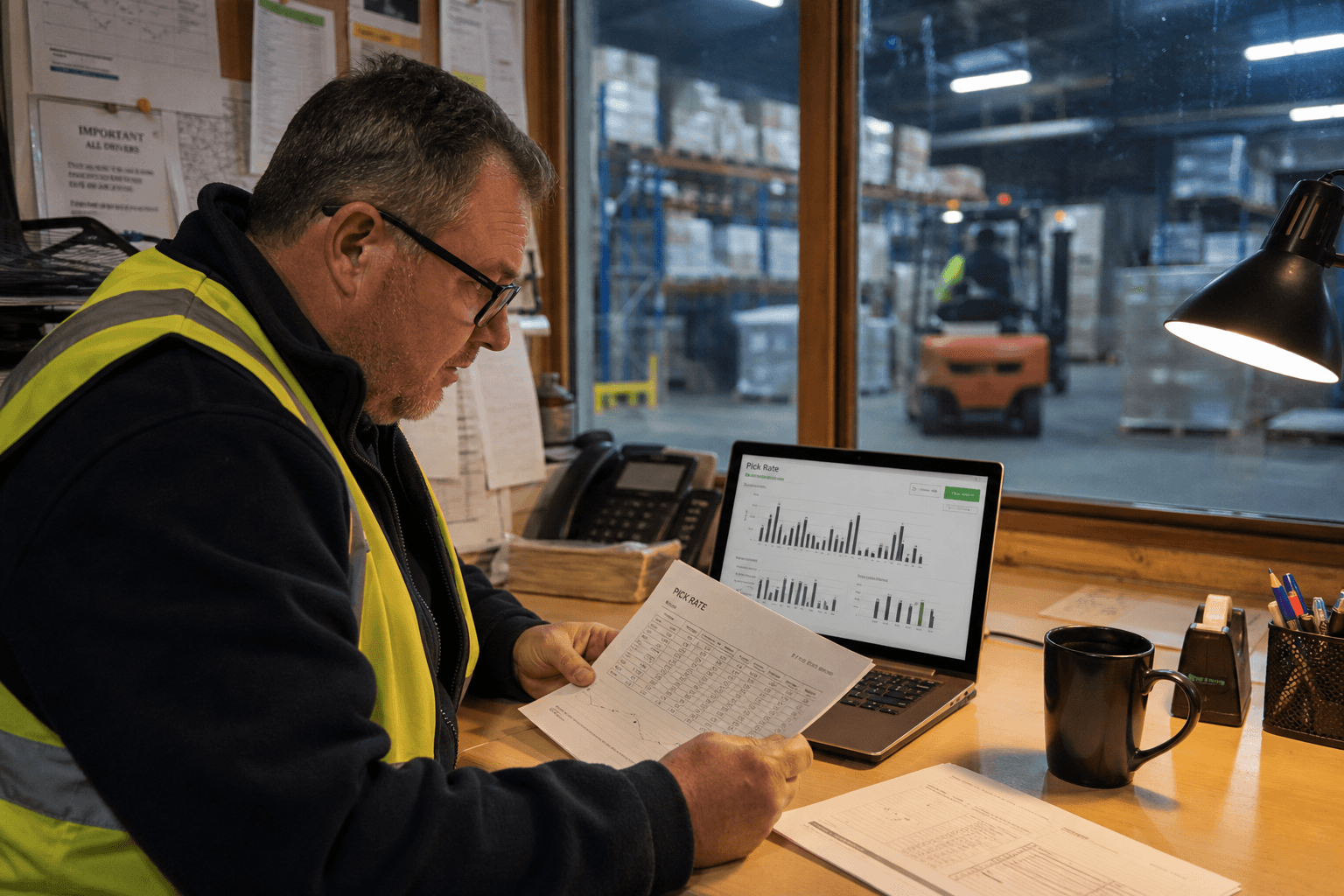
You can't optimise what you don't measure. Before changing anything, establish baselines:
- Picks per person per hour (by zone, shift, and day of week)
- Order cycle time (order received → shipped)
- Travel time vs productive time (if you have scan data or WMS timestamps)
- Error rates (mispicks, short ships, damage)
- Labour utilisation (productive hours / paid hours)
Most WMS systems have this data buried in their reporting. If yours doesn't, a 2-week time study with sampling gives you enough to work with.
Phase 2: Quick Wins (Weeks 4-8)
Pick path optimisation: Change the sequence in which pickers visit locations. This is the fastest win — it's a software change, not a physical change. Expected improvement: 15-20% reduction in travel time.
Batch and wave optimisation: Group orders into waves that maximise pick density. Instead of picking one order at a time across the whole warehouse, pick 10 orders in the same zone simultaneously. Expected improvement: 20-30% more picks per wave.
Labour schedule adjustment: Shift start/end times, break scheduling, and casual staff allocation based on demand patterns. Expected improvement: 10-15% reduction in overtime and idle time.
Phase 3: Layout Optimisation (Weeks 8-14)
AI-driven slotting: Reposition SKUs based on pick frequency, velocity, and co-order patterns. Fast movers go to ergonomic golden zones (waist height, close to packing). Slow movers go high or to overflow. This requires a weekend reorganisation, but the productivity gain is permanent.
Expected improvement: 15-25% increase in picks per hour.
Zone reconfiguration: If your warehouse has fixed zones that were designed for a different product mix, AI analysis may recommend zone boundary changes. This is a bigger project but can unlock significant capacity.
Phase 4: Process Automation (Weeks 12-20)
Receiving automation: Barcode/RFID scan at dock door → automated putaway instruction → system-directed storage. Eliminates the receiving-to-available delay.
Packing automation: System-suggested box size, automated label generation, integrated weight check. Reduces pack time by 30-40%.
Shipping automation: Automated carrier selection based on service level, cost, and capacity. Manifesting and label generation without manual intervention.
The Math
For a warehouse currently processing 5,000 orders per day with 60 staff:
| Optimisation | Throughput Gain | Equivalent Staff |
|---|---|---|
| Pick path optimisation | +18% | +11 staff equivalent |
| Batch/wave optimisation | +25% | +15 staff equivalent |
| Slotting optimisation | +20% | +12 staff equivalent |
| Labour scheduling | +12% | +7 staff equivalent |
| Compounded effect | ~100% | ~60 staff equivalent |
The effects don't simply add — they compound. Better slotting makes pick paths shorter. Better batching makes labour scheduling more efficient. Better scheduling makes the whole operation more consistent.
Result: 10,000 orders per day with the same 60 staff — or more realistically, 8,000-9,000 orders per day with some investment in process automation to eliminate bottlenecks.
What It Doesn't Require
- New racking: Your existing infrastructure is fine. AI works with your current layout and improves how you use it.
- Robots: Autonomous mobile robots are great but they're a $500K+ investment with long lead times. Start with optimising your human pickers first.
- WMS replacement: Most optimisations work alongside your existing WMS. You might need to change how it sequences picks, but you don't need a new system.
- More space: If your warehouse is "full," it's usually full of slow-moving inventory in the wrong locations. Optimisation often recovers 15-20% of usable space.
Many of our clients have transformed their warehouse operations through AI readiness assessments that identify the biggest bottlenecks in their current systems. For businesses running legacy warehouse management systems, our legacy modernisation services can integrate modern AI-driven optimisation tools without disrupting daily operations.
Getting Started
Start with measurement. Two weeks of data collection and analysis will tell you where your biggest capacity gaps are. Then prioritise:
- If pickers are your constraint: Pick path and batch optimisation first
- If layout is your constraint: Slotting analysis first
- If labour cost is your constraint: Scheduling optimisation first
- If you don't know: Start with measurement
The goal isn't to work harder. It's to work smarter — and AI is very good at finding the "smarter" that humans can't see in the data.
Get a warehouse capacity assessment →
Ready to unlock your warehouse's hidden capacity? Our team has helped dozens of Australian businesses double their throughput without adding headcount. Get in touch to discuss how AI-driven optimisation can transform your operations.
Zero Footprint
The Zero Footprint team — AI modernisation for Australian logistics.