Hazmat Routing Compliance Automation with AI for Australian Logistics
AI systems automate hazmat routing compliance by applying ADG Code restrictions, tunnel categories, and population density rules to create compliant dangerous goods routes. These systems integrate with Australian transport authority databases to ensure regulatory compliance while optimising operational efficiency.
Hazmat Routing Compliance Automation with AI for Australian Logistics
Hazmat routing compliance automation uses AI to ensure dangerous goods transport meets Australian regulations while optimising delivery efficiency. AI systems automatically apply ADG Code restrictions, tunnel categories, and population density rules to create compliant routes that reduce manual oversight and compliance risk.
For Australian logistics operators handling dangerous goods, manual route compliance checking creates bottlenecks and increases the risk of regulatory violations. AI-powered hazmat routing systems automate these complex compliance requirements while maintaining operational efficiency.
Understanding Australian Hazmat Routing Requirements
Australian hazmat transport operates under the Australian Dangerous Goods (ADG) Code, which defines specific routing restrictions for different classes of dangerous goods. These restrictions vary by state and territory, creating a complex compliance landscape for multi-jurisdictional operators.
Key compliance elements include UN classification requirements, packaging group restrictions, quantity thresholds, and time-of-day limitations. Each dangerous goods class—from explosives to corrosive substances—has specific routing constraints that must be considered during dispatch planning.
State transport authorities maintain databases of restricted routes, tunnel categories, and emergency response protocols. Manual compliance checking against these requirements is time-intensive and prone to human error, particularly for operators managing multiple dangerous goods classes across different jurisdictions.
AI-Powered ADG Code Route Restrictions
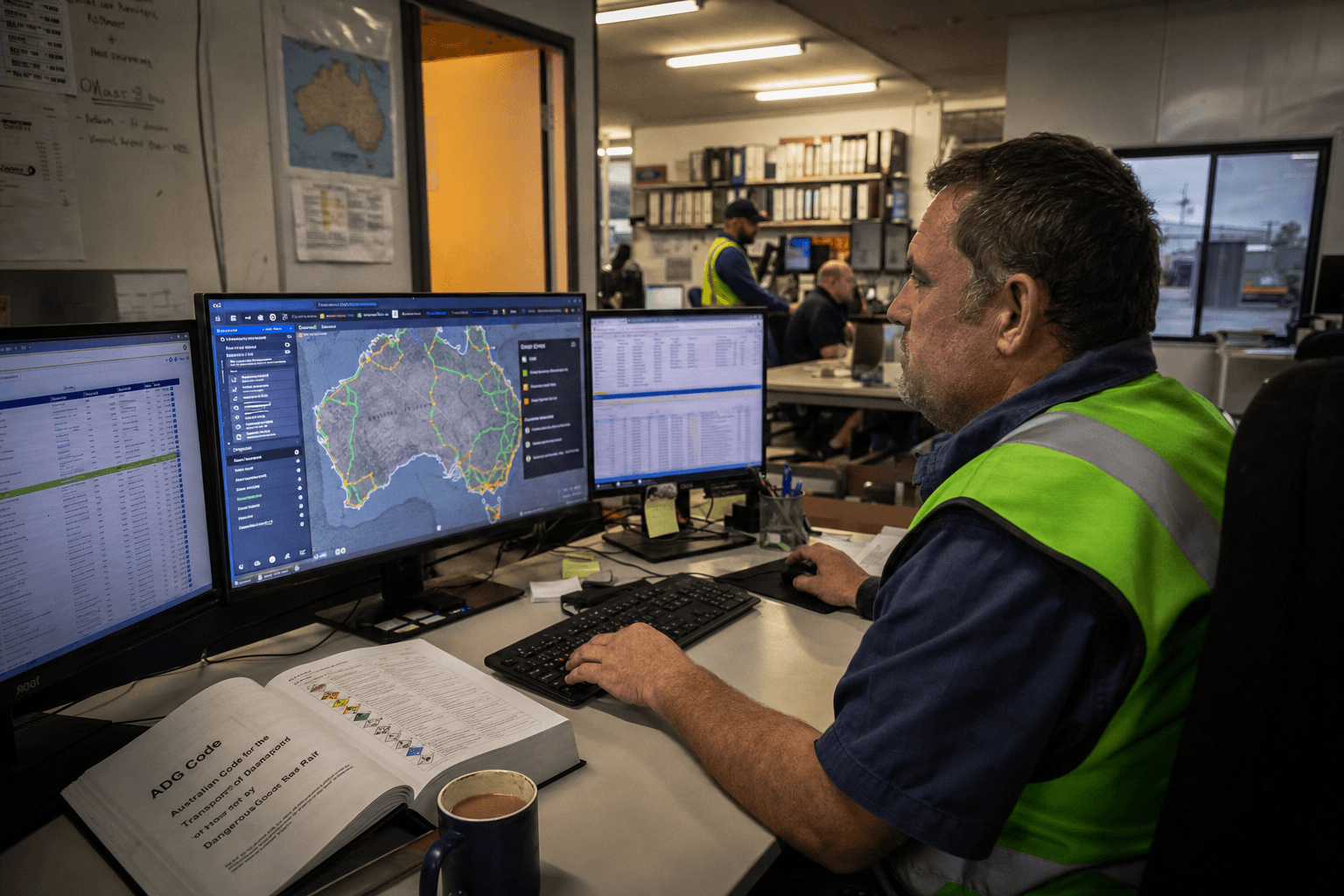
AI systems automatically apply ADG Code routing restrictions by cross-referencing shipment classifications with regulated route databases. The system identifies applicable restrictions based on UN numbers, packaging groups, and transport quantities, then generates compliant routing options.
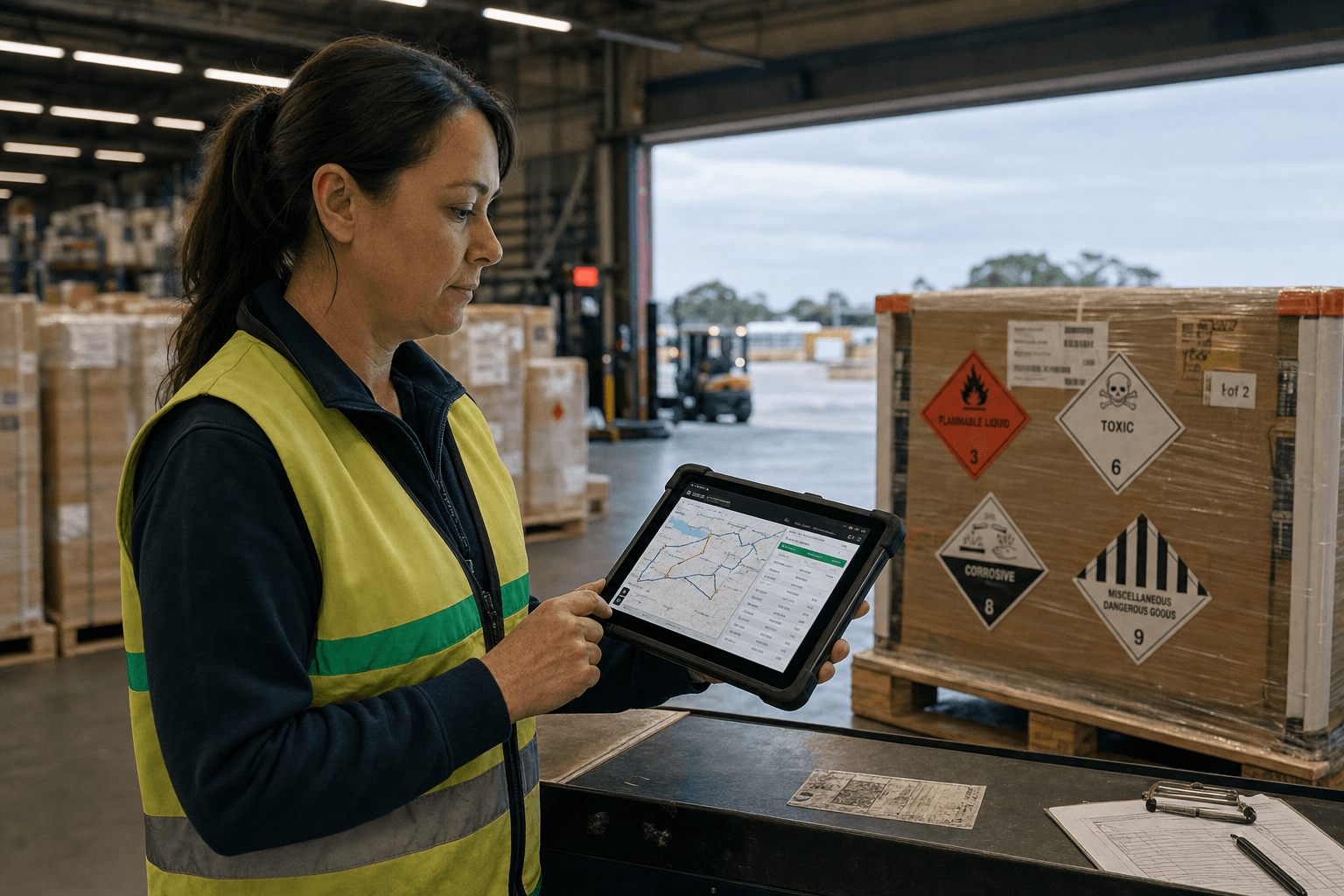
Automated ADG compliance checking eliminates manual lookup of dangerous goods classifications and route restrictions. AI algorithms process multiple constraint layers simultaneously—including class-specific restrictions, quantity thresholds, and jurisdictional variations—to identify viable routing options.
Integration with Australian transport authority databases ensures routing decisions reflect current restrictions and temporary route closures. The system updates routing parameters automatically when authorities publish new restrictions or modify existing ones, maintaining compliance without manual intervention.
Tunnel Category Management and Population Density Avoidance
Australian tunnel categories (A through E) restrict different dangerous goods classes based on fire and explosion risk assessments. AI routing systems automatically identify tunnel categories along potential routes and exclude non-compliant options based on shipment classifications.
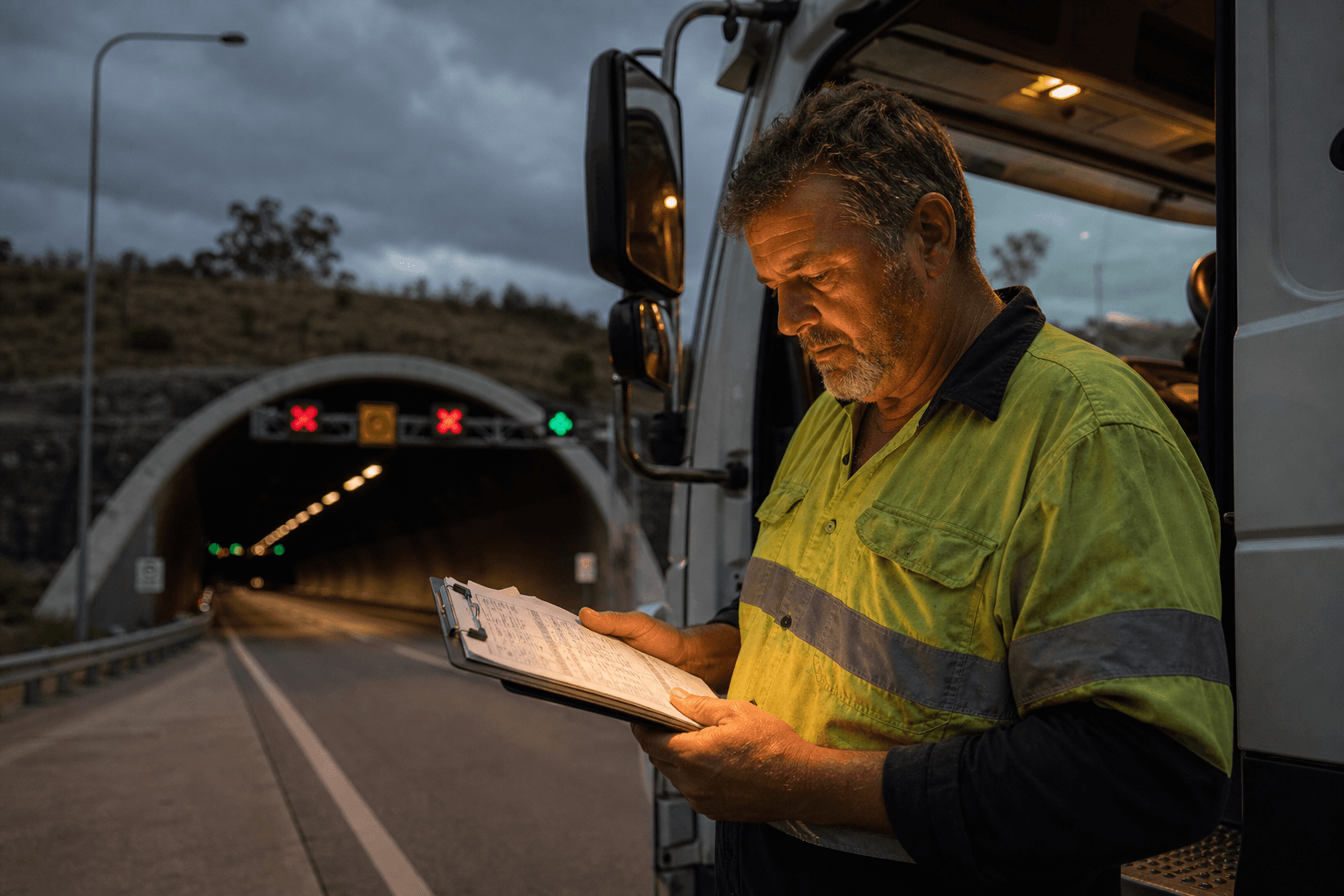
Population density avoidance requirements mandate alternative routing for certain dangerous goods through built-up areas during peak hours. AI systems use census data and real-time population density mapping to identify restricted zones and calculate compliant alternative routes.
The system balances compliance requirements with operational efficiency by evaluating multiple routing scenarios. When population density restrictions apply, AI algorithms calculate detour costs and delivery time impacts to recommend the most efficient compliant route option.
Emergency Response Planning Integration
AI hazmat routing systems incorporate emergency response planning by identifying emergency services locations along planned routes. The system maps fire stations, hospitals, and hazmat response teams relative to routing options, ensuring emergency response capability throughout the journey.
Automated emergency contact generation provides dispatchers with location-specific emergency response information for each route segment. This includes relevant authority contact details, nearest emergency services, and class-specific response protocols for different dangerous goods types.
Route deviation protocols automatically trigger when emergency situations require alternative routing. The AI system recalculates compliant alternatives in real-time while maintaining emergency response coverage and regulatory compliance.
Integration with State Transport Authority Systems
API integration with state transport authority systems enables real-time access to current routing restrictions and permit requirements. Victorian, NSW, and Queensland transport authorities provide digital access to hazmat routing databases, allowing AI systems to verify compliance against current regulations.
Automated permit application processes streamline regulatory approval for restricted routes when alternative options are unavailable. The AI system identifies permit requirements based on route analysis and generates application documentation with relevant shipment and routing details.
Cross-jurisdictional compliance management handles varying state requirements for interstate dangerous goods movements. The system applies jurisdiction-specific restrictions at border crossings and maintains compliance documentation for multi-state journeys.
Implementation Considerations for Australian Operators
Hazmat routing AI implementation requires integration with existing transport management systems and dangerous goods classification databases. Operators need reliable connectivity to transport authority systems and regular database updates to maintain compliance accuracy.
Staff training covers AI system operation and override procedures for exceptional circumstances. While AI handles routine compliance checking, operators retain decision-making authority for complex scenarios requiring human judgment or emergency response.
Compliance auditing capabilities provide documentation trails for regulatory inspections and insurance requirements. The system maintains detailed records of routing decisions, compliance checks, and emergency response planning for each dangerous goods shipment.
Measuring Hazmat Compliance Automation Success
Compliance rate improvements measure the reduction in routing violations and regulatory incidents following AI implementation. Operators typically see decreased compliance risks and fewer manual intervention requirements for routine dangerous goods shipments.
Operational efficiency gains include reduced dispatch planning time and faster route approval processes. Automated compliance checking eliminates manual lookup time while providing consistent application of complex regulatory requirements.
Risk mitigation metrics track emergency response preparedness and route safety improvements. AI routing systems enhance safety outcomes by ensuring appropriate emergency response coverage and population density compliance for dangerous goods transport.
If you're managing dangerous goods transport and need to automate hazmat routing compliance, our AI specialists can help design solutions that integrate with Australian transport authority systems while maintaining operational efficiency. We understand the complexity of ADG Code requirements and can build systems that reduce compliance risk while optimising your routing operations.
Zero Footprint
The Zero Footprint team — AI modernisation for Australian logistics.