Inventory Anomaly Detection: AI for Stock Accuracy
AI-powered inventory anomaly detection identifies discrepancies between recorded and actual stock levels by analysing transaction patterns and movement history. This technology helps Australian logistics operators catch phantom stock, shrinkage, and data entry errors before they impact customer fulfilment.

Inventory Anomaly Detection: AI for Stock Accuracy
Inventory anomaly detection using AI identifies discrepancies between recorded and actual stock levels by analysing patterns in transaction data, cycle counts, and movement history. For Australian logistics operators managing thousands of SKUs across multiple locations, this technology helps catch phantom stock, systematic shrinkage, and data entry errors before they impact customer fulfilment.
Manual inventory reconciliation becomes unmanageable at scale. AI-powered anomaly detection provides continuous monitoring that flags unusual patterns — from missing pallets to systematic count discrepancies — allowing teams to investigate and resolve issues quickly.
How AI Detects Inventory Discrepancies
AI inventory systems use statistical analysis and machine learning to identify patterns that indicate potential stock issues. The technology compares expected inventory movements against actual recorded transactions, flagging deviations that exceed normal operational variance.
The system learns normal patterns for each SKU, location, and time period. When actual counts deviate significantly from expected levels — accounting for receipts, shipments, and historical variance — the AI flags these as potential anomalies requiring investigation.
Key detection methods include:
- Statistical process control: Monitors inventory levels against expected ranges based on transaction history
- Pattern recognition: Identifies unusual movement patterns that may indicate systematic issues
- Comparative analysis: Compares similar SKUs or locations to identify outliers
- Temporal analysis: Detects timing-based anomalies, such as stock appearing or disappearing outside normal operating hours
Common Inventory Anomalies AI Can Detect
Phantom Stock Issues

Phantom stock occurs when systems show inventory that doesn't physically exist. AI detects these issues by identifying SKUs with consistent negative pick variances or locations where physical counts repeatedly fall short of system records.
The technology flags items with unusual allocation patterns — such as products that system records suggest are available but consistently fail to fulfil orders, indicating the stock may not actually exist in the stated location.
Cycle Count Discrepancies
AI analyses cycle count results to identify systematic counting errors or locations with persistent accuracy issues. Rather than treating each discrepancy as isolated, the system identifies patterns that suggest underlying problems.
Industry benchmarks suggest that well-managed warehouses maintain cycle count accuracy above 95%, but many Australian facilities struggle with consistent accuracy due to manual processes and legacy systems.
Systematic Shrinkage Patterns
Shrinkage detection goes beyond simple variance reporting. AI identifies subtle patterns that may indicate theft, damage, or process issues — such as specific SKUs that consistently lose stock at rates exceeding normal operational variance.
The system can detect location-based patterns (certain aisles showing higher shrinkage), time-based patterns (stock disappearing during specific shifts), or product-based patterns (high-value items showing unusual loss rates).
Receiving and Put-Away Errors
AI monitors the receiving process by comparing purchase orders against actual receipts and subsequent stock movements. The system flags discrepancies between what was ordered, what was recorded as received, and what actually appears in inventory.
Common issues detected include partial receipts recorded as complete, items received but never put away, or stock placed in incorrect locations during the receiving process.
Integration with Warehouse Management Systems
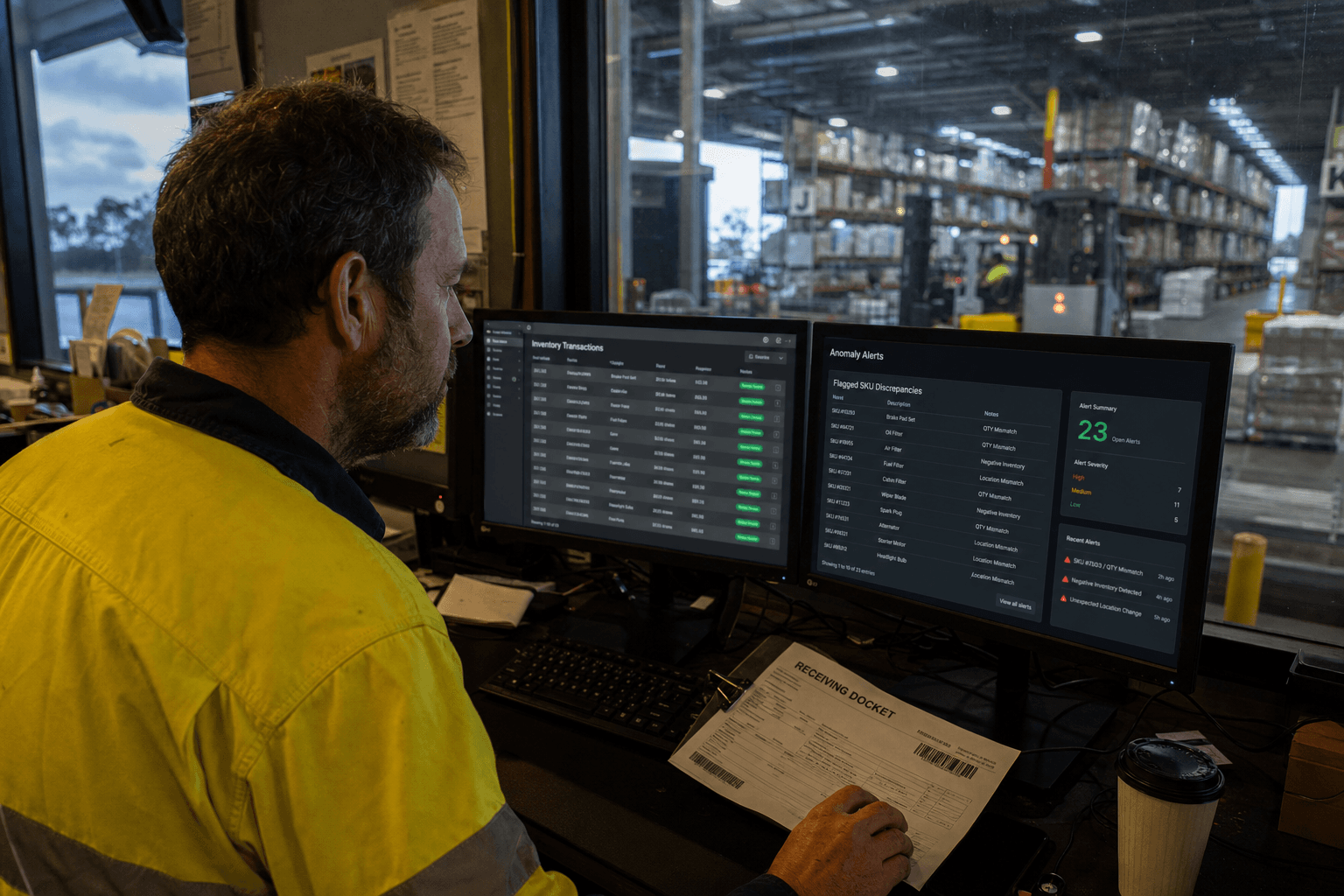
Effective inventory anomaly detection requires integration with existing WMS and ERP systems to access real-time transaction data. The AI system connects to these platforms through APIs or database connections, analysing inventory movements as they occur.
Data Integration Requirements
The system needs access to:
- Real-time inventory transaction logs
- Purchase order and receipt data
- Cycle count results and adjustment history
- Pick, pack, and ship transaction details
- Location and SKU master data
Integration typically occurs through established APIs or scheduled data extracts, depending on the capabilities of existing systems. The AI platform processes this data continuously, updating anomaly detection models as new information becomes available.
Working with Legacy Systems
Many Australian logistics operators run older WMS platforms with limited integration capabilities. AI anomaly detection systems can work with legacy infrastructure through database connections, file-based data transfers, or middleware platforms that bridge older systems with modern analytics tools.
The key is ensuring data quality and consistency across different systems, which may require data cleansing and standardisation processes before analysis can begin.
Statistical Methods for Anomaly Detection
AI inventory systems employ several statistical approaches to identify anomalies while minimising false positives. These methods must account for the natural variance in logistics operations while detecting genuine issues.
Control Chart Analysis
Statistical process control methods monitor inventory levels against expected ranges based on historical data. The system establishes upper and lower control limits for each SKU and location, flagging movements that fall outside these boundaries.
This approach accounts for seasonal variations, promotional impacts, and normal operational variance while identifying truly unusual patterns that warrant investigation.
Machine Learning Pattern Recognition
Machine learning algorithms analyse complex patterns across multiple variables — SKU characteristics, location attributes, seasonal trends, and operational patterns. These models can detect subtle anomalies that traditional rule-based systems might miss.
The algorithms continuously learn from new data, improving their ability to distinguish between normal operational variance and genuine issues requiring attention.
Implementation for Australian Operators
Implementing AI-powered inventory anomaly detection requires careful planning to ensure the system works effectively with existing processes and systems. This includes data preparation, model training, and staff training on interpreting and acting on alerts.
Starting with High-Impact Areas
Organisations typically see the most benefit by focusing initial implementation on areas with the highest impact — fast-moving SKUs, high-value items, or locations with known accuracy issues. This approach allows teams to learn the system while addressing the most critical inventory challenges.
Alert Management and Workflows
Effective anomaly detection requires clear workflows for investigating and resolving alerts. Teams need processes for prioritising anomalies, assigning responsibility for investigation, and tracking resolution outcomes.
The system should integrate with existing task management tools or workflows to ensure anomalies are investigated promptly and resolutions are documented for continuous improvement.
Benefits for Australian Logistics Operations
AI-powered inventory anomaly detection provides several operational benefits for Australian logistics operators:
Improved Inventory Accuracy
Continuous monitoring and early detection of issues helps maintain higher inventory accuracy levels, reducing stockouts and overstock situations that impact customer service and working capital.
Reduced Manual Effort
Automated anomaly detection reduces the manual effort required for inventory reconciliation and exception management, allowing staff to focus on resolution rather than detection.
Better Visibility
Real-time anomaly detection provides operations teams with immediate visibility into inventory issues, enabling faster response times and preventing small problems from becoming larger operational challenges.
Compliance Support
For operators subject to inventory auditing or regulatory requirements, AI-powered detection systems provide audit trails and documentation of inventory management processes.
Getting Started with AI Inventory Detection
Implementing AI inventory anomaly detection starts with understanding your current inventory accuracy challenges and data quality. Our AI readiness assessment evaluates your systems and processes to identify the best approach for implementing these capabilities.
We work with Australian logistics operators to implement practical AI solutions that integrate with existing systems and deliver measurable improvements in inventory accuracy and operational efficiency.
Ready to improve your inventory accuracy with AI? Get in touch to discuss how anomaly detection can work for your operation.
Zero Footprint
The Zero Footprint team — AI modernisation for Australian logistics.