Metro vs Linehaul: AI Strategies for Different Freight Operations
Metro last-mile and interstate linehaul need fundamentally different AI approaches. Drop density vs load utilisation, real-time replanning vs demand forecasting.
One Size Doesn't Fit All
Logistics operators often talk about "route optimisation" as if it's one thing. It's not. The AI strategies that work for a Melbourne metro delivery fleet are fundamentally different from those that work for interstate linehaul.
The difference comes down to what you're optimising for:
- Metro: Maximise drops per run within tight time windows
- Linehaul: Maximise load utilisation across long-distance corridors
Getting this wrong — applying metro thinking to linehaul or vice versa — is why many logistics companies try AI and decide it "doesn't work for us."
Metro Last-Mile: The Drop Density Game
The Challenge
A metro delivery fleet — say 80-120 vehicles doing same-day or next-day delivery across Melbourne — faces a combinatorial explosion. Each vehicle might handle 20-30 stops per day, each with a delivery window, each with load constraints. The number of possible route combinations is astronomical.
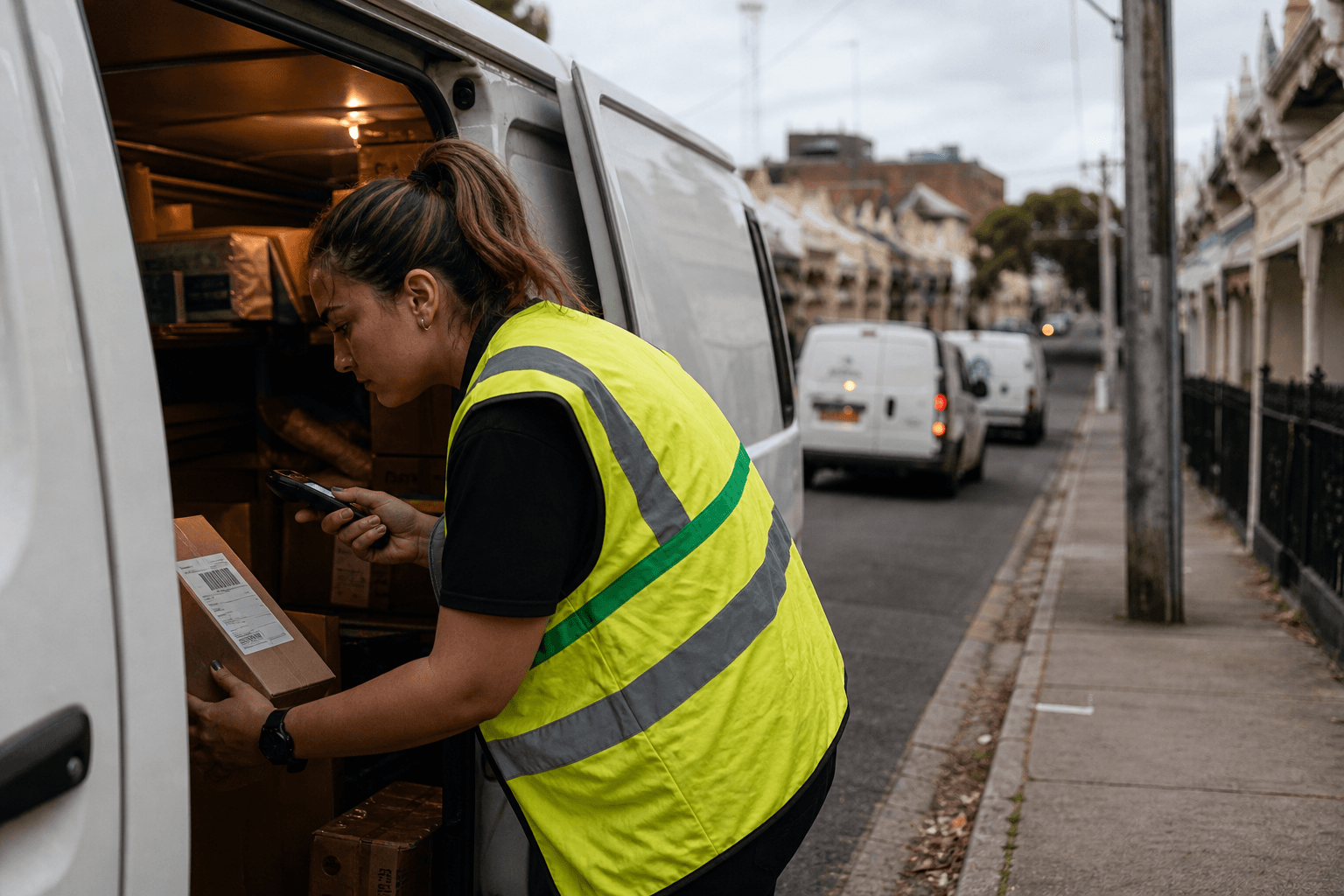
Human planners handle this by dividing the city into fixed zones and assigning drivers to zones. It works, but it's inherently inefficient — zone boundaries don't flex with daily demand patterns, and cross-zone consolidation opportunities are missed.
What AI Changes
AI route optimisation for metro operations focuses on:
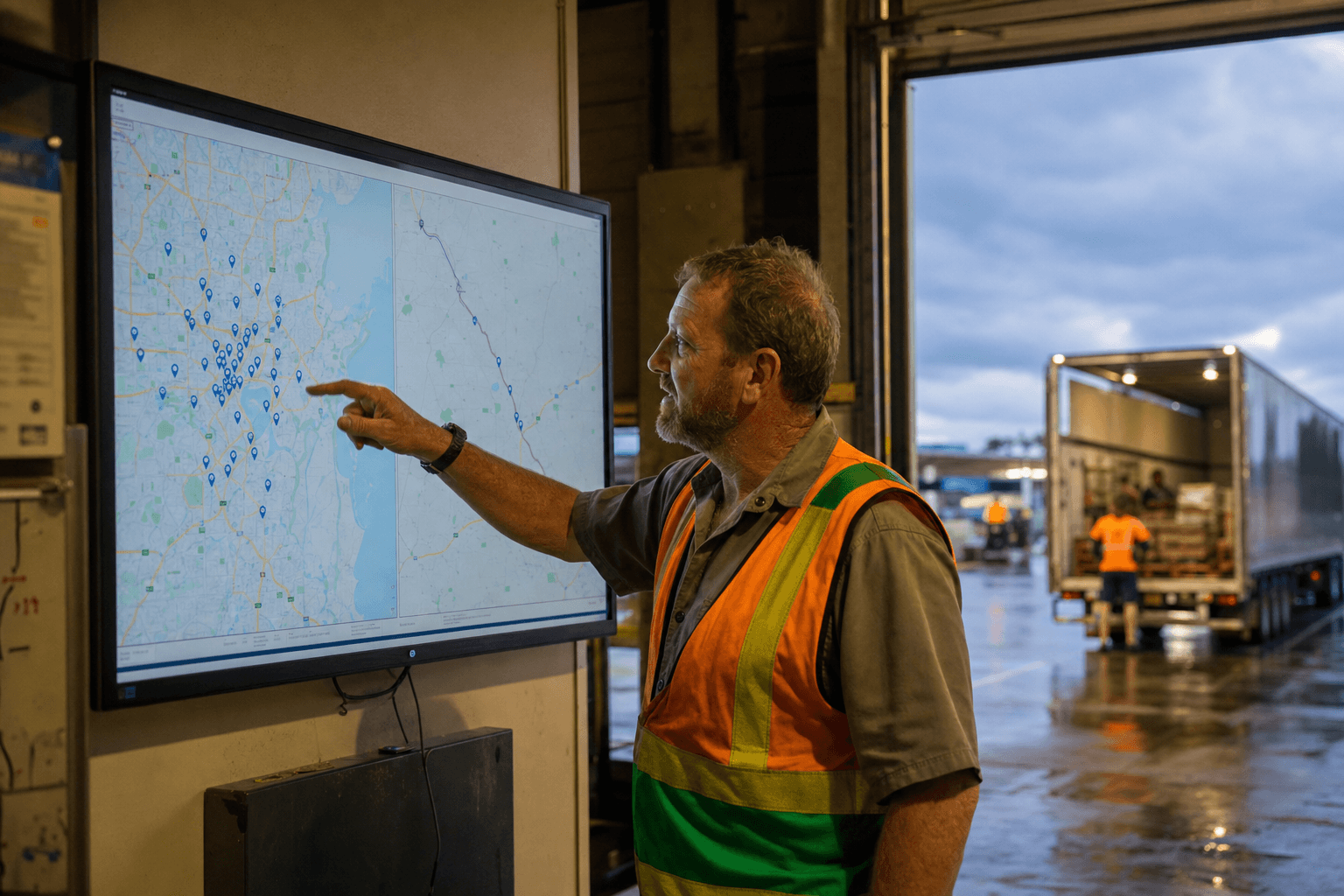
Dynamic zoning: Instead of fixed zones, the system creates optimal delivery clusters each day based on actual order patterns. Monday's zones look different from Thursday's because demand patterns are different.
Sequence optimisation: Within each cluster, the system finds the optimal stop sequence considering time windows, traffic patterns (which vary by hour), and driver-specific constraints (break times, shift end).
Real-time replanning: When a cancellation comes in at 10am or a priority job is added at noon, the system replans affected routes in seconds — redistributing stops across nearby drivers rather than just appending the change to one route.
Real Results
A Melbourne metro fleet of 120 vans:
- Average drops per run: 18 → 24 (+33%)
- Average daily kilometres per vehicle: down 18%
- Failed deliveries (missed windows): down 40%
- Driver overtime: down 25%
The fuel savings were significant, but the productivity gain (6 more drops per driver per day) was worth more — it effectively added the capacity of 20 vehicles without buying any.
Linehaul: The Load Utilisation Game
The Challenge
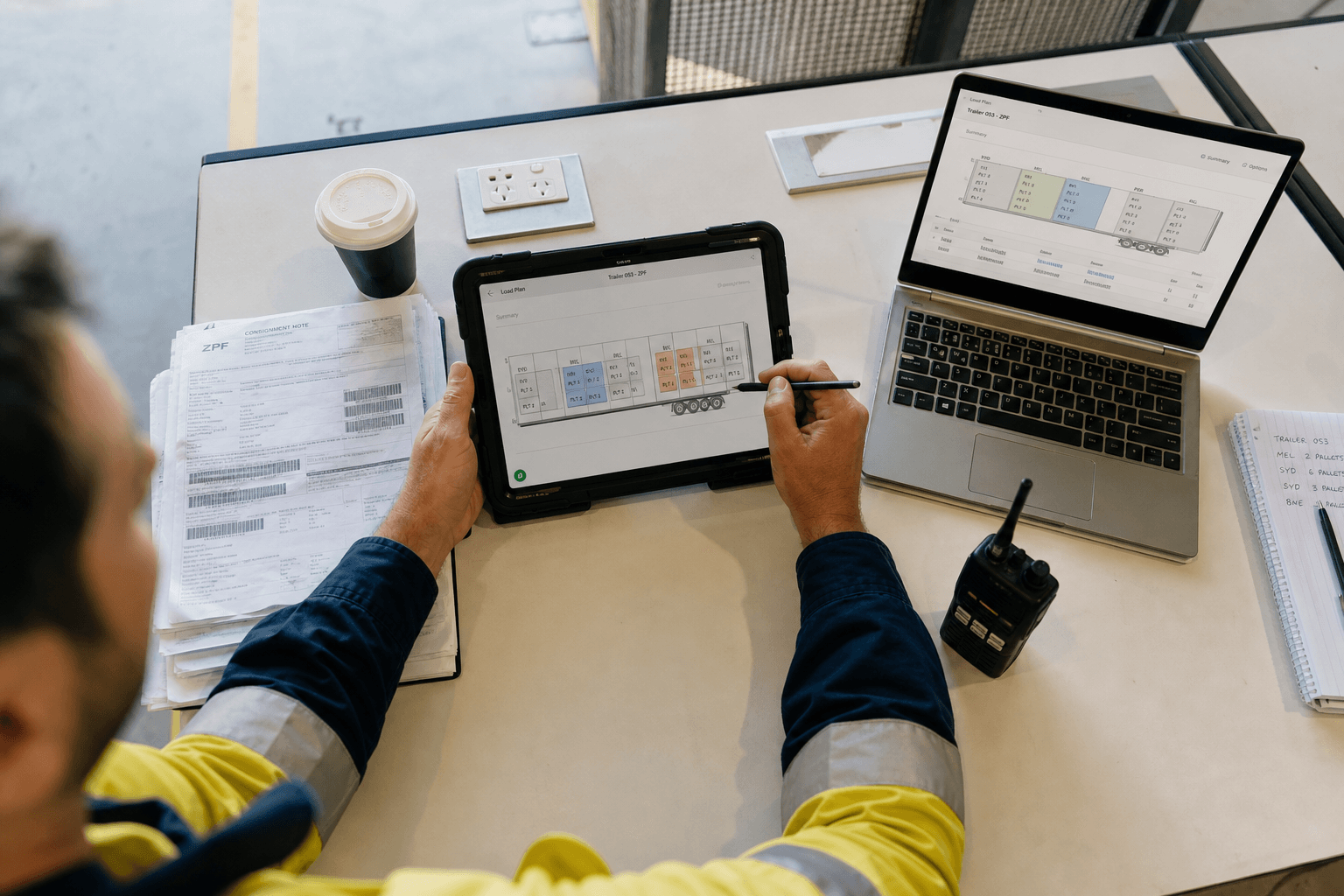
Interstate linehaul — Melbourne to Sydney, Brisbane to Perth, Adelaide to Darwin — is a different problem entirely. You're not optimising stop sequences. You're optimising what goes on each truck, when it departs, and whether it has a backhaul load.
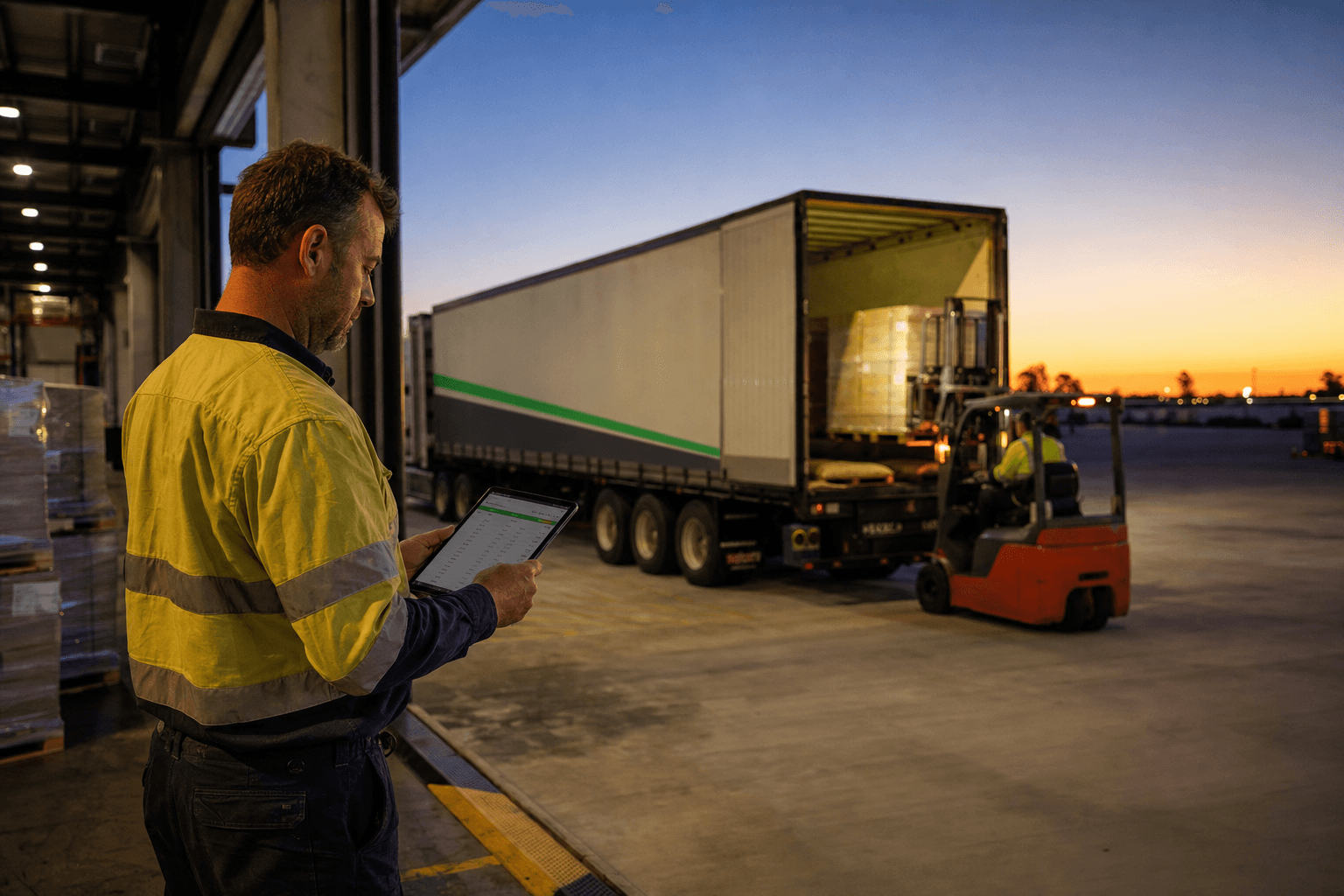
The typical linehaul challenge: your trucks run full going north but come back 60% empty. Or your Tuesday departures are overloaded while Wednesday's are underloaded. Load utilisation across the network averages 70-75% — which means 25-30% of your fuel spend is moving air.
What AI Changes
AI for linehaul operations focuses on:
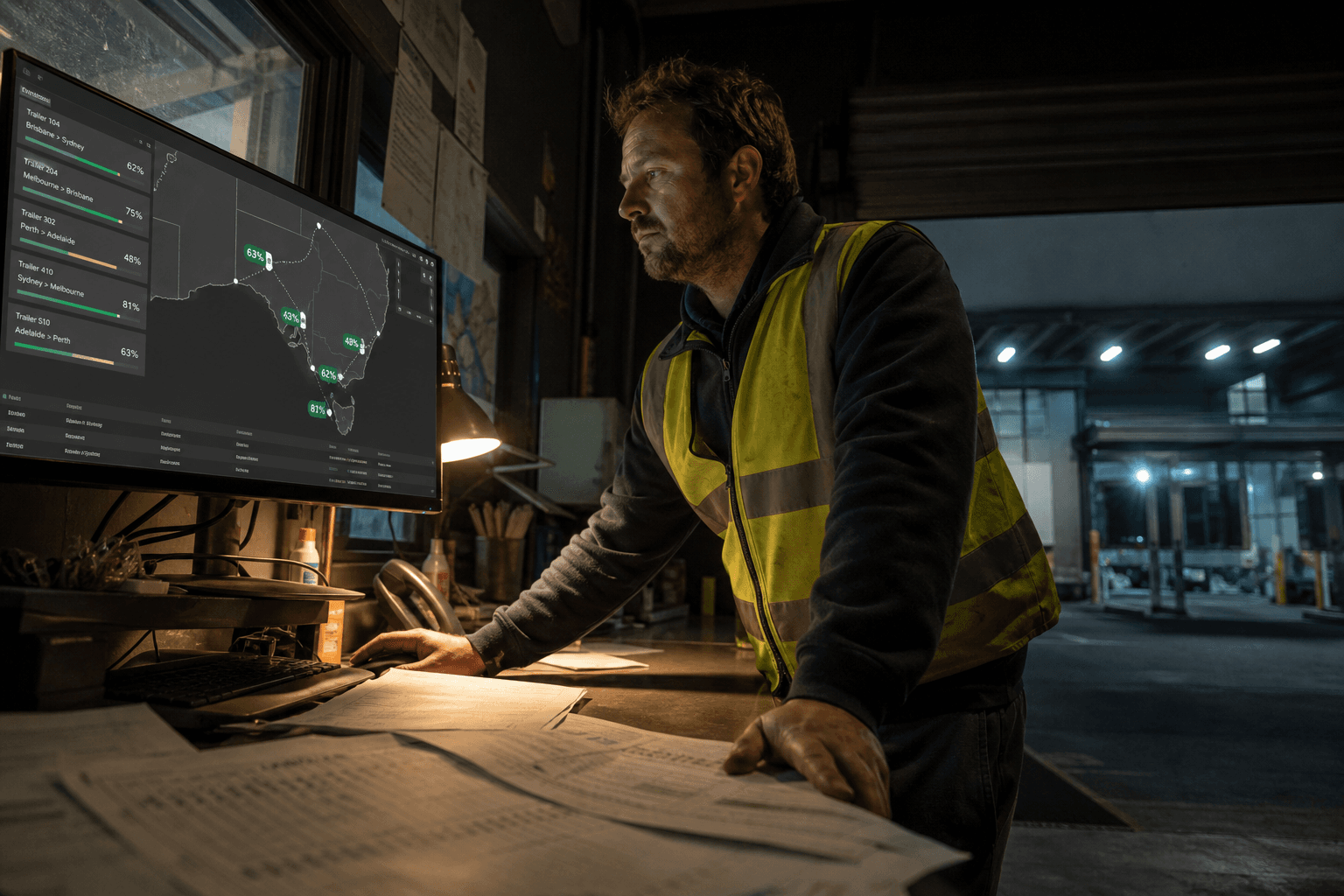
Demand forecasting: Predicting freight volumes 48-72 hours ahead by lane, so you can pre-position capacity and avoid both overloading and empty running. The models learn from historical patterns — seasonal cycles, day-of-week effects, customer order patterns — and improve over time.
Load consolidation: Identifying opportunities to combine partial loads from different customers onto the same vehicle. This requires real-time visibility into what's booked, what's likely to be booked (from the forecast), and what capacity is available.
Backhaul optimisation: Matching northbound loads with southbound capacity. This often means working across customer accounts and sometimes across carrier partners to fill the return leg.
Departure optimisation: Instead of fixed departure schedules, dynamic departure times that balance customer commitments against load efficiency. Sometimes waiting 4 hours for two more pallets means the difference between a 75% loaded truck and a 95% loaded truck.
Real Results
A linehaul operator running the Melbourne-Sydney-Brisbane triangle:
- Load utilisation: 72% → 89%
- Trucks in rotation: 25 → 22 (-3 trucks, $450K/year saving)
- Empty running: down 45%
- On-time delivery: maintained at 97% (no service degradation)
Where They Overlap
Some AI capabilities benefit both metro and linehaul:
Predictive maintenance: Engine data analysis to prevent breakdowns. A metro van breaking down disrupts 20 deliveries. A linehaul truck breaking down on the Hume disrupts the entire network for 24 hours.
Driver behaviour analysis: Fuel consumption patterns, harsh braking, speeding. The ROI is larger in linehaul (more kilometres, more fuel) but the safety case is stronger in metro (more interactions with pedestrians and traffic).
Carbon tracking: Per-consignment emissions calculation. Increasingly required by customers regardless of whether you're running metro or linehaul.
Choosing the Right Approach
| Factor | Metro Priority | Linehaul Priority |
|---|---|---|
| Primary optimisation | Drop density & sequence | Load utilisation & fill rate |
| Time horizon | Same-day / real-time | 48-72 hour forecast |
| Replanning frequency | Every 30-60 minutes | Daily / per departure |
| Key data source | Order system + GPS | Booking system + demand history |
| Biggest cost lever | Fuel + driver time | Empty running + vehicle count |
| Implementation time | 8-10 weeks | 10-14 weeks |
If you run both metro and linehaul operations, you need both approaches — and you need them integrated so that linehaul arrival times feed into metro dispatch planning.
Different freight operations require different AI approaches. Our route optimisation services are tailored specifically for metro delivery fleets versus interstate linehaul operations. Before implementing any AI strategy, we recommend starting with an AI readiness assessment to determine which approach fits your operational model.
Getting Started
Start with the operation that has the most obvious waste:
- If your metro drivers are doing fewer than 20 drops per day, start there
- If your linehaul load utilisation is below 80%, start there
- If you don't know either number, start with measurement — you can't optimise what you don't measure
Assess your route optimisation opportunity →
Ready to implement the right AI strategy for your freight operation? Whether you're running metro deliveries or interstate linehaul, we'll help you choose the approach that maximises your operational efficiency. Contact us to discuss your specific requirements.
Zero Footprint
The Zero Footprint team — AI modernisation for Australian logistics.