Multi-Language Bill of Lading Processing with AI
AI document intelligence systems automatically extract data from bills of lading regardless of language, eliminating manual translation bottlenecks. This capability processes everything from Chinese shipping documents to Spanish invoices without human intervention.
Multi-Language Bill of Lading Processing with AI
AI document intelligence systems can automatically extract data from bills of lading regardless of language, eliminating manual translation and reducing processing delays in international freight operations. This capability handles everything from Chinese shipping documents to Spanish invoices without human intervention.
The Challenge of Multi-Language BOL Processing
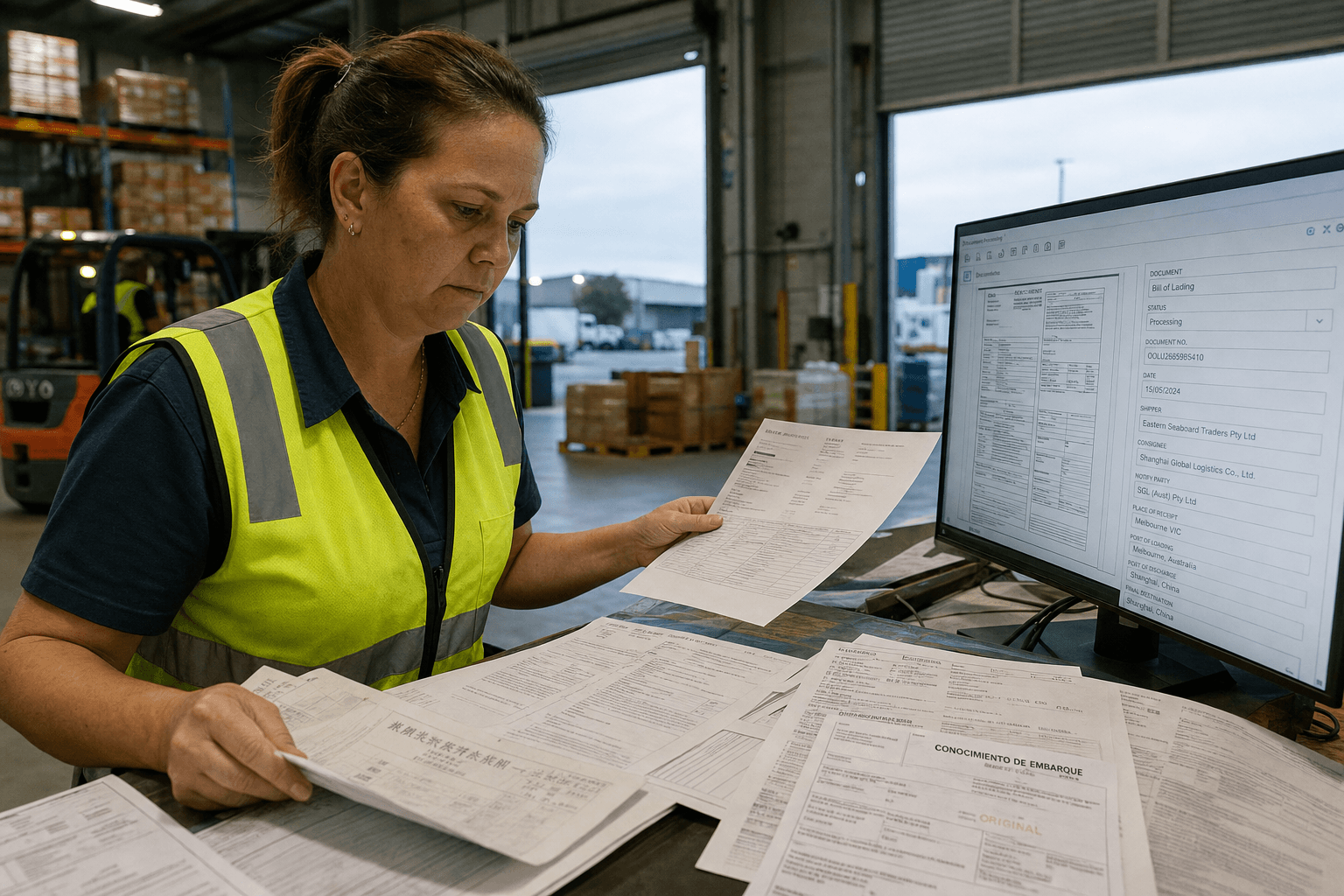
Traditional document processing systems fail when confronted with bills of lading in different languages and scripts. A single shipment might include English documentation from the Australian exporter, Chinese paperwork from the manufacturer, and Spanish customs declarations from a Latin American port.
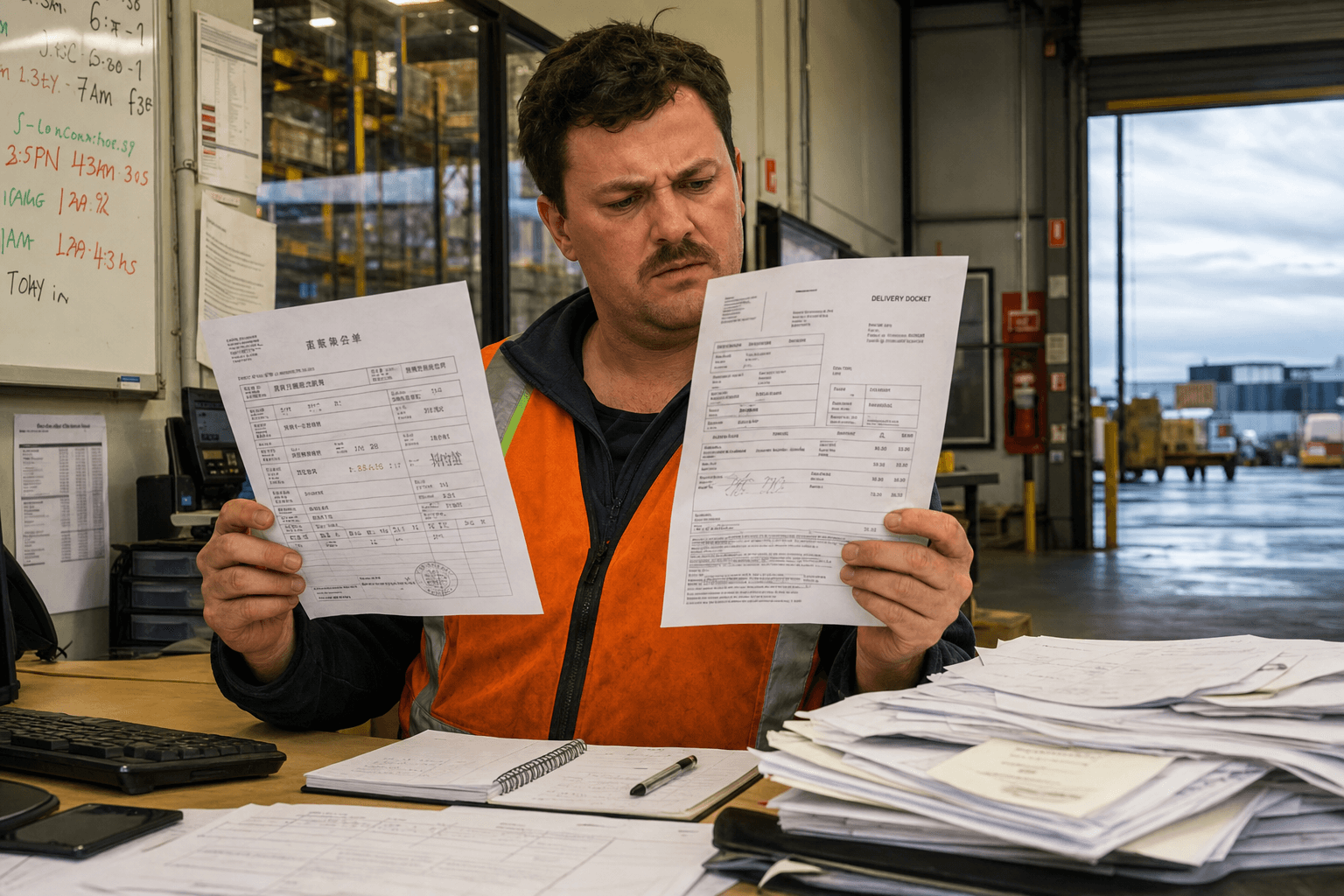
Manual processing requires bilingual staff or external translation services, creating bottlenecks that delay cargo clearance. For Australian importers dealing with Asian suppliers, processing delays often occur when documents require translation before data entry.
How AI Handles Multiple Languages and Scripts
Modern AI document intelligence uses optical character recognition (OCR) engines trained on diverse character sets. These systems recognise Latin, Cyrillic, Arabic, Chinese, Japanese, and Korean scripts within the same document.
The AI first identifies the language and script, then applies the appropriate OCR model. Entity extraction algorithms trained on multilingual datasets can identify key fields like consignee details, container numbers, and commodity descriptions regardless of the source language.
Template-free approaches are crucial here. Unlike traditional systems that require pre-configured templates for each document type, AI systems learn to identify bill of lading structures across different formats and languages. The system recognises that "收货人" (Chinese), "Consignee" (English), and "Destinatario" (Spanish) all refer to the same data field.
OCR Accuracy Considerations Across Scripts
Optical character recognition accuracy varies across different scripts and document conditions. Latin-based languages typically perform well on clear documents, while complex character sets present greater challenges.
Handwritten Chinese characters or Arabic script on poor-quality faxes create recognition difficulties. Modern AI systems address these challenges by combining multiple OCR engines and using confidence scoring to flag uncertain extractions for human review. This hybrid approach maintains processing speed while ensuring accuracy.
Japanese documents present unique challenges with mixed scripts including Hiragana, Katakana, and Kanji characters. Arabic script's right-to-left reading direction and connected letters require specialised recognition models.
Entity Extraction Across Languages
Extracting structured data from multilingual documents requires AI models trained on international shipping terminology. The system must understand that "20' Container" and "20尺柜" represent the same container type.
Successful entity extraction relies on:
- Contextual understanding: Recognising shipping terms in different languages
- Format standardisation: Converting dates from DD/MM/YYYY (Australian) to MM/DD/YYYY (American) formats automatically
- Currency recognition: Identifying whether "$1,000" refers to USD, AUD, or another dollar denomination
- Address parsing: Extracting postal codes, states, and countries from international address formats
Template-Free Processing Advantages
Template-free AI systems adapt to new document formats without manual configuration. This flexibility is essential for international freight, where bills of lading vary between shipping lines, countries, and regulatory requirements.
Traditional template-based systems require IT teams to create new templates for each document variation. A single shipping route might involve numerous different BOL formats. Template-free AI eliminates this maintenance burden by learning document structures automatically.
Australian Import/Export Document Requirements
Australian customs requires specific data elements on import/export documentation. AI systems must extract and validate these fields regardless of source language:
- Harmonised System (HS) codes: Product classification codes that determine duty rates
- Country of origin: Required for free trade agreement benefits
- Quarantine declarations: Biosecurity risk assessments for agricultural products
- Dangerous goods classifications: IMDG codes for hazardous materials
The Australian Border Force requires these elements in English for processing. AI systems automatically translate and standardise extracted data to meet regulatory requirements.
Integration with Australian Logistics Systems
Effective multilingual BOL processing requires integration with existing Australian logistics software. Most transport management systems (TMS) and warehouse management systems (WMS) expect data in specific formats.
AI document intelligence systems can output standardised Australian formats regardless of input language. This includes converting international measurement units (metric to imperial where required), standardising date formats, and translating commodity descriptions to match local product catalogues.
For Australian freight forwarders handling diverse international trade, seamless integration with legacy systems ensures multilingual capabilities don't disrupt existing workflows. The AI layer sits between document capture and system input, providing clean, standardised data regardless of source language complexity.
Implementation Considerations
Deploying multilingual document processing requires careful planning around document volume, language diversity, and accuracy requirements. System design must account for the specific language mix your organisation encounters.
Accuracy requirements vary by document type. Commercial invoices require high accuracy for customs clearance, while internal delivery receipts may accept lower accuracy with human review processes.
Training data quality significantly impacts performance. AI systems perform best when trained on documents similar to those encountered in production. Australian logistics operators should prioritise solutions with relevant training datasets.
AASB S2 Compliance and Multi-Language Processing
Under AASB S2 emissions reporting requirements, Australian logistics companies must capture Scope 3 emissions data from international suppliers. This often involves processing Chinese, Korean, or Southeast Asian documentation to extract fuel consumption and transport data.
AI document intelligence enables automated extraction of emissions-relevant data from multilingual supplier documents, supporting emissions reporting compliance without manual translation overhead.
Future Developments in Multi-Language Processing
Emerging AI capabilities include real-time translation during document capture and automated compliance checking across jurisdictions. Machine learning models continue improving at recognising handwritten text in complex scripts.
Advanced natural language processing will enable more sophisticated understanding of shipping terminology and regulatory requirements across different countries and languages.
For Australian logistics operators considering multilingual document processing capabilities, an AI readiness assessment can identify current document volumes, language mix, and integration requirements to inform system selection.
Document intelligence represents one component of broader logistics digitalisation. Organisations benefit most when multilingual processing integrates with route optimisation and warehouse management systems as part of comprehensive modernisation.
Ready to explore how AI document intelligence can handle your multilingual freight documentation? Get in touch to discuss your specific requirements and see how we help Australian logistics operators modernise their document processing capabilities.
For more insights on AI applications in Australian logistics, explore more insights on emerging technologies and implementation approaches.
Zero Footprint
The Zero Footprint team — AI modernisation for Australian logistics.