Network Design & Site Selection AI for Growing 3PLs
Growing 3PLs often decide where to put new distribution centres using spreadsheets and instinct rather than freight lane data. Here's how a modernised data foundation sets up smarter site selection and network sizing decisions.
What Is Network Design and Site Selection for a 3PL?
Network design is the process of deciding where a 3PL should locate its distribution centres and how large each facility should be, based on where freight actually moves and where customers are concentrated. Site selection is the specific decision of choosing a location once the broader network shape is understood. For a growing 3PL, getting this wrong means paying for warehouse space in the wrong place — or running out of capacity in the right one.
Why Is Site Selection Getting Harder for Growing 3PLs?
Most mid-market 3PLs still make network decisions on spreadsheets, historical instinct, and whatever industrial property happens to be available when the lease is up. That approach worked when volume was flat and customers were clustered in one or two regions. It breaks down once a 3PL is running multiple freight lanes across states, onboarding customers with different service-level expectations, and facing real estate costs that punish an undersized or badly placed facility.
Growth compounds the problem. A network built around three customers in Melbourne's west doesn't necessarily hold up once you're servicing twelve customers spread across Victoria, NSW, and Queensland. Freight lane density shifts, customer concentration shifts, and the facility footprint that made sense two years ago may now be the constraint on throughput.
What Data Do You Need Before You Can Model Your Network?
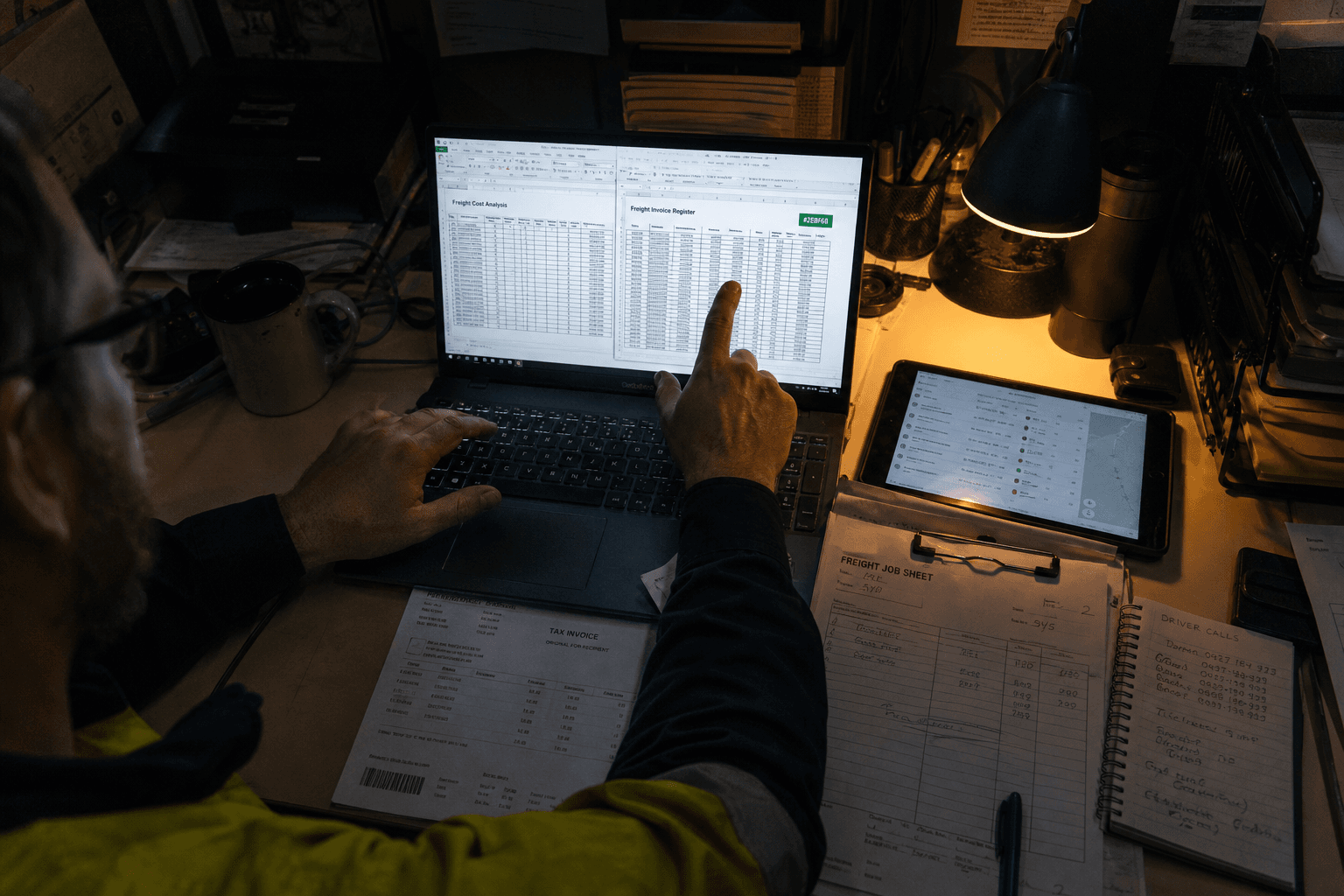
A useful network model needs freight lane volumes (what's moving between which points, and how often), customer location and order concentration, current facility throughput and constraints, and inbound/outbound freight costs by lane. Most 3PLs already generate this data inside their TMS and WMS — the challenge is that it's often siloed, inconsistently coded, or trapped in legacy systems that weren't built to export it cleanly.
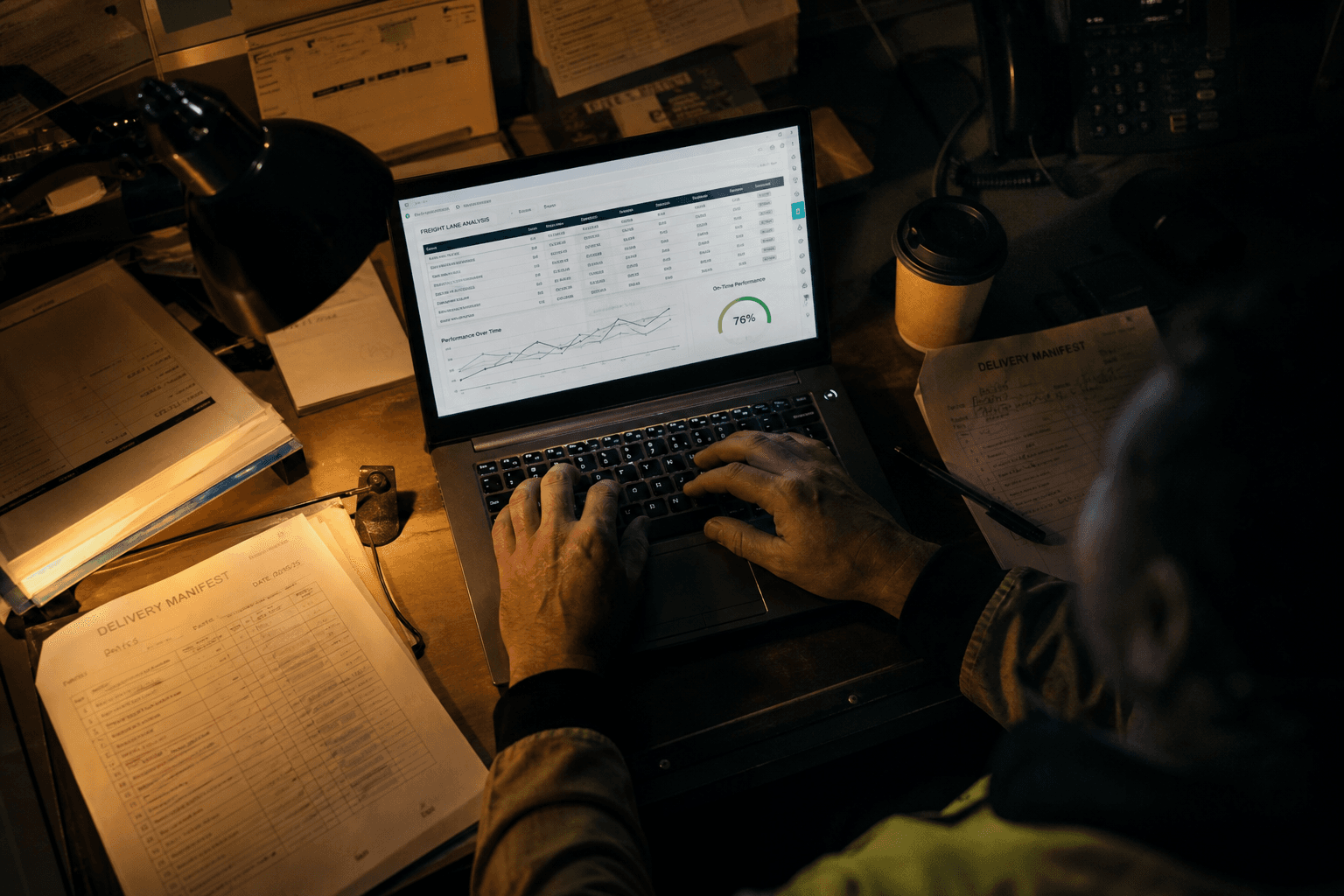
This is the same data foundation problem that underpins most AI initiatives in logistics. As we've covered in our work on legacy system modernisation, the constraint on doing anything meaningful with AI — whether that's route optimisation, demand forecasting, or eventually network modelling — is rarely the algorithm. It's whether the underlying data is clean, structured, and accessible in the first place.
How Does AI Support Network Design Decisions?
AI in logistics network design works by combining freight lane and customer data into a model that can test scenarios — what happens to service levels and cost if you add a facility in Western Sydney versus expanding an existing site in Dandenong — faster and with more variables than a spreadsheet can realistically handle. Rather than replacing operational judgement, it gives operations leaders a structured way to compare options against real freight and customer patterns rather than gut feel alone.
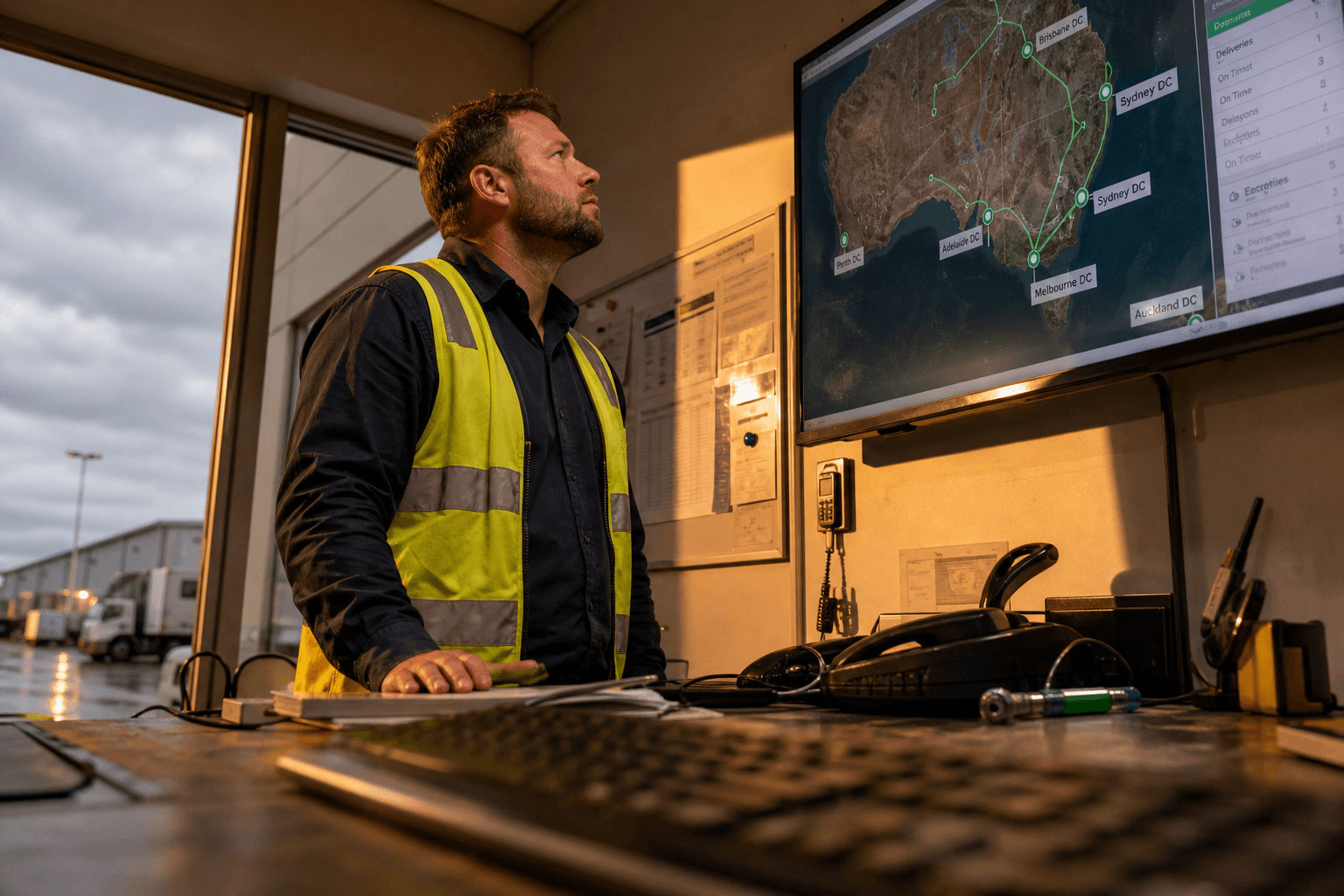
It's worth being direct about where the industry is at: purpose-built, off-the-shelf network design AI for mid-market 3PLs is still an emerging capability, not a mature, plug-and-play category. What's proven and available now is AI layered on top of a modernised data foundation — for demand forecasting, route optimisation, and exception management, as discussed in our broader look at digital transformation in Australian logistics. Network and site selection modelling is a natural extension of that same foundation, and it's an area we work through with clients on a case-by-case basis once their core data is in order.
Traditional vs Data-Driven Approaches to Network Planning
| Factor | Traditional approach | Data-driven approach |
|---|---|---|
| Basis for decisions | Historical instinct, available real estate | Freight lane density and customer concentration data |
| Speed of scenario testing | Slow — manual spreadsheet modelling | Faster — multiple scenarios compared systematically |
| Sensitivity to growth | Static, reviewed infrequently | Can be re-run as customer mix and volume shift |
| Data requirements | Low | Requires clean TMS/WMS and order data |
| Risk of under/oversizing facilities | Higher | Lower, but depends on data quality |
Where Does This Fit in a Modernisation Roadmap?
For most growing 3PLs, network design and site selection modelling sits downstream of the basics: clean data, a modernised TMS/WMS, and existing AI use cases like route optimisation and document processing already delivering value. An AI Readiness Assessment is typically where this conversation starts — it identifies what data you already have, what's missing, and whether your systems can support more advanced modelling before you invest in it.
It's also worth connecting network decisions to your emissions reporting obligations. A new distribution centre changes your Scope 1 and Scope 2 footprint and affects how Scope 3 freight emissions are allocated across your network — a consideration that's becoming more important as AASB S2 reporting deadlines approach. If you're weighing up a new site, it's worth looping in whoever owns your emissions reporting obligations early, not after the lease is signed.
In the meantime, the two capabilities with the clearest, proven payoff for growing 3PLs remain route optimisation — getting more out of the network you already have — and document intelligence — cleaning up the paperwork and data capture that any future network model will depend on.
Is Network Design AI Right for Your 3PL Yet?
If you're still running dispatch off spreadsheets or your TMS data is inconsistent across sites, network modelling isn't the first problem to solve — data foundations are. If you already have clean freight and customer data and are weighing up a second or third facility, it's a reasonable next conversation to have.
Read more on related topics over on our insights.
If you're evaluating where to locate your next distribution centre, or whether your current network still matches your customer base, we can help — starting with an honest look at whether your data is ready to support that decision.
Zero Footprint
The Zero Footprint team — AI modernisation for Australian logistics.