Predicting Temperature Excursions in Cold Chain Logistics with AI
Machine learning models can predict temperature excursions in cold chain logistics before they occur, transforming reactive monitoring into proactive management. These systems analyse sensor data patterns, weather forecasts, and operational factors to prevent costly product losses.
Predicting Temperature Excursions in Cold Chain Logistics with AI
Temperature excursions in cold chain logistics cost Australian businesses millions annually through product spoilage, regulatory penalties, and customer claims. Machine learning models can now predict these failures before they occur, transforming reactive temperature monitoring into proactive cold chain management.
What Are Temperature Excursions in Cold Chain Operations?
Temperature excursions occur when products exceed their required temperature range during transport or storage. For pharmaceutical products, this might mean exceeding 2-8°C for more than 30 minutes. For frozen goods, any temperature above -18°C constitutes an excursion.
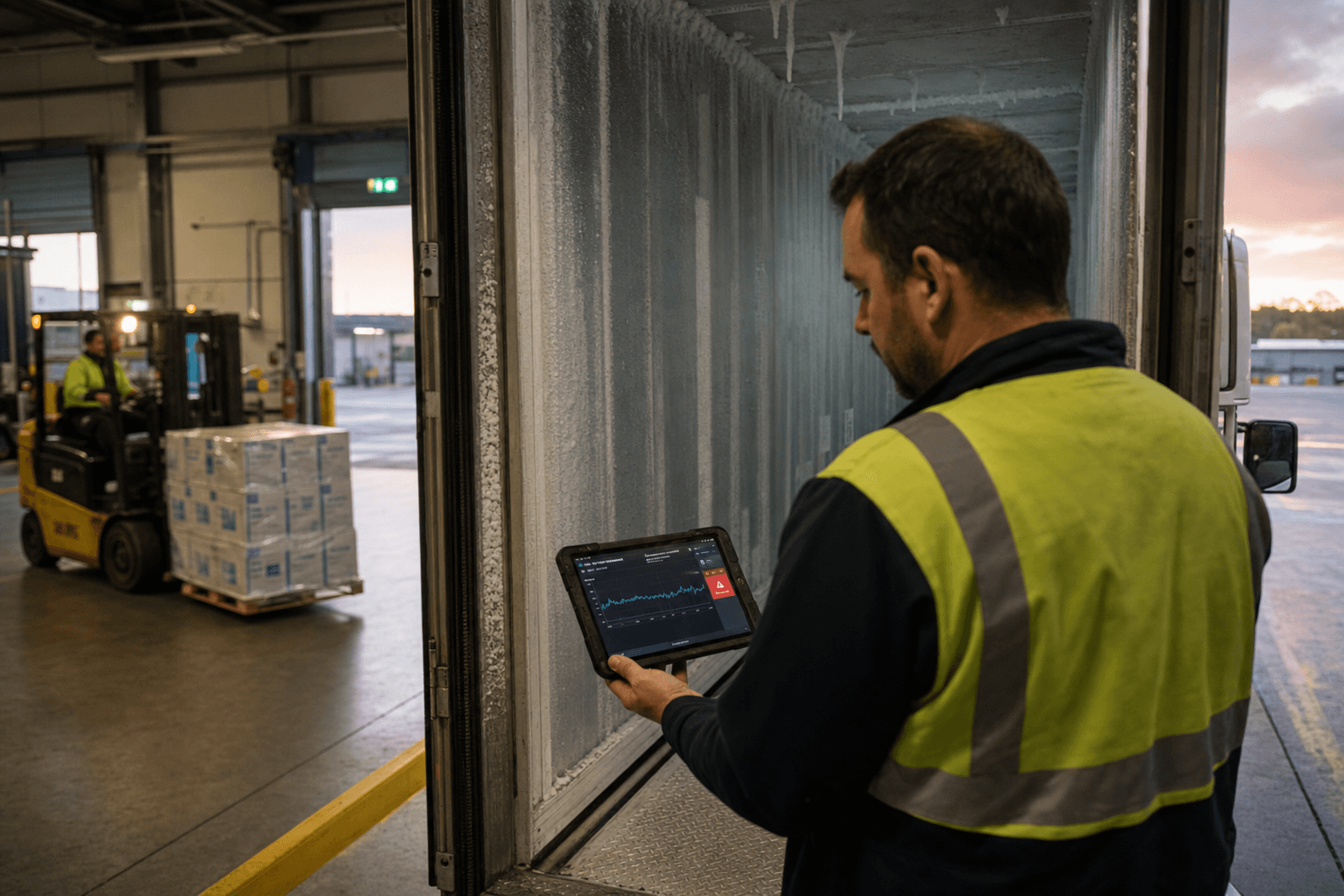
Traditional monitoring systems only alert operators after an excursion has begun. By then, product integrity may already be compromised, leaving operators with difficult decisions about product disposition.
How Machine Learning Predicts Cold Chain Failures
Predictive models analyse patterns in sensor data to identify conditions that typically precede temperature excursions. These systems process multiple data streams simultaneously, detecting subtle changes that human operators might miss.
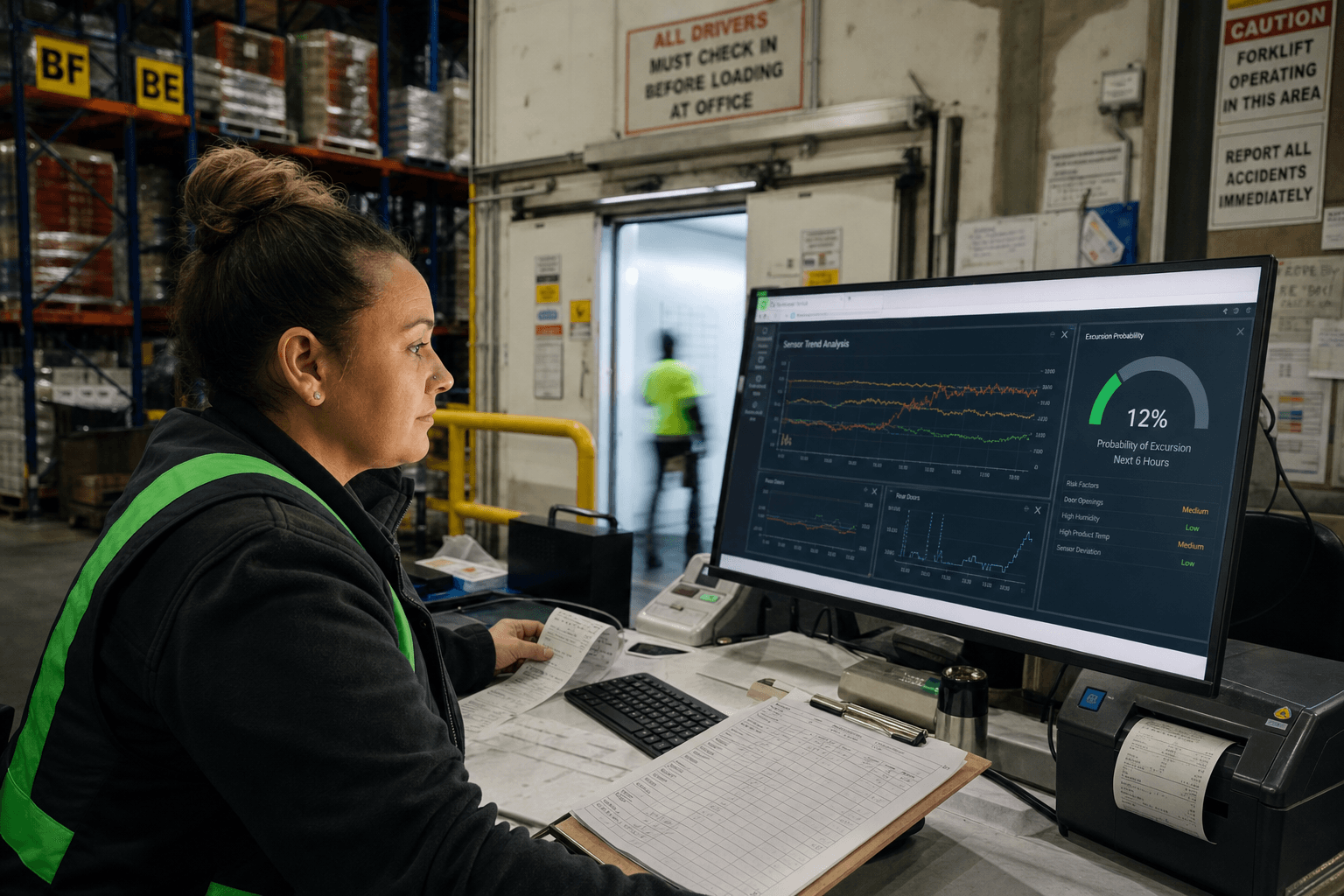
The models examine refrigeration unit performance, ambient temperature trends, door-opening frequency, and vehicle route characteristics to calculate excursion probability. When risk exceeds predetermined thresholds, the system triggers preventive actions.
Sensor Data Pattern Analysis
Cold chain sensors generate data every 30 seconds to 5 minutes, creating massive datasets. Machine learning algorithms identify patterns in this data that correlate with future temperature problems.
Key patterns include gradual temperature drift indicating refrigeration system decline, irregular cooling cycles suggesting compressor issues, and humidity spikes that often precede equipment failure. The models also detect seasonal patterns, learning that certain ambient conditions increase excursion risk.
Ambient Temperature Forecasting Integration
Weather forecasting APIs provide ambient temperature predictions that machine learning models incorporate into risk calculations. A delivery route through Western Sydney on a 42°C day carries higher excursion risk than the same route on a mild day.
The models consider not just peak temperatures but also duration of exposure and humidity levels. They factor in urban heat island effects, knowing that city centres run 2-5°C warmer than surrounding areas.
Route-Specific Risk Assessment
| Risk Factor | Impact on Excursion Probability |
|---|---|
| Ambient temperature > 35°C | Significantly higher |
| Multiple urban stops | Higher |
| Highway-only route | Lower |
| Pre-dawn departure | Lower |
| Rush hour traffic delays | Higher |
Door-Open Event Analysis
Frequent door openings are a leading cause of temperature excursions. Machine learning models track door-opening patterns and predict when cumulative heat load will overwhelm refrigeration capacity.
The models consider door-open duration, frequency, and timing relative to ambient temperature. Opening doors during peak afternoon heat has dramatically different impact than early morning openings.
Some models also factor in delivery sequence optimisation, recommending route changes when door-opening patterns suggest high excursion risk for later stops.
Pre-Cooling Optimisation Strategies
Predictive models help optimise pre-cooling procedures by forecasting the thermal load each vehicle will face. Trucks heading into high-risk conditions receive extended pre-cooling, while others use standard procedures to minimise energy costs.
The systems analyse historical data to determine optimal pre-cooling temperatures for different scenarios. They might recommend pre-cooling to -25°C for frozen deliveries on hot days, versus -20°C under normal conditions.
Dynamic Cooling Adjustments
Modern telematics systems allow remote adjustment of refrigeration settings based on predictive model recommendations. If models detect increasing excursion risk, they can trigger automatic temperature adjustments before problems occur.
These adjustments balance product protection with fuel efficiency, avoiding unnecessary over-cooling while ensuring temperature compliance.
Understanding Cold Chain Failure Costs
The cost of temperature excursions extends beyond immediate product loss. Regulatory penalties under the Therapeutic Goods Administration can reach hundreds of thousands of dollars for pharmaceutical violations.
Customer claims and potential contract cancellations often dwarf direct product costs. Insurance claims for cold chain failures require extensive documentation and may face coverage disputes without proper monitoring data.
Brand damage from temperature-related recalls can impact sales for months or years. The 2019 insulin recall affected multiple pharmaceutical companies and reinforced the critical importance of cold chain integrity.
Implementation Considerations for Australian Operators
Implementing predictive temperature monitoring requires integrating existing sensor systems with machine learning platforms. Most modern temperature loggers provide API access, but older systems may need hardware upgrades.
Data quality is crucial for model accuracy. Sensors require regular calibration, and operators need protocols for handling data gaps or sensor failures. Models perform poorly with incomplete or inaccurate input data.
Staff training is essential for successful implementation. Operators need to understand alert priorities and appropriate responses to different risk levels. Over-alerting can lead to alarm fatigue, while under-alerting defeats the system's purpose.
ROI Factors for Predictive Cold Chain Systems
Return on investment depends heavily on current excursion rates and product values. High-value pharmaceutical or biological products justify more sophisticated monitoring than standard frozen foods.
Energy savings from optimised cooling strategies often offset system costs within the first year. Reduced product loss and insurance claims provide additional benefits that vary by operator and product mix.
Regulatory compliance improvements may enable access to new contracts that previously required capabilities beyond the operator's existing systems.
Getting Started with Cold Chain AI
Start by auditing existing temperature monitoring capabilities and data quality. Many operators discover their current systems generate sufficient data for machine learning but lack the analytics tools to extract insights.
Pilot programs focusing on highest-risk routes or most valuable products provide proof of concept while limiting initial investment. Successful pilots can then expand to cover the entire cold chain operation.
AI readiness assessments help operators understand their current capabilities and identify the most promising opportunities for predictive analytics implementation.
If you're managing cold chain operations and want to explore predictive temperature monitoring, we can help evaluate your data readiness and identify the most impactful starting points for your business.
Zero Footprint
The Zero Footprint team — AI modernisation for Australian logistics.