RaaS vs Capex: A Buyer's Guide to Warehouse Automation
Robotics-as-a-Service and capital purchase are both viable paths to warehouse automation, but the commercial terms underneath each model carry very different risk and flexibility trade-offs. This buyer's guide covers contract terms, exit clauses and total cost of ownership for mid-market 3PLs weighing up the decision.
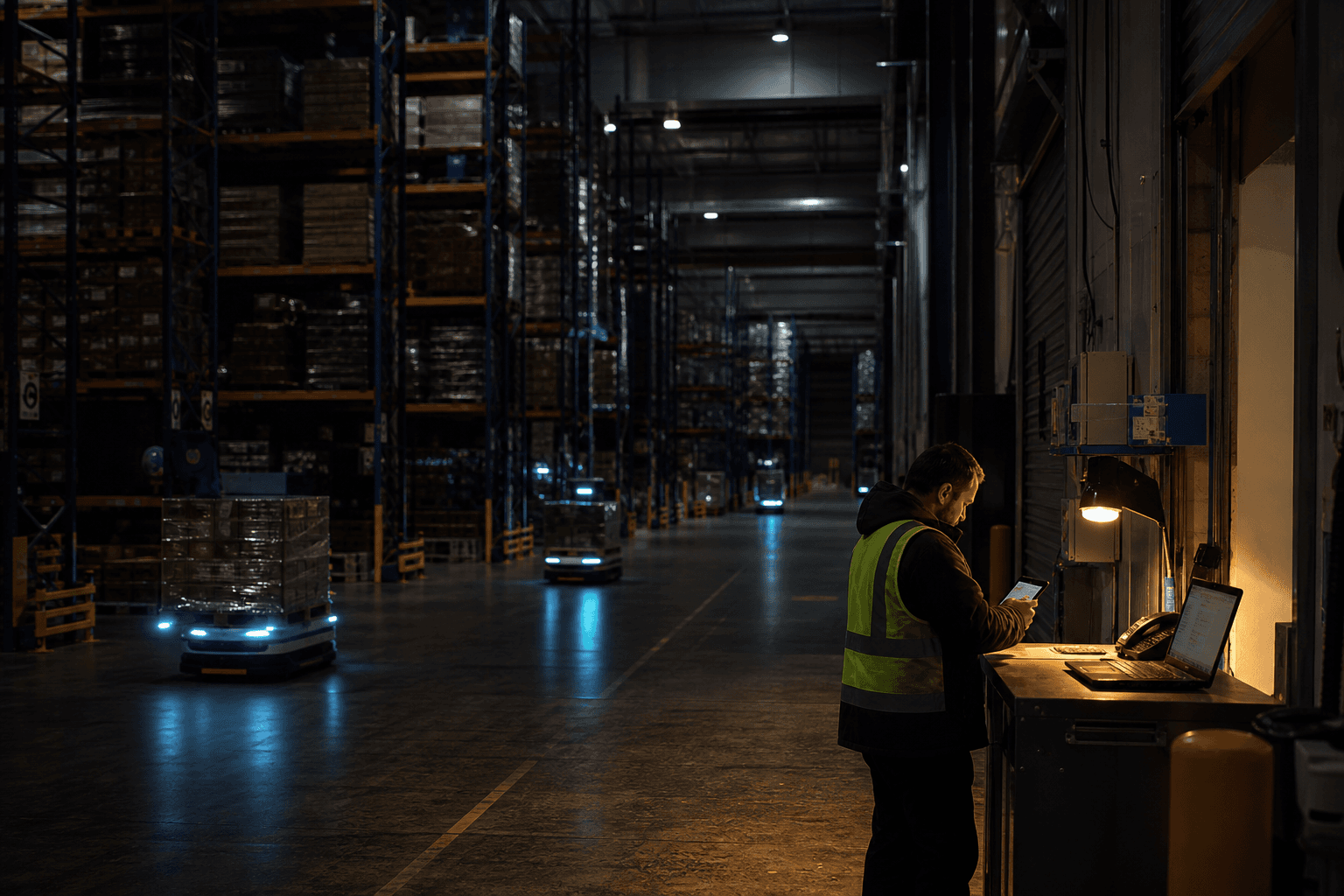
Warehouse automation Australia decisions increasingly come down to one commercial question before any technical one: do you buy the robots, or do you subscribe to them? Robotics-as-a-Service (RaaS) has emerged as an alternative to capital purchase for mid-market 3PLs and warehouse operators, but the procurement terms underneath a RaaS contract vary enormously — and getting them wrong can cost more than the automation itself saves. This guide walks through the commercial models, the contract terms worth scrutinising, and how to think about total cost of ownership before you sign anything.
What Is Robotics-as-a-Service?
Robotics-as-a-Service (RaaS) is a commercial model where a vendor supplies warehouse robotics — autonomous mobile robots, pick-assist systems, automated storage units — as an ongoing subscription rather than a one-off capital purchase. The operator pays a recurring fee, typically monthly or per-task, that bundles hardware access, software, maintenance, and often performance guarantees into a single line item. This sits in contrast to capital expenditure (capex), where the operator purchases the hardware outright, owns the asset on its balance sheet, and manages maintenance and software licensing separately.
Why Are Mid-Market 3PLs Considering Robotics Now?
Labour cost pressure and warehouse labour shortages are the primary drivers pushing automation onto the agenda for operators who previously ran on manual processes. Labour is typically the largest variable cost in warehousing and last-mile operations, which makes any technology that reduces reliance on manual picking, sorting, or replenishment commercially attractive — provided the commercial terms don't simply shift that cost into an equally rigid long-term liability.
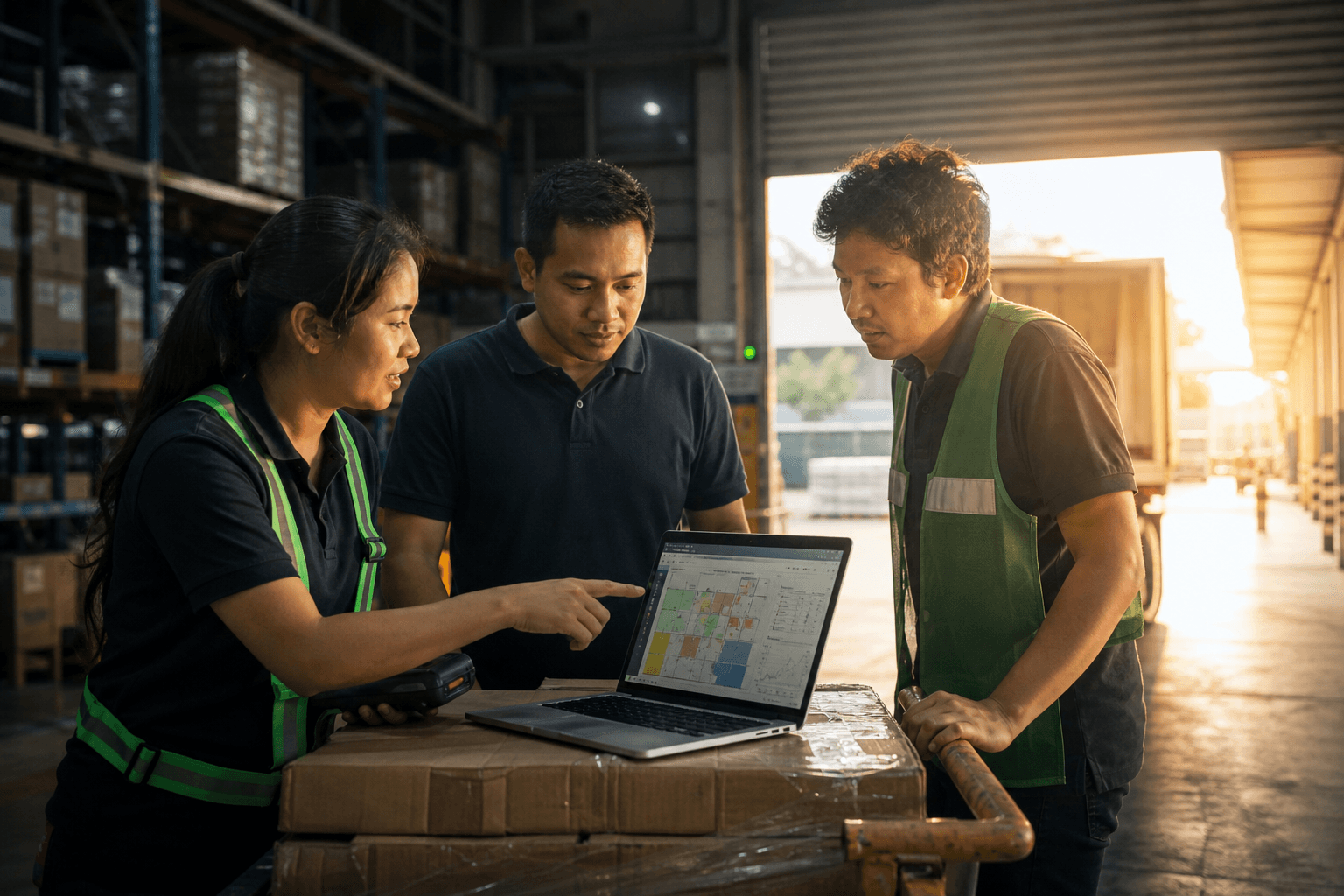
Automation investment also tends to sit at the tail end of a broader digital transformation journey. Operators generally need legacy systems migrated, data consolidated, and integration in place before robotics and AI deliver their full value — automation works best layered on top of clean data and connected systems, not bolted onto spreadsheets and disconnected WMS platforms. If your warehouse management system is still five-plus years old and running on manual data entry, a robotics decision is often premature until that foundation is assessed. An ai-readiness-assessment is designed to surface exactly this — whether your current systems and data can actually support the automation you're evaluating.
RaaS vs Capital Purchase: What's the Real Difference?
The core difference between RaaS and capex is where risk and flexibility sit. Capex puts the asset, the maintenance burden, and the obsolescence risk on your balance sheet in exchange for lower long-run unit cost once the asset is paid down. RaaS shifts that risk to the vendor in exchange for ongoing payments and, usually, less control over the hardware roadmap.
| Factor | Capital Purchase | Robotics-as-a-Service |
|---|---|---|
| Upfront cash outlay | Higher | Lower |
| Balance sheet impact | Asset + depreciation | Operating expense |
| Maintenance responsibility | Operator (or separate contract) | Usually bundled with vendor |
| Flexibility to scale down | Lower | Higher (contract-dependent) |
| Exposure to technology obsolescence | Higher | Lower (vendor-dependent) |
| Long-run unit cost once scaled | Typically lower | Typically higher |
| Vendor lock-in risk | Lower | Higher |
| Speed to deployment | Slower (procurement, capex approval) | Generally faster |
These are directional comparisons, not fixed outcomes — the actual numbers depend heavily on your volume, the vendor's pricing structure, and contract length. Any vendor proposal should be stress-tested against your own throughput and seasonality data rather than taken at face value.
What Contract Terms Should You Scrutinise in a RaaS Agreement?
The commercial terms in a RaaS contract matter more than the headline monthly fee. Before signing, operators should get clarity on minimum volume commitments, what happens if throughput falls below projections, how pricing escalates over the contract term, and who owns the operational data the robots generate.
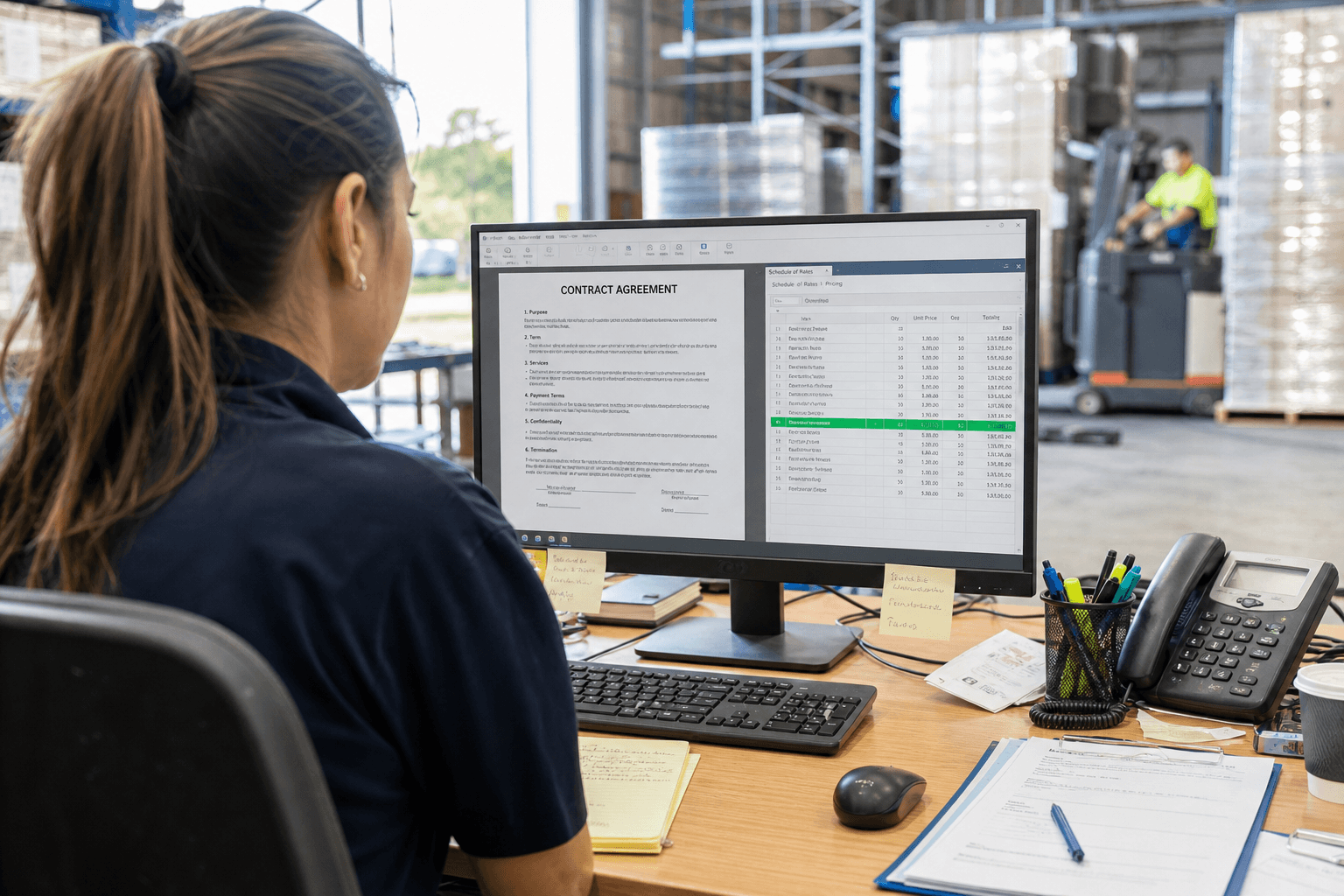
Key areas to push on with any vendor:
- Minimum commitment clauses — many RaaS contracts include a minimum fleet size or usage floor. Confirm what happens if your volumes are seasonal or lower than forecast.
- Service level agreements (SLAs) — uptime guarantees, response times for hardware faults, and what compensation (if any) applies when SLAs are missed.
- Pricing escalation — whether fees are fixed, CPI-linked, or subject to vendor discretion at renewal.
- Software and firmware updates — whether these are included, and whether the vendor can push changes that affect your workflow without consultation.
- Data ownership — who owns the throughput, performance, and movement data the robots capture, and whether you can export it if you switch vendors. This matters for your own reporting obligations, including Scope 3 emissions data if energy or fuel use is part of the automation footprint.
What Exit Clauses Protect You If the Deployment Doesn't Work?
An exit clause is a contract provision that defines how and when either party can terminate the agreement before its natural end date, and what costs apply. In RaaS agreements, exit terms are often the single biggest determinant of real flexibility — a short notice period with no termination penalty behaves very differently to a multi-year lock-in with early-exit fees equivalent to the remaining contract value.
Ask vendors directly: what is the notice period for termination, is there an early-exit fee, and does the contract renew automatically unless cancelled. Operators evaluating tenders or customer contracts with uncertain volume should treat exit flexibility as a primary negotiating point, not an afterthought — particularly if the automation decision is being driven by a specific customer win rather than steady baseline demand.
How Do You Calculate Total Cost of Ownership for Each Model?
Total cost of ownership (TCO) is the full cost of acquiring, operating, and eventually retiring an asset or service over its useful life, not just the purchase price or subscription fee. For capex, TCO includes the purchase price, financing cost, maintenance, software licensing, staff training, and eventual decommissioning or resale value. For RaaS, TCO includes the subscription fees over the full contract term, any usage overages, integration costs, and the cost of switching providers if the relationship ends.
A common mistake is comparing a RaaS monthly fee against a capex purchase price without extending both to the same time horizon — typically five to seven years for warehouse robotics, aligned with usual asset life expectations under standard asset management frameworks such as ISO 55000. Run both scenarios over the same period, using your actual volume assumptions rather than vendor-supplied projections, before drawing a conclusion.
Which Model Fits Your Mid-Market 3PL?
The right model depends more on your volume certainty and balance sheet position than on the technology itself. Operators with stable, predictable volumes and the capital available often find capex delivers lower long-run cost once the asset is paid down. Operators facing volume uncertainty, a recent tender win that needs fast deployment, or limited appetite for capital outlay are generally better served by RaaS, provided the exit terms are genuinely flexible.
Either way, the decision shouldn't be made in isolation from your wider technology stack. Robotics generates data — on throughput, exceptions, and performance — that needs to feed into existing reporting and documentation processes rather than create a new silo. If your current paperwork and exception-handling processes are still manual, document-intelligence tools are often a lower-cost, faster win than robotics, and a useful proof point for whether your organisation is ready to manage a more complex automation contract. For a broader view of where automation fits in a staged technology roadmap, see our insights.
If you're weighing up RaaS against capital purchase for your warehouse and want an independent view on which model fits your volumes, contracts, and balance sheet, get in touch — we can help you pressure-test the numbers before you sign.
Zero Footprint
The Zero Footprint team — AI modernisation for Australian logistics.