Succession Planning: Capturing Freight Knowledge with AI
Institutional knowledge in freight and 3PL businesses usually lives in people's heads, not in systems. Here's how AI-assisted interviews and document intelligence can capture that knowledge before a key person exits.
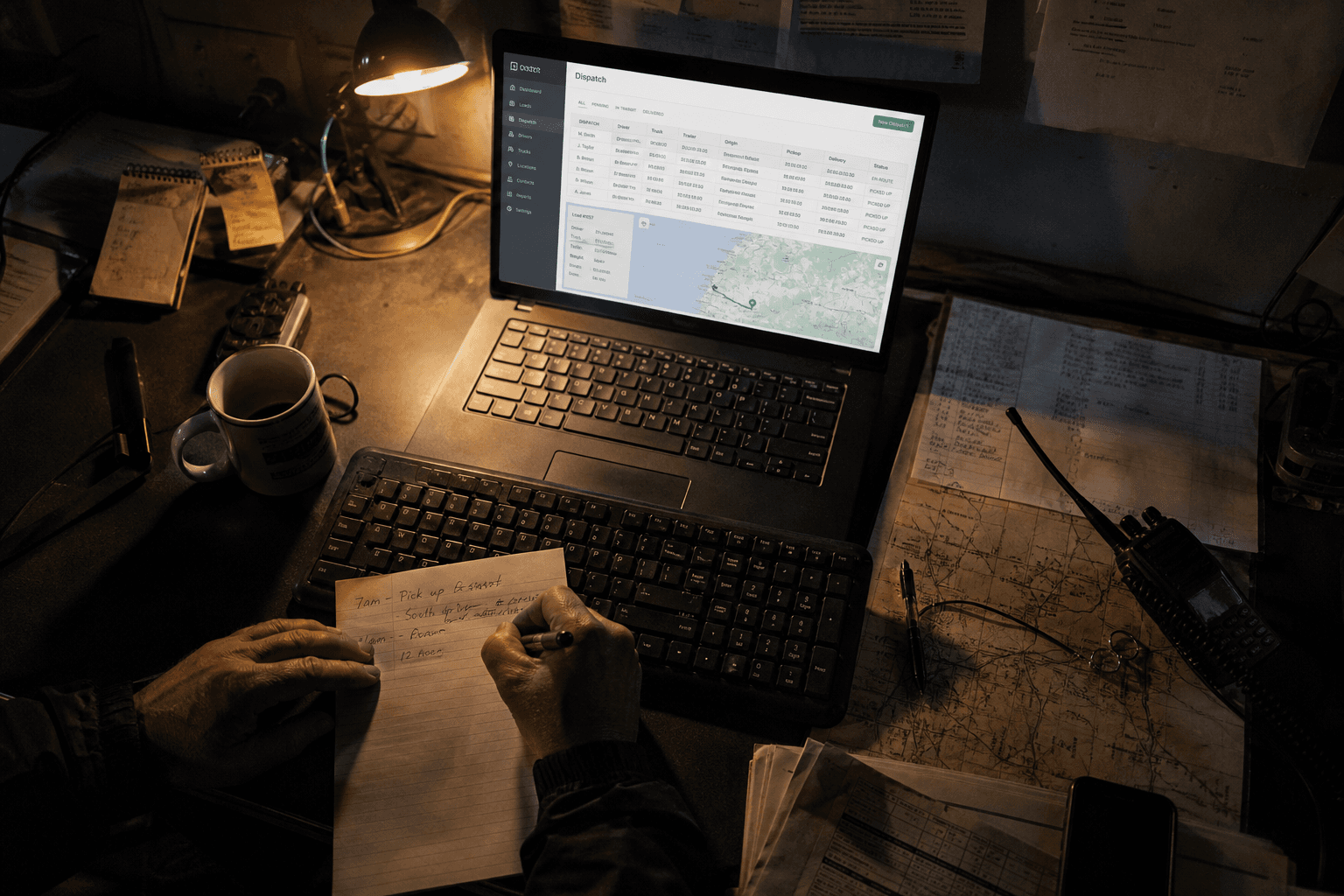
AI can capture freight knowledge before it walks out the door
The short answer: AI tools — structured interview and transcription software, combined with document intelligence that reads old spreadsheets, emails, and paper records — can turn the undocumented decisions in a dispatcher's or ops manager's head into searchable, repeatable workflows. This isn't a replacement for experienced judgement, but it's a practical way to reduce the risk that judgement disappears the day someone retires or exits.
Most family-owned freight and 3PL businesses carry a risk that never shows up on the balance sheet: the operational knowledge that exists only in the heads of a handful of long-tenured staff. Dispatch logic, customer quirks, exception-handling rules, carrier relationships — none of it is written down. If the founder, a senior dispatcher, or an operations manager retires or exits, that knowledge leaves with them.
For Growth Greg — the owner or MD thinking five to ten years ahead about succession, sale, or generational handover — this is a genuine business risk, not an abstract HR concern. A freight business that can't demonstrate repeatable, documented operations is harder to value, harder to sell, and harder to scale.
What is institutional knowledge risk in a freight business?
Institutional knowledge risk is the exposure a business carries when critical operational decisions depend on the memory and judgement of a small number of individuals rather than on documented, repeatable processes. In freight and logistics, this typically concentrates in dispatchers, long-serving ops managers, and owner-operators who have run the business informally for years.
This risk is especially acute in family-owned carriers and 3PLs because the business has often grown around one or two people's instincts rather than formal systems. Legacy transport and warehouse management systems — many implemented more than five years ago — are frequently held together by manual workarounds that only the long-tenured team understands. The system records the transaction; it doesn't record why a particular routing or exception decision was made.
Why does tacit knowledge concentrate in so few people?
Tacit knowledge builds up because day-to-day freight operations reward speed and pattern recognition over documentation. A dispatcher who has handled a customer's account for fifteen years knows which loading dock closes early, which driver suits which route, and which customer tolerates a late delivery without complaint — none of which is written anywhere.
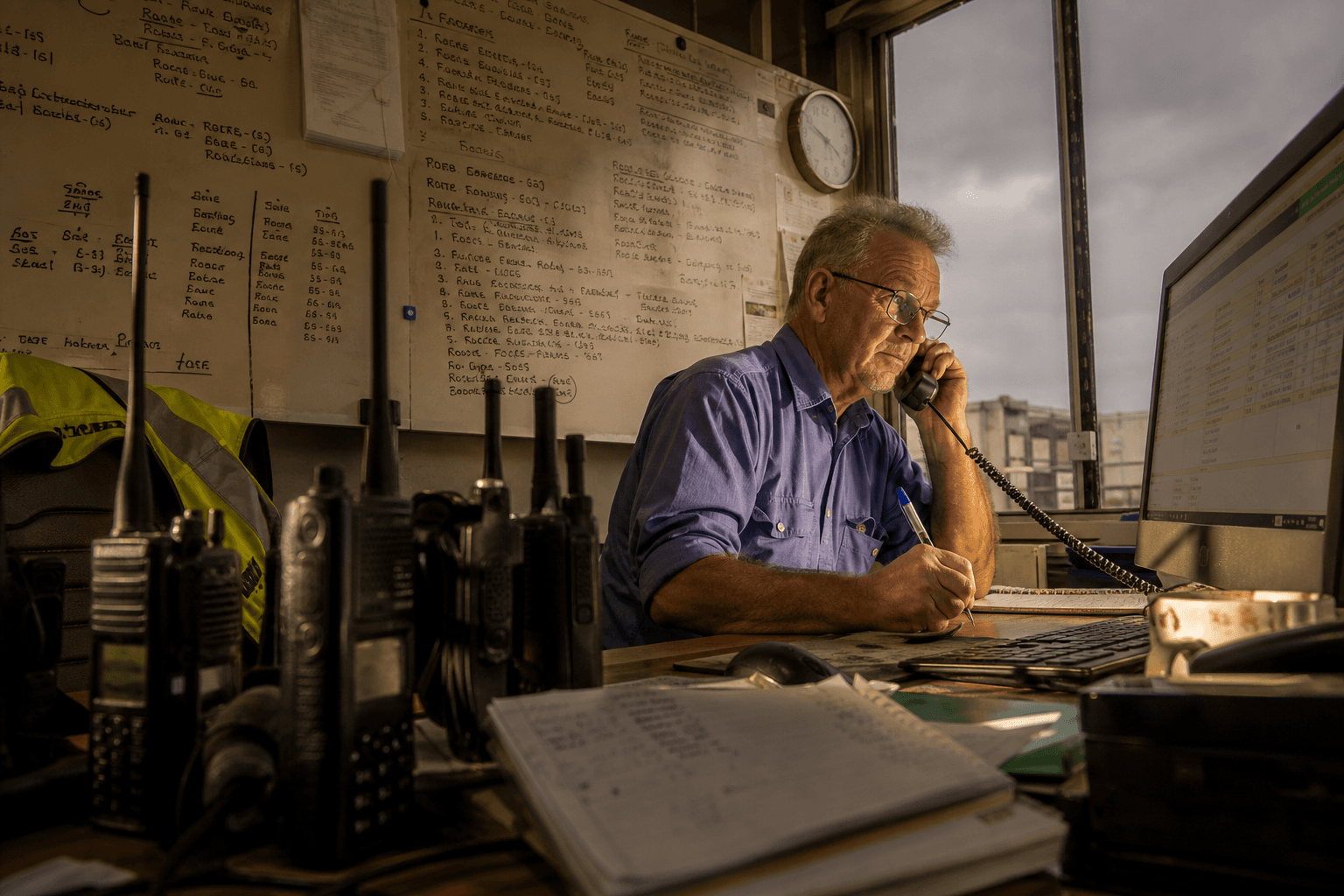
Over time, this knowledge becomes the de facto operating manual. New hires learn by shadowing, not by reading a process document. When that person leaves, the business doesn't just lose a staff member — it loses an undocumented decision-making framework that took years to build. The same pattern shows up in route optimisation decisions: the "best" route for a given customer often lives in one person's head rather than in a documented rule set, which makes it hard to hand over or scale.
How does undocumented knowledge show up operationally?
The table below contrasts what tends to happen when knowledge stays undocumented versus when it's captured and formalised. These are qualitative patterns, not measured outcomes — every business differs.
| Scenario | Knowledge stays undocumented | Knowledge is captured and systemised |
|---|---|---|
| Key person leaves or retires | Operational disruption while replacement learns by trial and error | New staff onboard against documented workflows and decision rules |
| Due diligence for sale or investment | Buyers discount value for key-person dependency | Business demonstrates repeatable operations, independent of any one person |
| Customer exceptions handling | Inconsistent, dependent on who's rostered | Consistent handling based on recorded rules and precedent |
| New system or TMS implementation | Workarounds and tribal knowledge resist migration | Documented logic can be built into new workflows |
How does AI actually capture this knowledge before someone exits?
AI can support knowledge capture, but this is an emerging application area rather than a proven, widely benchmarked practice — we'd rather be upfront about that than overstate it. What's better established is that AI can be layered over legacy TMS and WMS platforms for data extraction, normalisation, and workflow automation without requiring a full system replacement, and this same layering approach is a reasonable foundation for capturing operational decision logic.
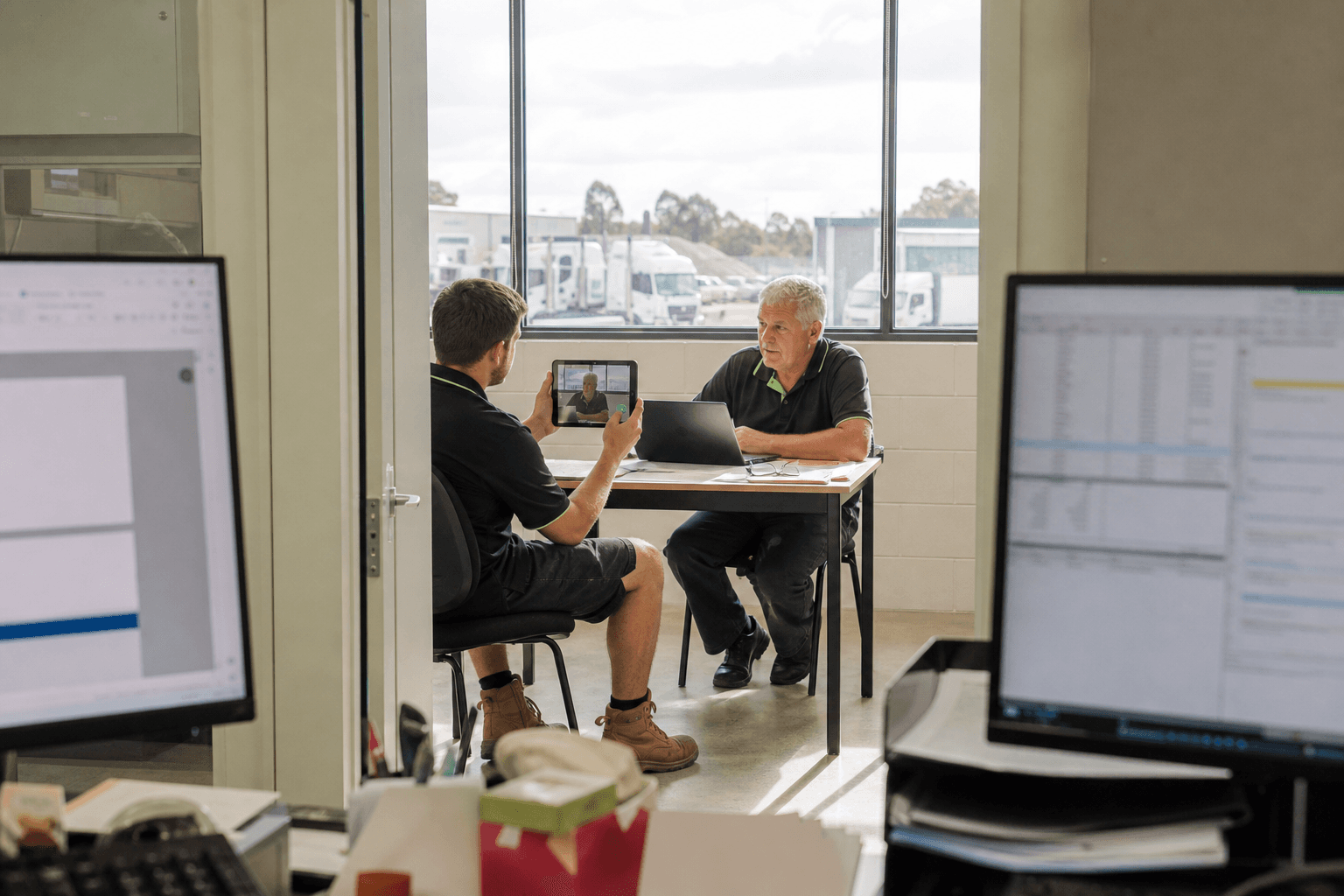
In practice, this looks like using transcription and structured-interview tools to record how experienced dispatchers actually make decisions, then turning those recordings into searchable, documented workflows rather than relying on memory. It also means using document intelligence to extract the informal rules embedded in old spreadsheets, email threads, and paper-based processes — the places where exception handling actually lives for most mid-market freight operators.
The same discipline applies to compliance knowledge. As AASB S2 and broader emissions reporting obligations land on mid-market carriers, much of the data needed to quantify Scope 3 emissions sits informally with whoever currently manages supplier relationships. Capturing that knowledge now — rather than scrambling for it during an audit or a leadership transition — is the same exercise as capturing dispatch logic, just applied to a different risk.
The starting point isn't a knowledge-capture tool. It's an honest audit of where the knowledge actually sits, how it's currently used, and what happens operationally if the person holding it is unavailable for a month. That's the kind of gap an AI Readiness Assessment is designed to surface before you commit to building anything.
What should a family freight business do before a transition or exit?
Start by identifying your single points of failure — the two or three people whose departure would most disrupt operations — and document what they actually do, not what the job title says they do. This is a practical, low-tech first step that doesn't require AI at all, but it's the groundwork any AI-assisted capture effort depends on.
From there, prioritise the processes with the highest exposure: dispatch logic, customer exception handling, and carrier relationships typically carry the most risk in a freight or 3PL business. Run structured interviews with the people holding that knowledge, use transcription tools to capture the reasoning behind their decisions (not just the decisions themselves), and feed the output into documented workflows your team can reference without needing the original person in the room.
This isn't a weekend project, and it shouldn't be rushed to meet an arbitrary deadline. But it is a bounded, sequenced piece of work — and one that pairs well with the broader AI in logistics conversation most mid-market operators are already having about modernising legacy systems. For more on how this fits alongside route optimisation, emissions reporting, and document intelligence work, see more insights from our team.
If you're planning a transition, a sale, or simply want to understand where your business depends too heavily on one or two people, get in touch and we'll talk through what an honest knowledge audit looks like for your operation.
Zero Footprint
The Zero Footprint team — AI modernisation for Australian logistics.