The True Cost of Manual Processes in Australian Logistics
Manual processes in logistics cost more than anyone tracks. We've modelled the real cost across data entry, route planning, emissions reporting, and invoice reconciliation — $500K-$1.2M per year for a typical mid-market operator.
Nobody Tracks the Cost
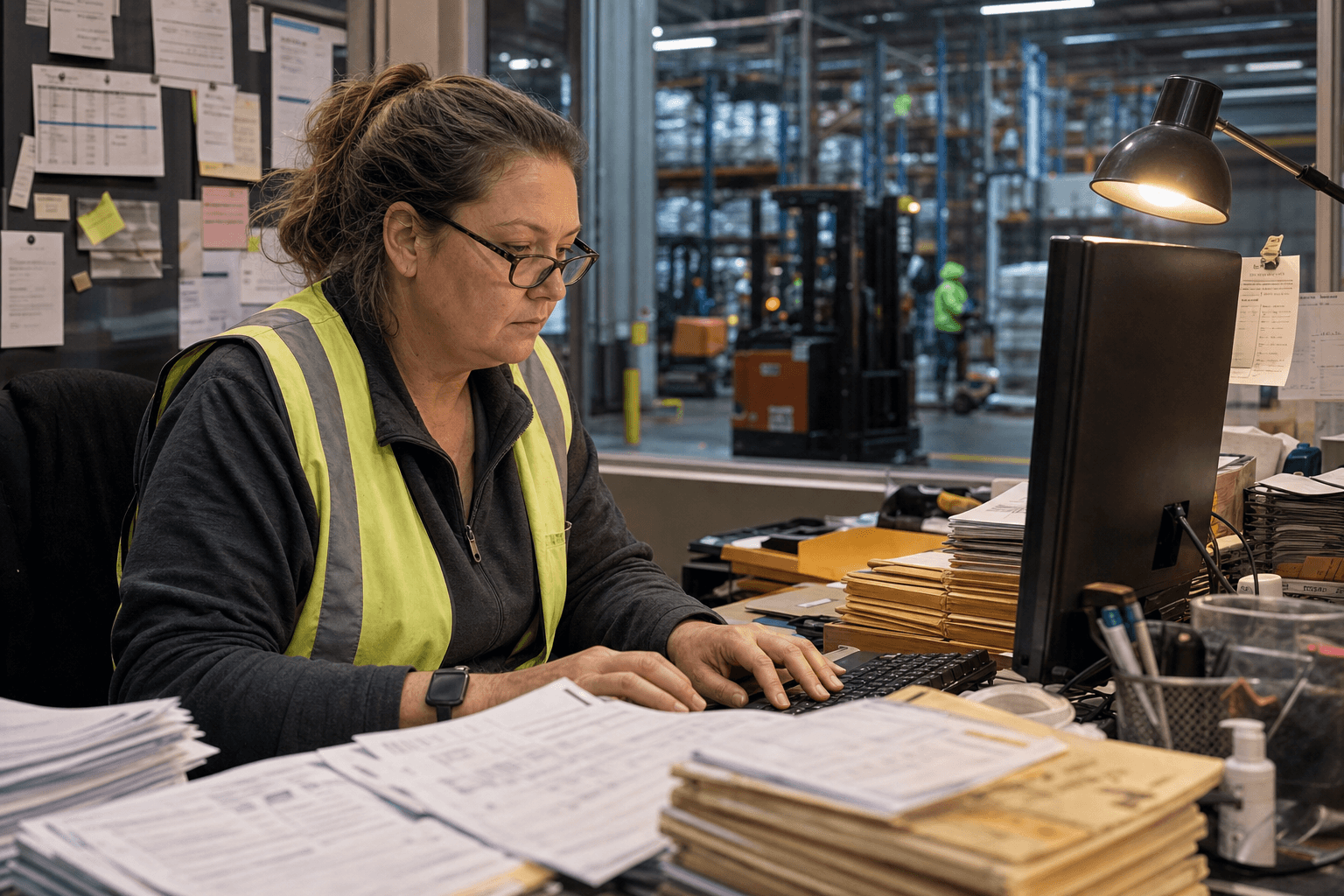
Manual processes feel free because they're buried in wages you're already paying. Nobody sends an invoice for "time your admin team spent re-keying consignment data into three systems." But the cost is real, measurable, and — for most mid-market logistics operators — surprisingly large.
We've modelled the cost of manual processes across four operational areas using Australian wage data, industry benchmarks, and our direct experience with logistics operators. The numbers are ranges because every operation is different, but the methodology is transparent and the assumptions are disclosed.
Cost Model 1: Data Entry and Document Handling
The Problem
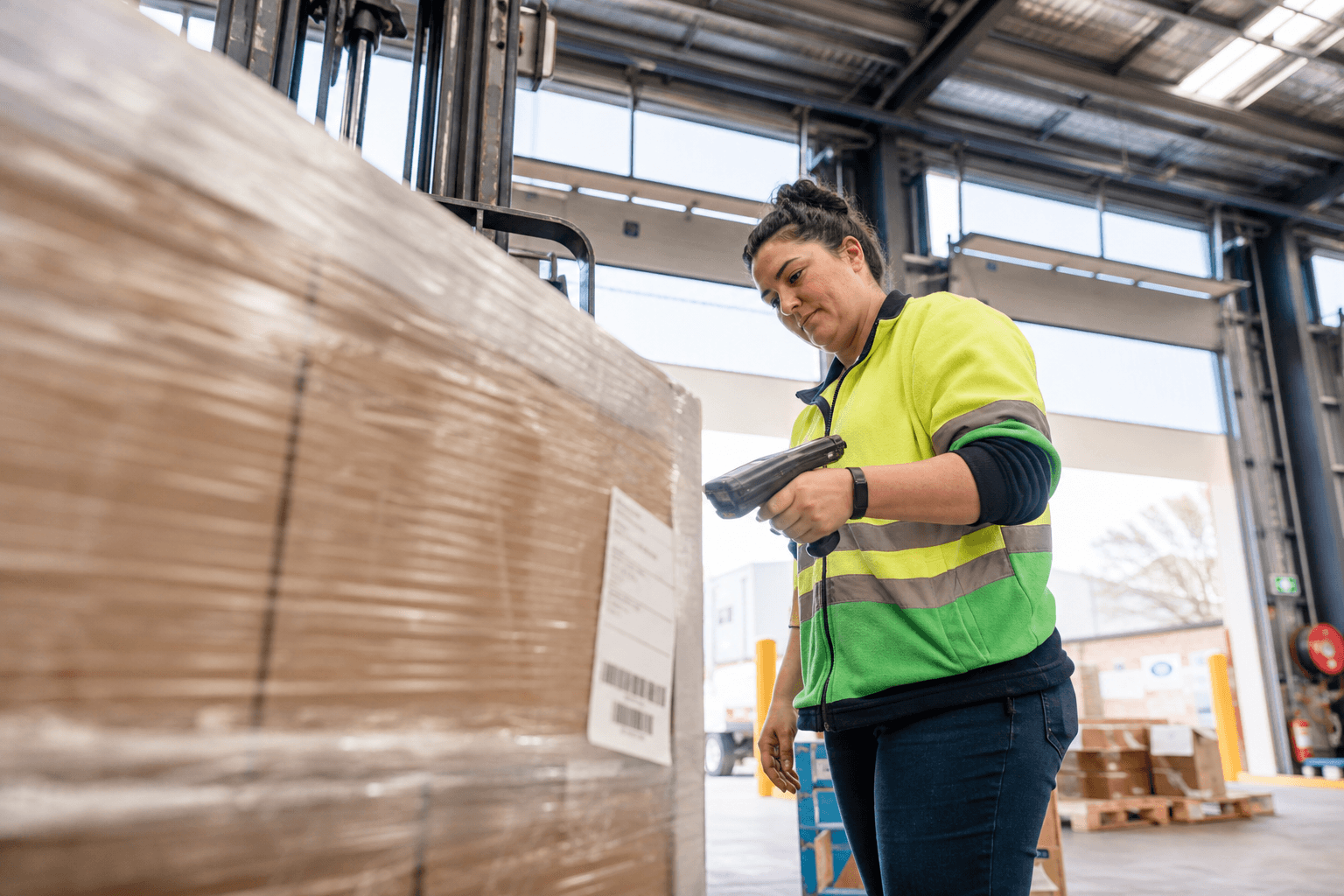
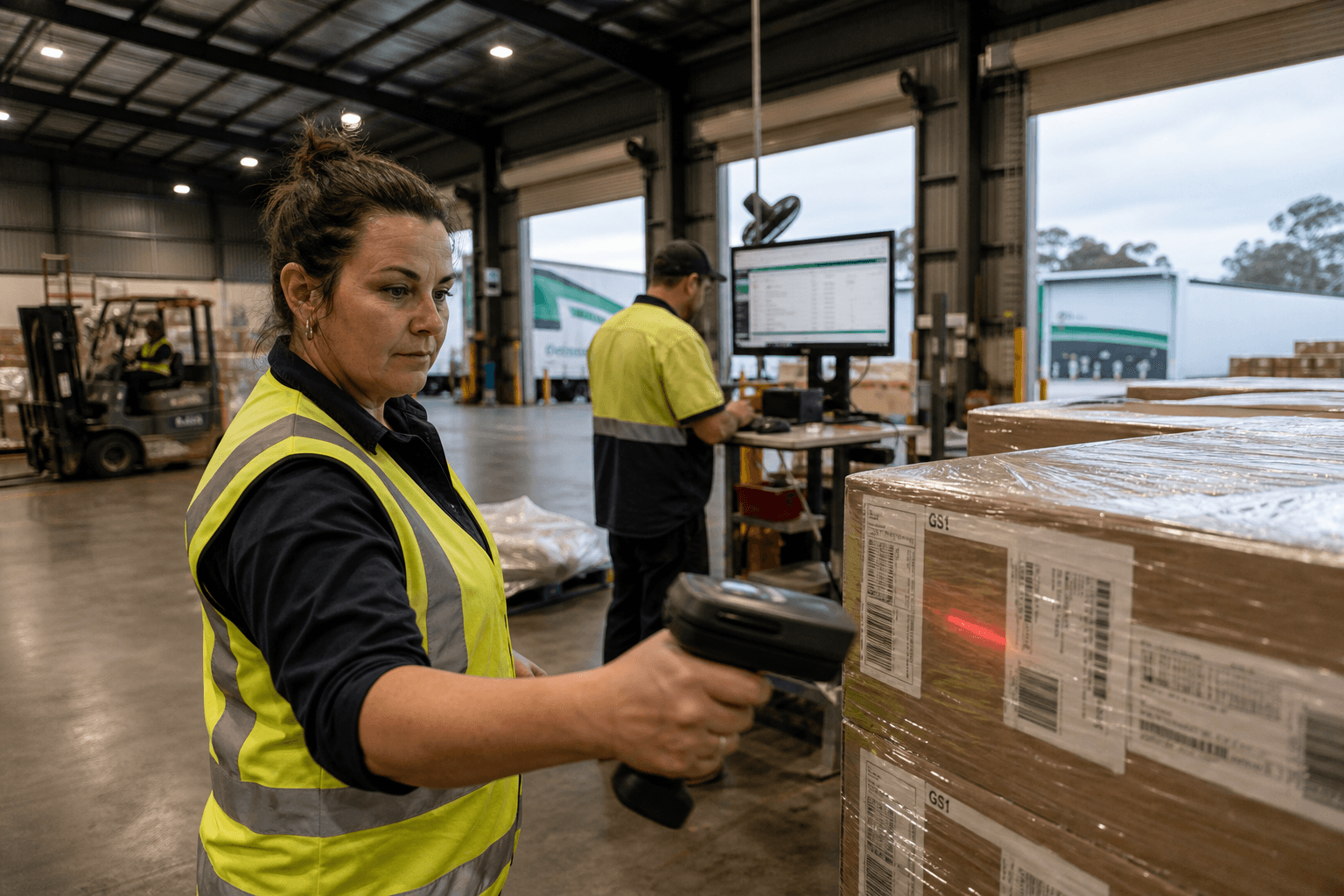
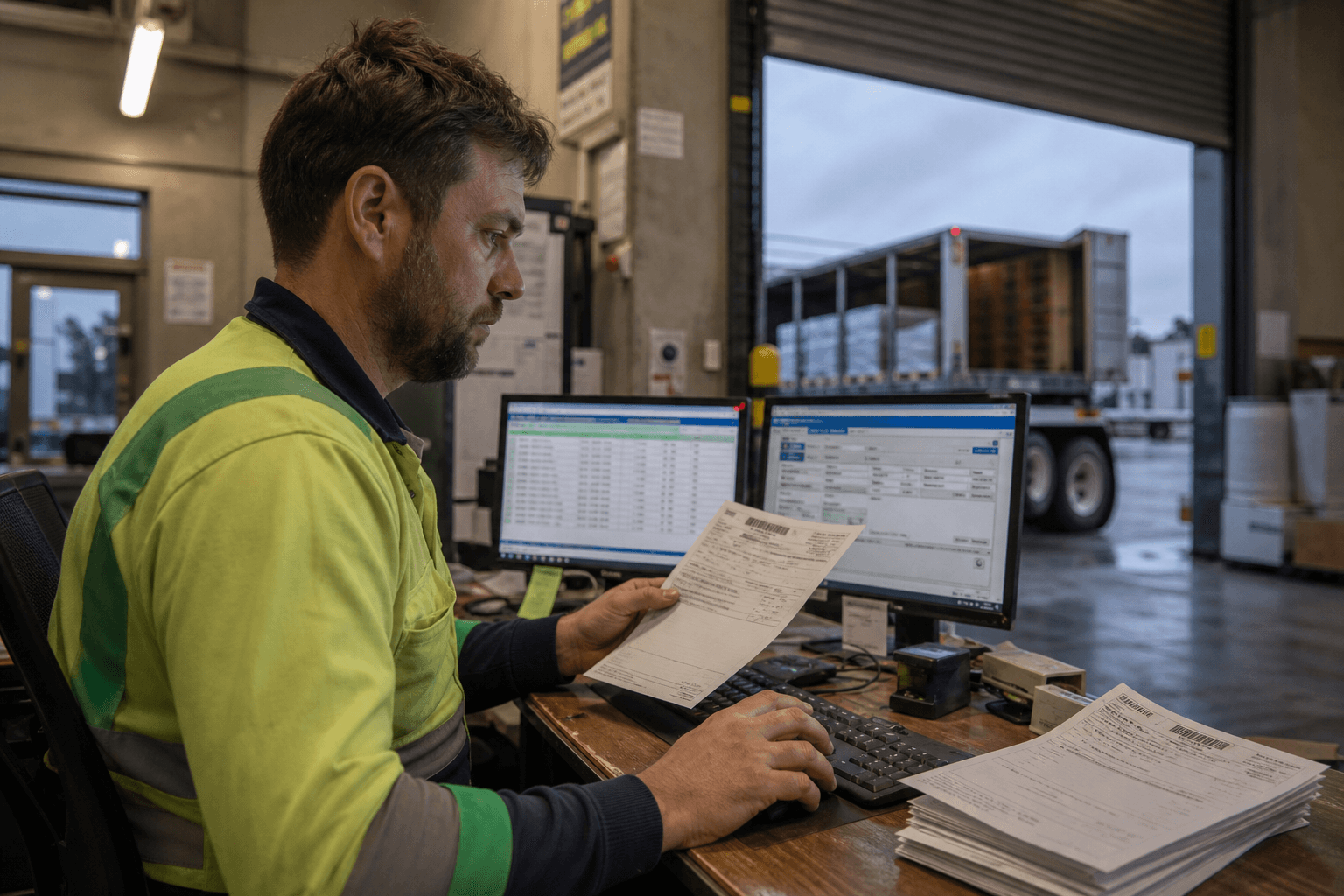
In a typical logistics operation, the same data — consignment number, sender, receiver, weight, description — gets entered into multiple systems manually. TMS, WMS, accounting, customer portal, customs system. Each entry takes time, and each entry introduces error risk.
The Numbers
| Metric | Value |
|---|---|
| Average admin salary (loaded, including super and overhead) | $65,000/year |
| Percentage of admin time on manual data entry | 40-60% |
| Data entry error rate | 3-5% of records |
| Cost of error correction (investigation, fix, re-processing) | $15-$50 per error |
| Consignments per day (mid-market operator) | 200-500 |
Annual Cost
For a mid-market operator processing 300 consignments per day:
- Data entry labour: 3-4 admin staff × 50% time × $65K = $97,500-$130,000/year
- Error correction: 300 consignments × 4% error rate × $25 avg correction × 250 working days = $75,000/year
- Total data entry cost: $170,000-$205,000/year
What Automation Changes
Document intelligence (OCR + AI extraction) reduces manual data entry by 85-95%. The same 3-4 admin staff spend their time on exceptions, not keying. Error rates drop from 3-5% to under 0.5%.
Automation investment: $40,000-$120,000 (one-time) Annual saving: $140,000-$185,000 Payback: 4-8 months
Cost Model 2: Route Planning
The Problem
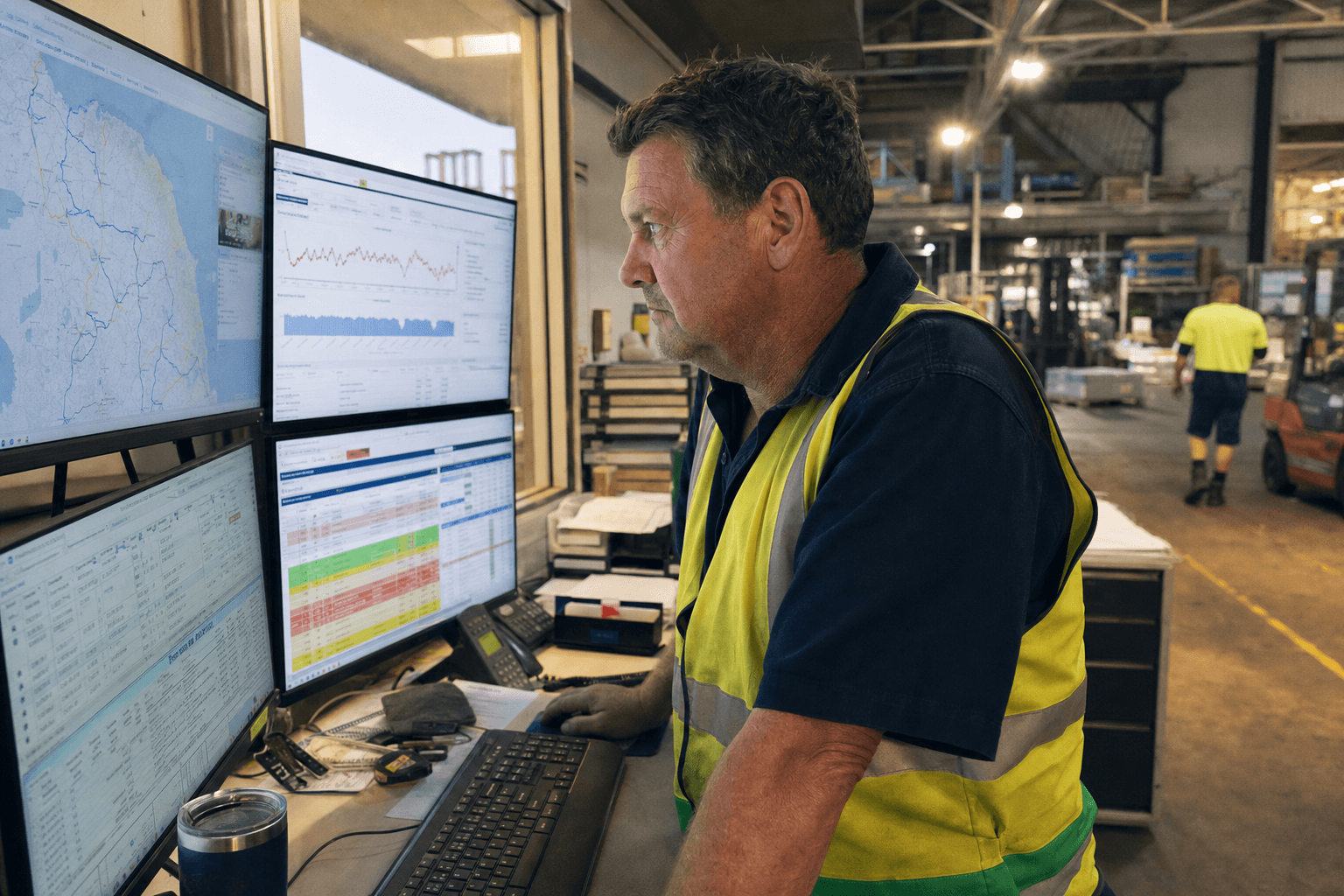
Manual route planning uses a combination of fixed zones, driver knowledge, and trial-and-error. It works, but it leaves 15-25% of fuel spend on the table through suboptimal routing, poor load consolidation, and missed backhaul opportunities.
The Numbers
| Metric | Value |
|---|---|
| Average fuel cost per vehicle per year (metro delivery) | $25,000-$35,000 |
| Average fuel cost per vehicle per year (linehaul) | $60,000-$90,000 |
| Fuel waste from suboptimal routing | 15-25% |
| Manual planning time | 2-4 hours/day for a 50-vehicle fleet |
| Planner salary (loaded) | $80,000/year |
Annual Cost (50-vehicle metro fleet)
- Fuel waste: 50 vehicles × $30K avg fuel × 20% waste = $300,000/year
- Planning labour: 3 hours/day × $40/hour × 250 days = $30,000/year
- Total route planning waste: $330,000/year
For a linehaul operation with 25 trucks, the fuel waste alone is $225,000-$562,000/year.
What Automation Changes
AI route optimisation reduces fuel costs by 15-25% and increases drops per run by 20-33%. The planner's role shifts from building routes to managing exceptions.
Automation investment: $80,000-$150,000 Annual saving: $250,000-$500,000 Payback: 3-6 months
Cost Model 3: Emissions Reporting
The Problem
Manual emissions reporting involves pulling fuel card data, chasing subcontractors for numbers, applying emission factors from spreadsheets, and reconciling everything into a report. It's time-consuming, error-prone, and doesn't scale.
The Numbers
| Metric | Value |
|---|---|
| Staff hours per quarter on emissions data collection | 60-80 hours |
| Staff hours per quarter on calculation and reporting | 20-30 hours |
| Staff hours per quarter on review and corrections | 10-15 hours |
| Error rate in manual calculations | 15-25% of line items |
| External consultant cost (annual) | $30,000-$80,000 |
| Cost per error correction incident | $5,000-$15,000 |
Annual Cost
- Staff time: 360-500 hours/year × $40/hour = $14,400-$20,000/year
- External consultants: $30,000-$80,000/year
- Error correction (2-3 incidents/year): $10,000-$45,000/year
- Revenue at risk (contracts requiring emissions data): $500,000+ per lost contract
- Total emissions reporting cost: $55,000-$145,000/year (excluding revenue risk)
What Automation Changes
Automated pipelines pull data from fleet GPS, fuel cards, and TMS. Calculations run automatically using NGER factors. Reports are audit-ready without manual reconciliation.
Automation investment: $80,000-$200,000 Annual saving: $45,000-$125,000 + revenue protection Payback: 6-12 months (faster if it prevents a contract loss)
Cost Model 4: Invoice Reconciliation
The Problem
Carrier invoices contain errors — duplicate charges, incorrect rate applications, phantom surcharges. Manual spot-checking catches some, but at typical volumes (500-2,000 invoices/month), most errors go undetected.
The Numbers
| Metric | Value |
|---|---|
| Annual carrier spend (mid-market 3PL or forwarder) | $3M-$10M |
| Carrier billing error rate | 2-5% of invoice value |
| Staff hours per week on invoice checking | 15-25 hours |
| Detection rate with manual checking | 20-40% of errors |
Annual Cost
- Undetected billing errors: $5M spend × 3.5% error rate × 70% undetected = $122,500/year
- Invoice checking labour: 20 hours/week × $35/hour × 50 weeks = $35,000/year
- Total invoice cost: $157,500/year
What Automation Changes
AI invoice matching checks every line item against rate cards, consignment records, and PODs. Detection rate jumps from 20-40% to 95%+.
Automation investment: $30,000-$80,000 Annual saving: $120,000-$200,000 Payback: 3-6 months
The Total Picture
For a typical mid-market logistics operator ($20M-$100M revenue, 100-300 vehicles, 200-500 consignments/day):
| Cost Area | Annual Manual Cost | Automation Investment | Annual Saving | Payback |
|---|---|---|---|---|
| Data entry & documents | $170K-$205K | $40K-$120K | $140K-$185K | 4-8 months |
| Route planning | $330K+ | $80K-$150K | $250K-$500K | 3-6 months |
| Emissions reporting | $55K-$145K | $80K-$200K | $45K-$125K | 6-12 months |
| Invoice reconciliation | $157K+ | $30K-$80K | $120K-$200K | 3-6 months |
| Total | $712K-$837K+ | $230K-$550K | $555K-$1.01M | 6-12 months overall |
The total cost of manual processes for a mid-market operator: $500,000 to $1.2 million per year in labour waste, errors, overpayments, and missed efficiency.
The total investment to automate the four highest-impact areas: $230,000-$550,000 with a combined payback of 6-12 months.
The most expensive manual processes we see are typically route planning, where planners spend hours each day manually scheduling deliveries, and document processing, where teams re-key the same consignment data across multiple systems. Many operators also underestimate the hidden costs in emissions reporting, where manual data collection and calculation can consume weeks of effort each quarter.
Methodology
Cost models are based on:
- Wage data: ABS average weekly earnings, adjusted for superannuation and overhead (1.3x multiplier)
- Industry benchmarks: Published logistics industry reports on error rates, fuel efficiency, and operational metrics
- Direct experience: Zero Footprint's project data from implementations with Australian logistics operators
- Assumptions: Mid-market operator with $20M-$100M revenue, 100-300 vehicles, 200-500 daily consignments. All dollar figures are AUD.
Ranges reflect the variation between operators. A well-run operation with some existing automation will be at the lower end. An operation still heavily reliant on paper and spreadsheets will be at the upper end.
Get a cost assessment for your operation →
Want to understand where manual processes are costing your operation the most? Our AI readiness assessment identifies your highest-cost manual workflows and quantifies the automation opportunity for your specific operation.
Zero Footprint
The Zero Footprint team — AI modernisation for Australian logistics.