Vendor Risk Scoring for 3PL Networks: An AI Guide
There's no off-the-shelf AI product for scoring 3PL subcontractor risk — but the data problems that would underpin one are already visible in Scope 3 emissions reporting and legacy TMS/WMS gaps. Here's a practical, honest look at what's needed before you can build one.

What is vendor and subcontractor risk scoring for a 3PL network?
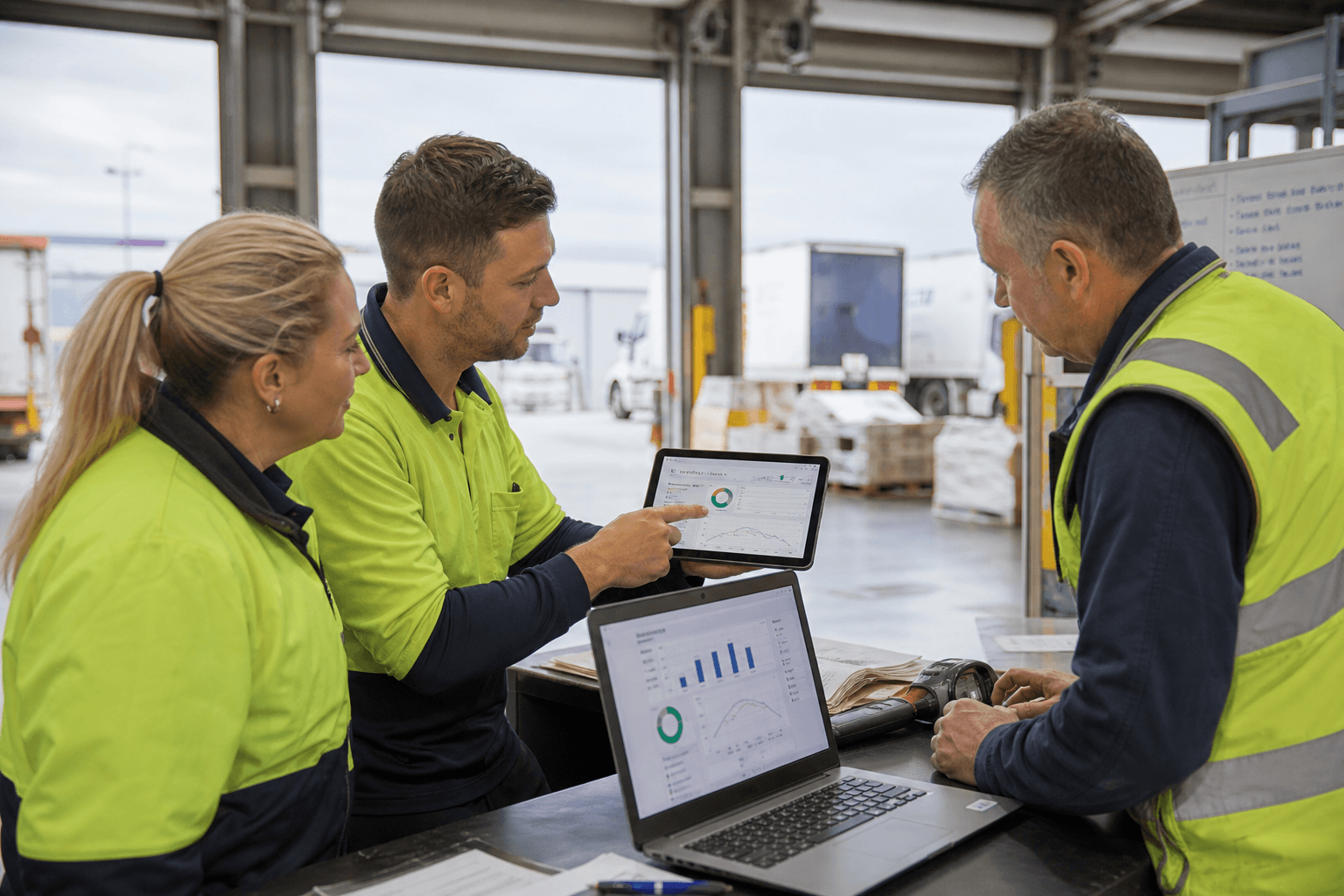
Vendor and subcontractor risk scoring is the practice of systematically assessing the carriers, owner-drivers, and third-party operators in your network against reliability, compliance, and performance criteria — then assigning a score that flags which relationships need closer management. For 3PLs and freight forwarders, this matters because a large share of physical freight movement is often performed by subcontracted carriers rather than owned fleet, which means risk (and data gaps) sit outside your direct operational control.
It's worth being upfront: this is an emerging capability area rather than an off-the-shelf product category. There's no single accepted industry framework for AI-based subcontractor risk scoring in Australian logistics. What follows is a practical guide built from the adjacent problems we see most often in 3PL networks — compliance exposure, emissions reporting gaps, and fragmented legacy data — and how AI is realistically applied to close them.
Why does subcontractor risk matter for Australian 3PLs?
Subcontractor risk matters because when a large proportion of your network's freight is moved by third parties, your compliance, safety, and reporting obligations don't disappear — they just become harder to verify. If a subcontracted carrier has a poor safety record, inconsistent insurance coverage, or doesn't track its own emissions, that risk sits inside your operation whether you have visibility into it or not.
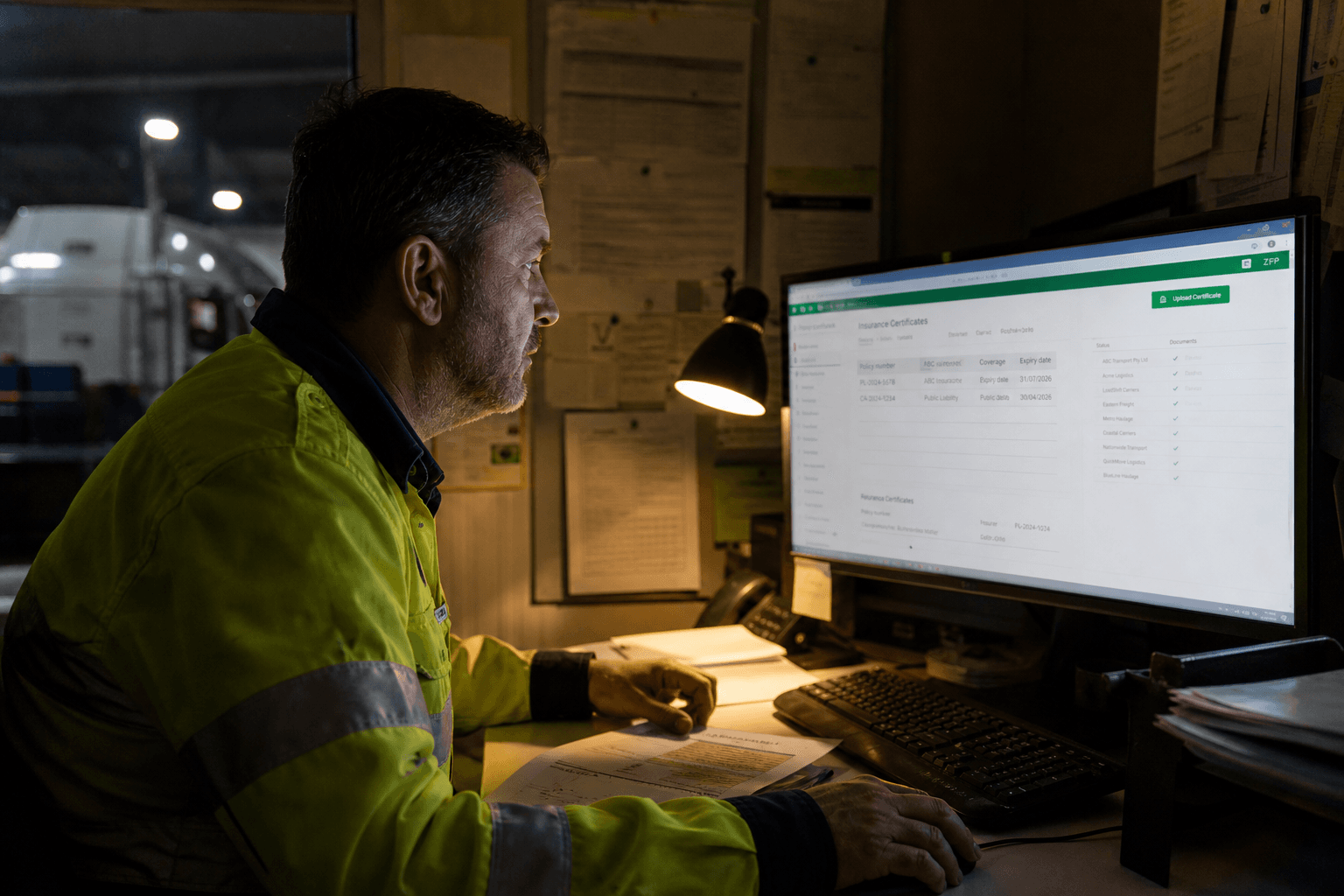
This shows up most concretely in emissions reporting. Under AASB S2, 3PLs and freight forwarders need to account for Scope 3 emissions — and because so much of the physical movement is subcontracted, producing accurate figures depends on subcontractor and carrier emissions data. Many smaller carriers don't have their own emissions tracking in place, which turns what should be a reporting exercise into a data collection problem across dozens or hundreds of relationships.
How does Scope 3 emissions reporting expose subcontractor risk?
Scope 3 emissions reporting exposes subcontractor risk because it forces a 3PL to formally request, verify, and reconcile data from third parties who may have no internal system for producing it. Scope 3 emissions are indirect emissions that occur in a company's value chain, including those generated by subcontracted transport — and for freight networks, this is typically the largest and hardest-to-verify emissions category.
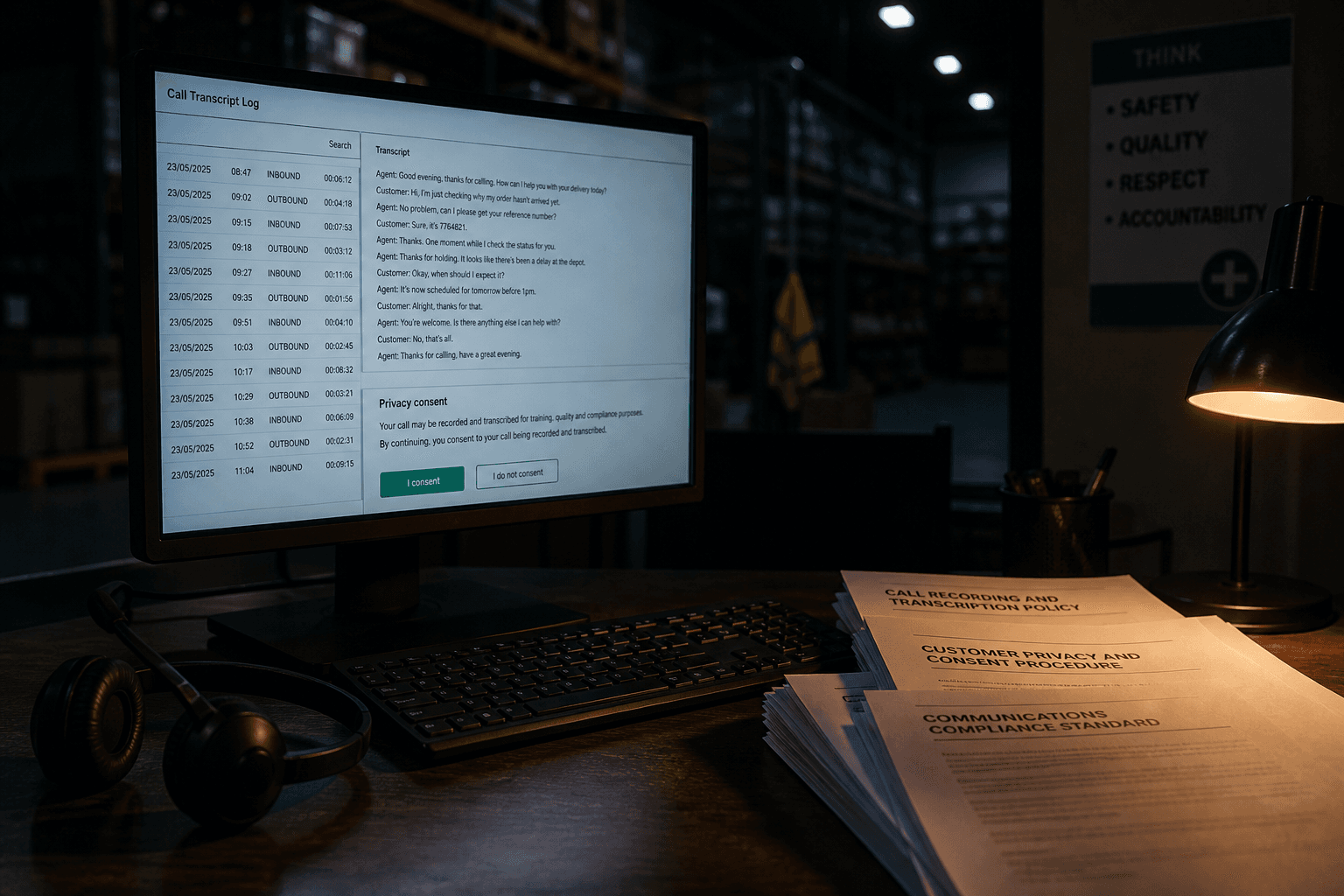
Without clean, structured operational data from your carrier network, emissions reporting becomes a manual, error-prone exercise, or in some cases isn't possible at all. That same data gap — inconsistent formats, missing fields, no single source of truth — is exactly what makes broader risk scoring difficult too. A subcontractor who can't reliably report fuel or distance data for emissions purposes is often the same subcontractor whose compliance documentation, insurance certificates, or on-time performance records are similarly patchy.
What data do you need before you can build a risk score?
You need consolidated, structured data from your legacy systems and your subcontractor network before any scoring model is meaningful — because a risk score is only as good as the inputs feeding it. Most 3PLs running legacy TMS or WMS platforms have this data scattered across spreadsheets, email threads, PDFs, and disconnected point solutions.
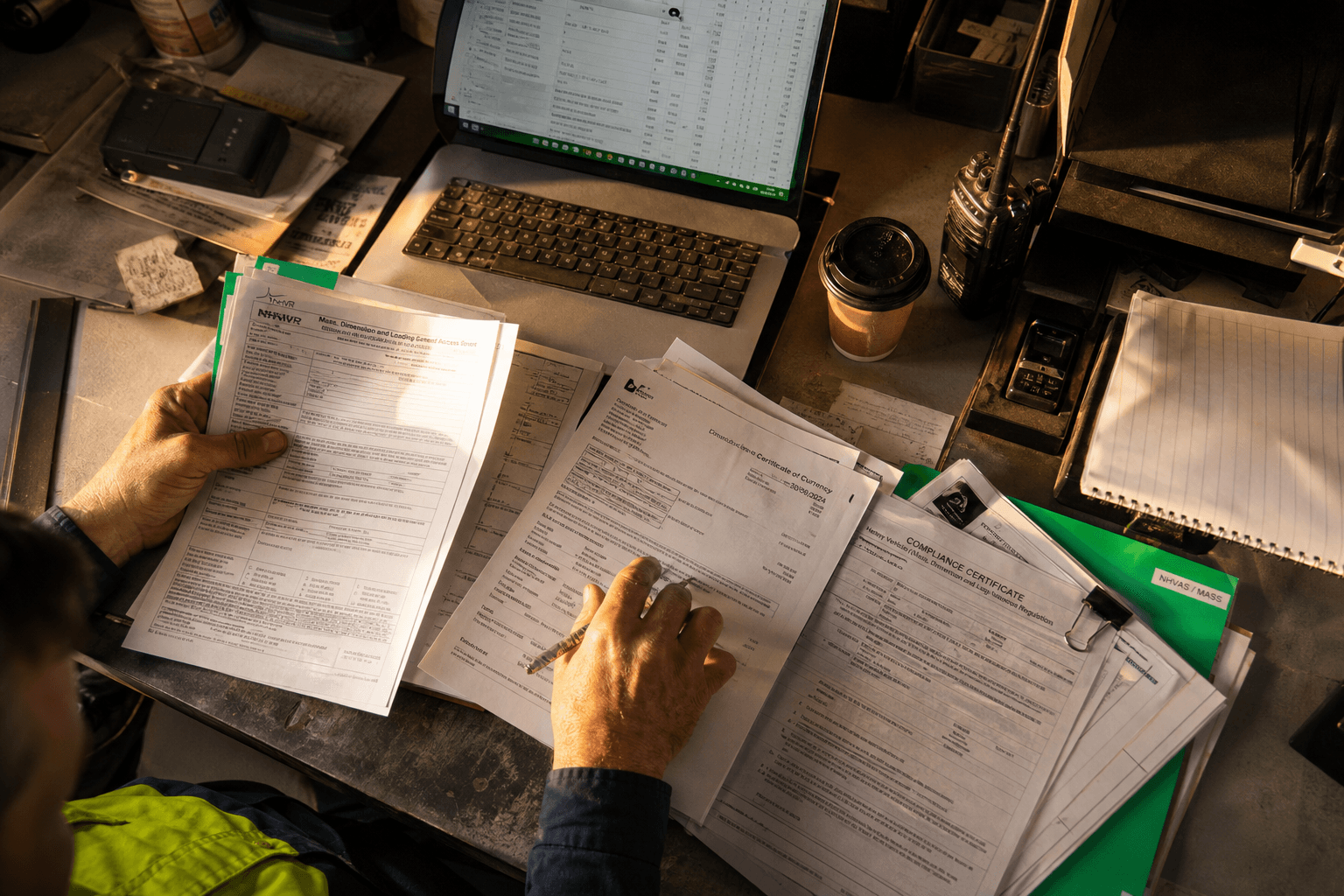
AI can be layered on top of these legacy systems to extract and normalise third-party data via API integrations or document processing, turning inconsistent subcontractor paperwork — compliance certificates, insurance renewals, rate cards, POD documentation — into structured records that can actually be compared across the network. This is foundational document intelligence work, and it typically needs to happen before any predictive or scoring layer is built on top. Digital transformation efforts that consolidate data and integrate EDI with carriers and suppliers are a prerequisite step here, not an optional extra.
What would an AI-assisted risk score actually track?
A practical subcontractor risk score draws on multiple categories of signal rather than a single metric, because reliability, compliance, and performance risk each have different causes and warning signs. Based on the data problems most 3PLs already face, the categories typically worth tracking include:
- Compliance history — insurance currency, licensing, safety accreditation, and any audit or incident findings.
- Operational performance — on-time pickup/delivery rates, claims frequency, POD accuracy, and responsiveness to exceptions.
- Data reliability — whether a subcontractor can reliably supply structured operational and emissions data, or whether every interaction requires manual chasing.
- Financial and continuity signals — payment history, contract renewal patterns, and any indicators of business instability.
None of these are exotic. What changes with AI is the ability to pull this information automatically from documents and system integrations, monitor it continuously rather than at annual review time, and surface which relationships are drifting into higher-risk territory before it becomes a service failure or a compliance finding.
Manual vendor oversight vs AI-assisted monitoring
| Aspect | Manual oversight | AI-assisted monitoring |
|---|---|---|
| Data currency | Updated at contract renewal or annual review | Continuously updated as documents and system data change |
| Compliance visibility | Relies on subcontractor self-reporting | Cross-checked against extracted document data |
| Emissions/Scope 3 data | Chased manually, often incomplete | Structured extraction, flagged gaps for follow-up |
| Time to detect a declining vendor | Often after a service failure | Earlier, via trend signals across multiple data points |
| Effort to scale across a large network | Higher, linear with network size | Lower relative to network size once systems are integrated |
This table reflects qualitative differences in approach, not guaranteed outcomes — the actual improvement any 3PL sees depends on the state of its existing systems and data quality.
Where should a 3PL start?
Most 3PLs should start by understanding what data they already have, where it lives, and how much of it is trustworthy — before investing in any scoring or monitoring layer. Attempting to build a risk model on top of fragmented spreadsheets and inconsistent subcontractor paperwork tends to produce a score nobody trusts, which defeats the purpose.
This is why we typically recommend a structured AI Readiness Assessment as the entry point: it maps your current TMS/WMS setup, identifies where subcontractor and compliance data is missing or unreliable, and clarifies whether emissions reporting, document processing, or broader route optimisation work should come first. For many networks, resolving the Scope 3 emissions data gap under AASB S2 turns out to be the fastest way to also surface subcontractor compliance and reliability issues — because it's the one reporting obligation that forces every carrier relationship to be examined at once.
You can read more on related foundations — emissions reporting, legacy system modernisation, and digital transformation — over on our insights.
Get in touch
If you're exploring how to get better visibility into subcontractor compliance, reliability, or emissions data across your carrier network, we can help. We start by understanding what data you actually have before recommending any AI layer on top of it.
Zero Footprint
The Zero Footprint team — AI modernisation for Australian logistics.