AI and Chain of Responsibility Compliance in Road Freight
AI can strengthen Chain of Responsibility record-keeping in road freight by structuring driver hour, vehicle check, and load data — but it doesn't replace the duty of care every party in the chain owes under the HVNL. Here's where AI genuinely fits, and what to check before you rely on any system.
How does AI actually help with Chain of Responsibility compliance?
AI can support Chain of Responsibility (CoR) compliance in road freight by strengthening the record-keeping and evidence trails that CoR obligations depend on — extracting and structuring data from driver hour logs, vehicle check sheets, and load documentation, then flagging gaps before they become an audit problem. It doesn't replace the primary duty of care that every party in the transport chain owes under the Heavy Vehicle National Law (HVNL). It's a tool that makes existing obligations easier to demonstrate, not a substitute for the safety systems and processes those obligations require. That distinction matters, and it's worth understanding the underlying legal framework before looking at where AI genuinely fits.
What is Chain of Responsibility under the HVNL?
Chain of Responsibility is a legal framework under Australia's HVNL that extends responsibility for heavy vehicle safety breaches beyond the driver to every party in the transport supply chain. Consignors, schedulers, loaders, packers, and operators can all be held liable if their actions or omissions contribute to a breach of mass, dimension, loading, fatigue, or speed requirements.
Under the HVNL, parties in the chain owe a primary duty of care to eliminate or minimise safety risks so far as reasonably practicable. This is why compliance can't be treated as a driver-only or fleet-only problem — it touches scheduling, warehouse loading practices, customer contracts, and the systems used to record and verify all of it.
Where does record-keeping fit into CoR obligations?
Record-keeping is central to demonstrating CoR compliance, particularly around driver work and rest hours. Operators must comply with NHVR-regulated work and rest hours for heavy vehicle drivers, and this comes with strict record-keeping requirements. Fatigue management sits alongside this as a state-based OHS obligation for shift workers in transport.
In practice, this means logbooks, roster records, vehicle inspection checklists, and loading documentation all need to be accurate, retrievable, and defensible if a regulator or court asks for them after an incident. Gaps in these records are a common source of exposure for operators who otherwise have reasonable safety practices in place.
Can AI actually help with CoR record-keeping and evidence trails?
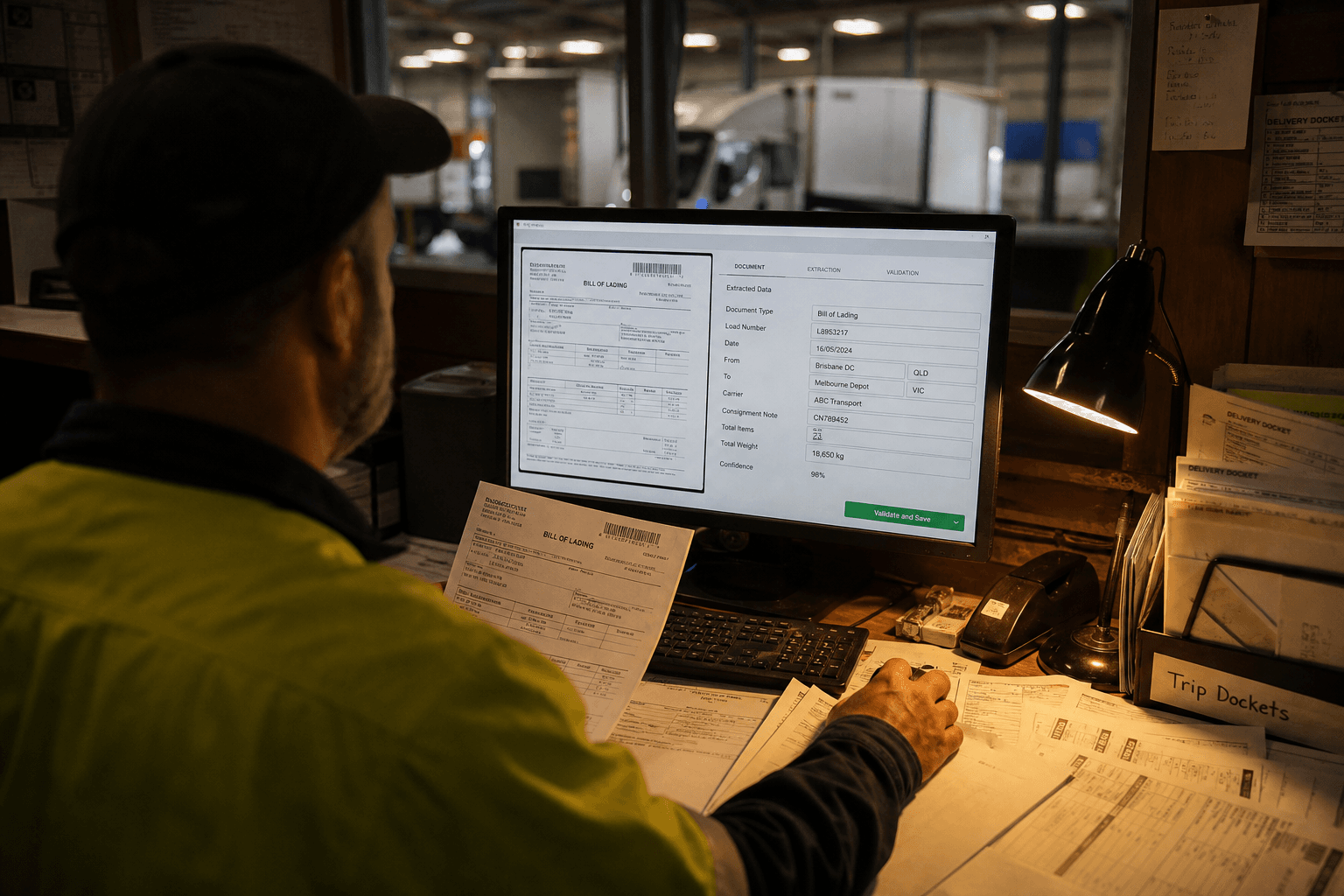
AI can, in principle, support CoR-related record-keeping by extracting and normalising data from disparate sources — driver hour logs, vehicle check sheets, load manifests — and automating the workflows that keep those records current and accessible. This is a genuine capability of AI layered on existing transport systems, but it's an application of broader document intelligence rather than a purpose-built, industry-tested CoR solution.
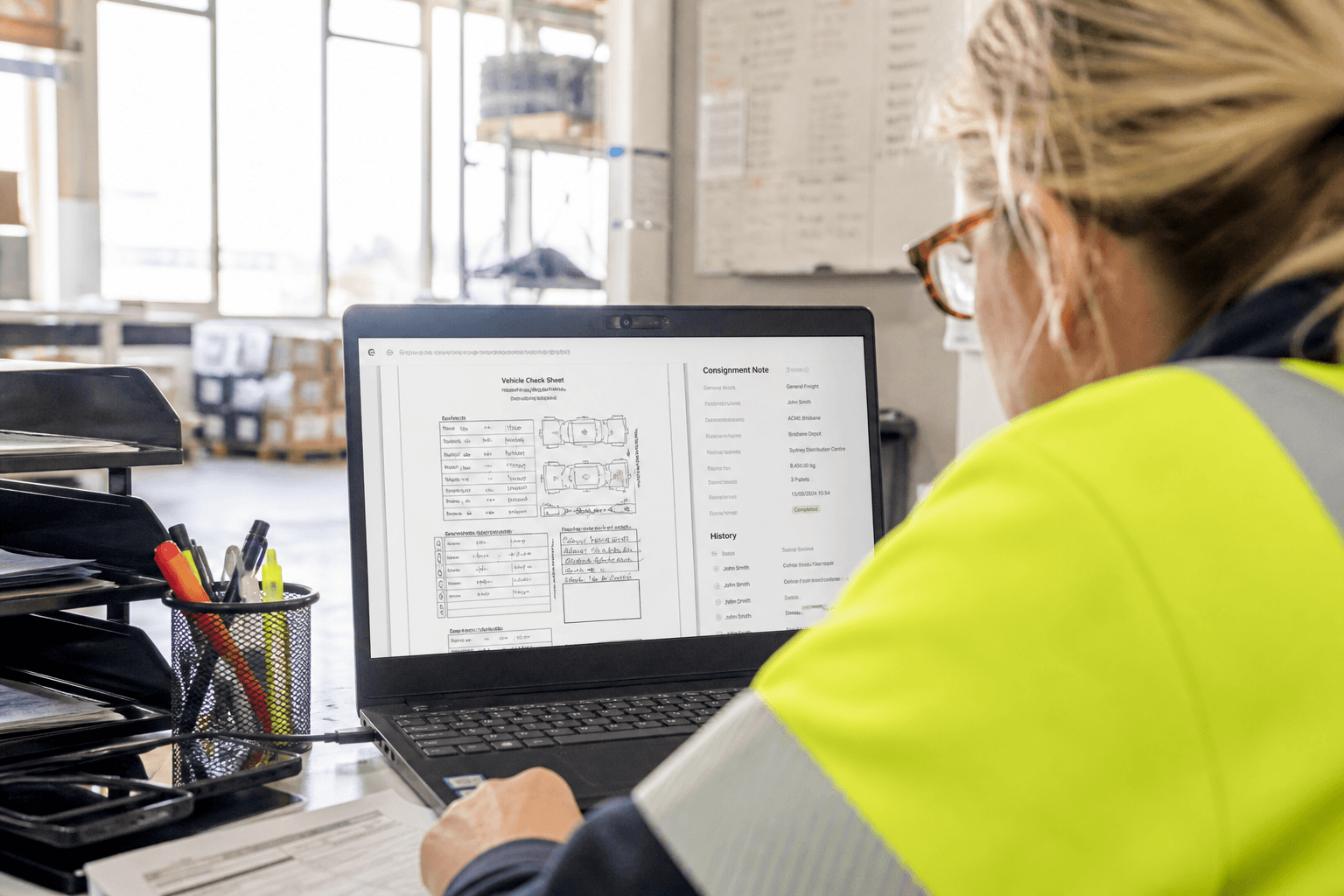
What this looks like operationally is AI reading paper-based or scanned vehicle check sheets and consignment notes, structuring that information, and flagging missing or inconsistent entries before they become an audit problem. Our document intelligence work covers this kind of extraction and normalisation, though we'd stress that translating it into a defensible CoR audit trail requires deliberate mapping against your specific duties — not just digitising paperwork.
What should operators check before relying on any system for HVNL compliance?
Any system you use to support CoR compliance — whether it's a transport management platform, a scheduling tool, or an AI layer sitting across your existing software — needs to be checked against Australian-specific requirements before you assume it covers you. NHVR/HVNL rules, Fair Work obligations around driver hours, and fatigue management requirements are jurisdiction-specific, and it's reasonable to ask any vendor how their system handles them, rather than assuming coverage out of the box.

The practical approach we take is to start from your actual duties under the HVNL — what records you need to produce, for whom, and on what timeframe — and build or configure systems around that, rather than starting from a generic feature list. This applies whether you're extending an existing platform or introducing AI-based data extraction and workflow automation. The ai readiness assessment is built to do exactly this kind of gap-mapping before any tool selection or build decision.
Should CoR compliance and emissions reporting be treated as the same problem?
No — CoR and Scope 3 emissions reporting are distinct obligations, even though they draw on overlapping operational data such as fuel use, distance travelled, and load information. CoR is a safety-based duty under the HVNL covering mass, dimension, loading, fatigue, and speed. Emissions reporting under AASB S2 is a climate disclosure obligation, and it comes with its own audit-trail expectations.
It's worth keeping these separate in your compliance planning, even as you build shared data infrastructure. The same underlying trip, fuel, and load data that supports CoR record-keeping can also feed route optimisation work and emissions calculations, so there's a genuine efficiency case for designing your data systems once and using them for multiple purposes. If you're also working through climate disclosure requirements, our emissions reporting service addresses that specifically, and shouldn't be conflated with CoR record-keeping projects.
What should operators do given the gaps in available guidance?
Given how much is at stake — and how jurisdiction-specific these rules are — the sensible first step is mapping your actual data flows and duties before selecting or building any AI tool. This is what an ai readiness assessment is designed to do: identify where your driver hour records, vehicle checks, load documentation, and scheduling data currently live, where the gaps are, and what an evidence trail that would satisfy an auditor actually needs to contain.
We'd also flag that this is genuinely a developing area. There isn't yet an established, widely-tested playbook for AI-specific CoR applications across the industry, and operators should treat vendor claims in this space — including ours — with the same scrutiny they'd apply to any new compliance tool. For more on how we approach these problems, see more insights on our blog, or get in touch to talk through where your CoR and compliance data currently stands.
Zero Footprint
The Zero Footprint team — AI modernisation for Australian logistics.