AI-Powered Mass and Dimension Compliance for Heavy Vehicles
Mass and dimension breaches remain a common source of fines and Chain of Responsibility exposure for Australian heavy vehicle operators. Here's how combining weighbridge, telematics and load data with AI can flag issues before dispatch, not after an intercept.
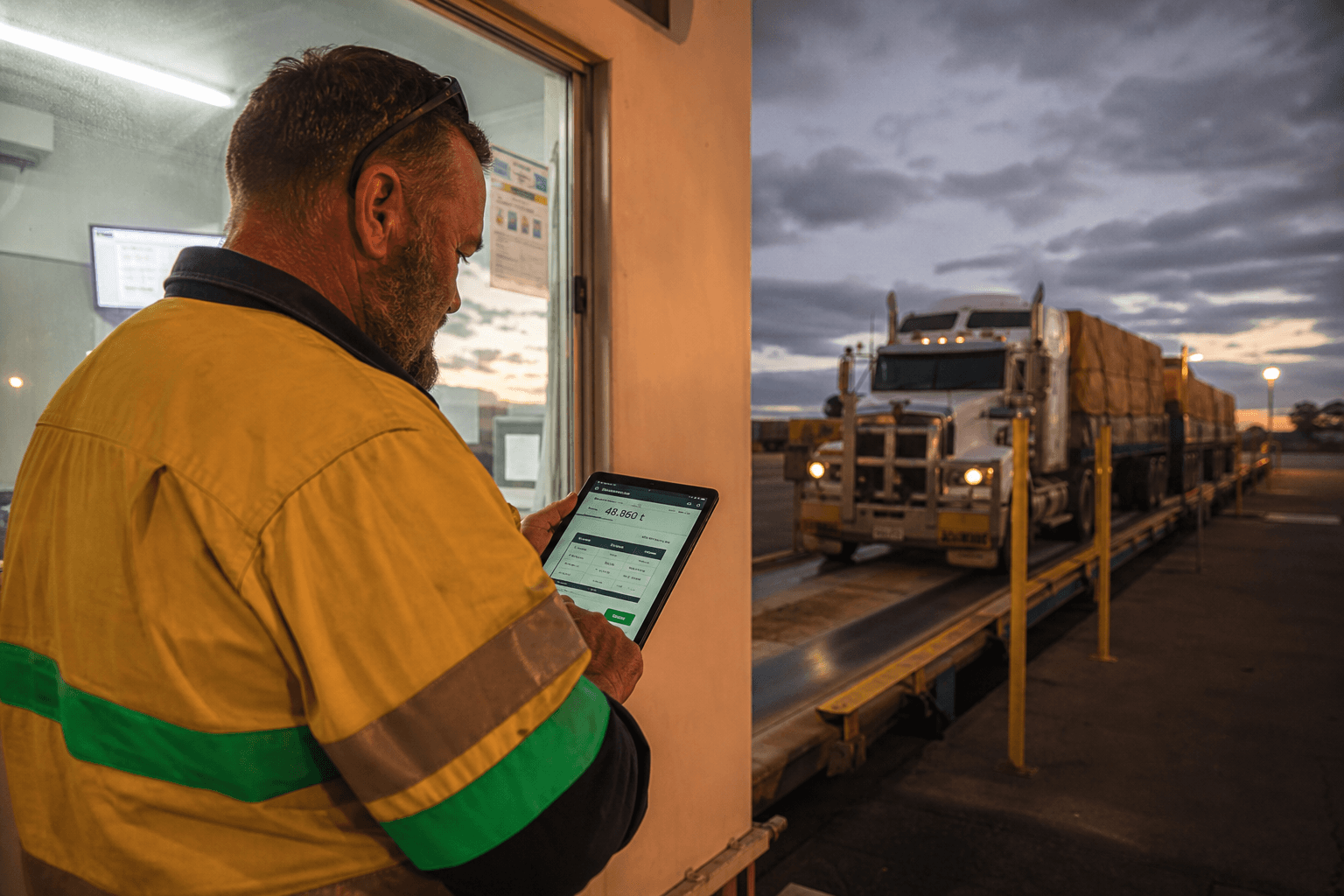
Heavy vehicle mass and dimension breaches are one of the most common — and most avoidable — sources of fines and Chain of Responsibility exposure for Australian carriers and 3PLs. AI in logistics is increasingly being used to pull together weighbridge readings, telematics feeds and load documentation so operators can catch a breach before a vehicle leaves the yard, not after it's been intercepted on the Hume or the M1.
This article looks at how that combination works in practice, what it means for operators running legacy TMS or WMS platforms, and where AI genuinely helps versus where it's still just a data-plumbing exercise.
What is Chain of Responsibility under the Heavy Vehicle National Law?
Chain of Responsibility (CoR) is a legal framework under the Heavy Vehicle National Law (HVNL) that extends liability for heavy vehicle safety and compliance breaches — including mass, dimension and loading offences — beyond the driver to everyone in the supply chain who has influence over the outcome, including consignors, schedulers, loading managers and executives. In practice, this means a warehouse manager who signs off on an overloaded pallet configuration, or an operations lead who sets an unrealistic delivery schedule, can carry legal exposure alongside the driver. The National Heavy Vehicle Regulator (NHVR) administers the HVNL and publishes guidance for parties in the chain at nhvr.gov.au.
What counts as a mass or dimension compliance breach?
A mass or dimension breach occurs when a heavy vehicle, combination or load exceeds the limits set out under the HVNL and its supporting regulations — whether that's gross vehicle mass, axle group loading, or overall height, width, length or load projection limits for the specific vehicle class and permit conditions. Breaches can arise from overloading, uneven load distribution across axle groups, incorrect restraint, or vehicles operating outside the dimensions permitted for their registered configuration. Because limits vary by vehicle type, combination and route permit, operators typically need to check specific NHVR mass and dimension requirements for their fleet rather than relying on general rules of thumb.
How can AI combine weighbridge, telematics and load data to catch breaches early?
AI can ingest weighbridge readings, on-board telematics (including load cell or air suspension sensor data where fitted), and load or consignment documentation, then cross-check them against known vehicle configuration limits to flag a likely mass or dimension issue before dispatch. Instead of a driver or dock supervisor manually comparing a weighbridge ticket to a permit, the system does the comparison automatically and in near real time, surfacing exceptions rather than requiring someone to go looking for them.
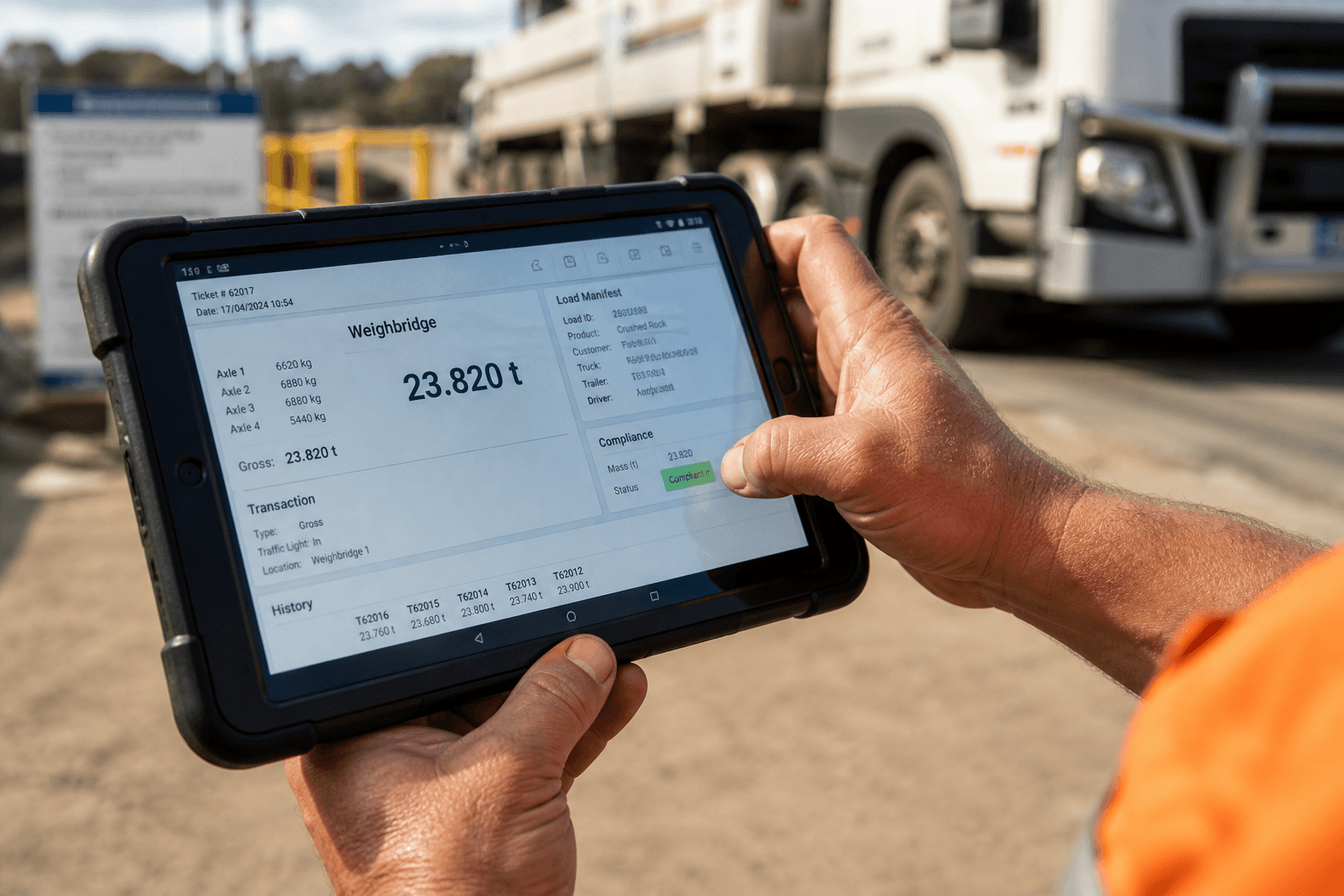
The practical value isn't the AI model itself — it's the integration. Most mid-market carriers and warehouse operators already have some of this data sitting in disconnected systems: a weighbridge printout in one place, telematics data in a fleet management portal, and load manifests in email or a spreadsheet. AI-based document intelligence can extract structured data from these sources — including scanned or handwritten load dockets and consignment notes — and normalise it into a format that can be checked against permit conditions automatically. That's the difference between a compliance check happening after the fact during an audit, and one happening before the truck leaves the gate.
Manual checks versus AI-assisted monitoring: what actually changes?
The underlying compliance obligations under the HVNL don't change — what changes is when and how often the check happens, and how much of it depends on someone remembering to do it manually.

| Aspect | Manual/paper-based process | AI-assisted monitoring |
|---|---|---|
| Data sources | Weighbridge ticket, telematics portal, manifest — checked separately | Weighbridge, telematics and load data combined automatically |
| Timing of checks | Often after loading, sometimes after dispatch | Before dispatch, closer to real time |
| Consistency | Depends on individual staff diligence | Applied consistently across every load |
| Audit trail | Paper records, hard to reconstruct quickly | Digital record, easier to retrieve for NHVR or insurer review |
| Effort to scale across sites | High — needs more people as volume grows | Lower — same logic applies across sites once integrated |
This isn't a claim that AI eliminates breaches — driver behaviour, third-party loading and equipment condition still matter. It's a claim that the detection and documentation burden shifts from manual vigilance to a system that's checking every load, every time.
What does this mean for operators still running legacy TMS or WMS systems?
Many Australian carriers and 3PLs run transport or warehouse management systems that are five or more years old, and global TMS platforms don't always localise well for Australian regulatory requirements. This is a genuine gap for operators trying to build mass and dimension monitoring on top of systems that weren't designed with NHVR or HVNL compliance in mind. In practice, this usually means AI compliance monitoring has to sit alongside or integrate with the existing TMS/WMS, pulling data out via whatever connections are available, rather than assuming the core system will handle it natively.
This is a common pattern across legacy system modernisation work generally — AI layered on top of ageing systems for data extraction, exception flagging and workflow automation, rather than a full system replacement. For mass and dimension compliance specifically, that might mean an AI layer that reads weighbridge exports and telematics feeds regardless of what TMS is underneath, and raises exceptions to the right person before a vehicle is dispatched.
Is this something to tackle in isolation, or as part of a broader AI strategy?
Mass and dimension compliance monitoring works best when it's assessed alongside the rest of an operator's data and systems, not bolted on as a one-off tool. Before investing in a specific compliance module, it's worth understanding what data is actually available, how clean it is, and where the real exposure sits — which is exactly what a structured AI readiness assessment is designed to establish. For operators already looking at route optimisation or emissions reporting under AASB S2 and Scope 3 obligations, compliance monitoring often shares the same underlying telematics and load data — so it makes sense to plan for it as part of the same data foundation rather than a separate project.
If you're weighing up where mass and dimension compliance fits into your broader operations and technology roadmap, we can help. Get in touch to talk through your current systems and where the real gaps sit.
Zero Footprint
The Zero Footprint team — AI modernisation for Australian logistics.