AI-Powered Pick-Path Optimisation in Large Distribution Centres
Machine learning algorithms can reduce picker travel time in large distribution centres while maintaining accuracy, directly improving throughput and labour costs. Here's how AI-powered pick-path optimisation works for Australian warehouse operations.
AI-Powered Pick-Path Optimisation in Large Distribution Centres
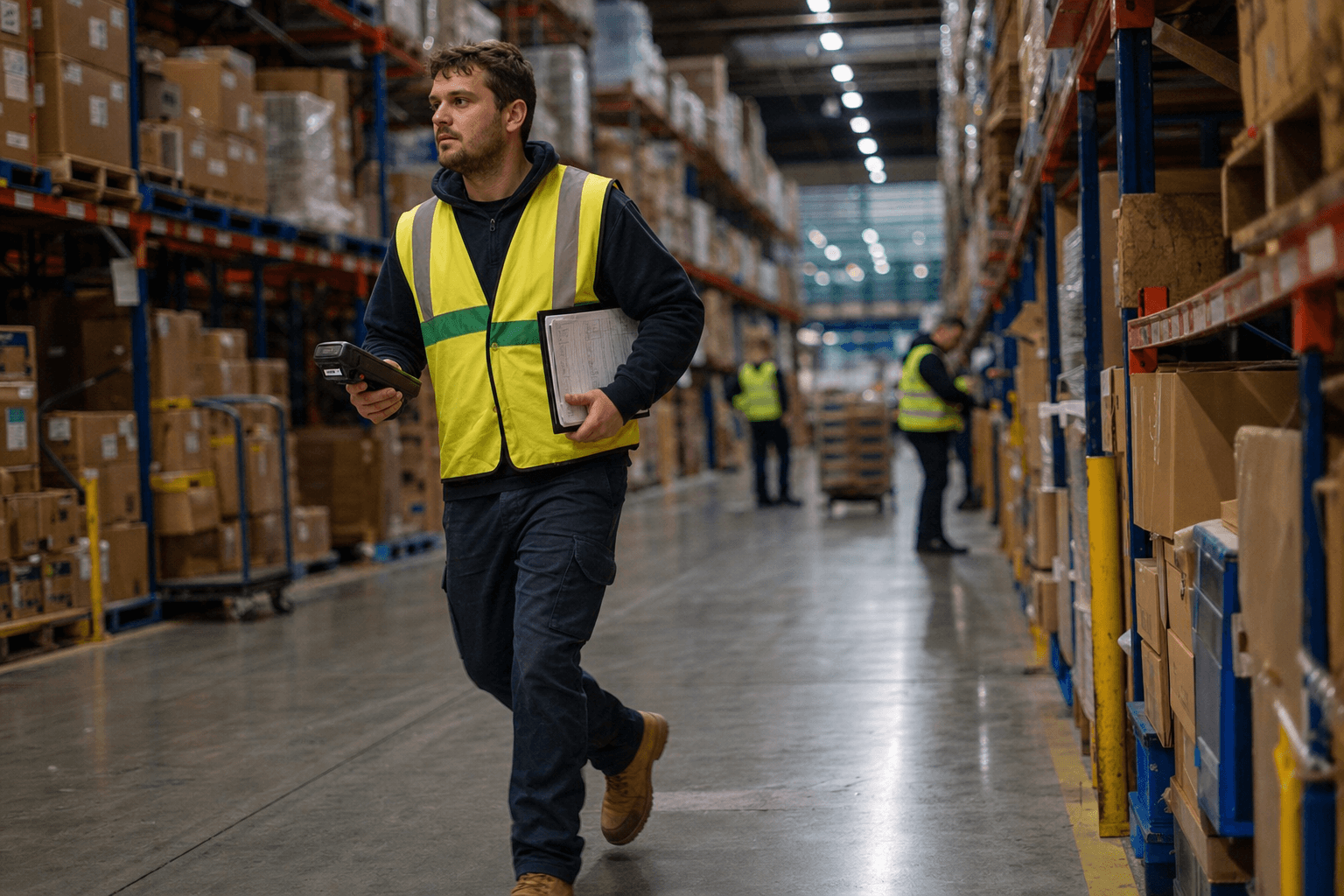
Pick-path optimisation in large distribution centres is one of the highest-impact applications of AI in warehouse operations. Machine learning algorithms can reduce picker travel time by 20-40% while maintaining accuracy, directly improving throughput and labour costs.
For Australian distribution centres handling 10,000+ orders daily, the right AI approach can mean the difference between meeting growth targets and hitting capacity walls. Here's how modern optimisation works and what Australian operators need to know.
Understanding the Travelling Salesman Problem in Warehouses
Pick-path optimisation is essentially a variation of the travelling salesman problem (TSP). The challenge is finding the shortest route through multiple pick locations while respecting warehouse constraints like aisle direction, congestion zones, and equipment placement.
Traditional warehouse management systems use simple heuristics like nearest-neighbour algorithms. These work for basic operations but leave significant efficiency on the table in large facilities. AI-powered systems use more sophisticated approaches:
- Genetic algorithms that evolve optimal paths over multiple iterations
- Simulated annealing to avoid getting stuck in local optima
- Machine learning models trained on historical pick data to predict optimal routes
The key advantage of AI approaches is they learn from real warehouse behaviour rather than theoretical shortest paths.
Zone-Based vs Wave-Based Picking Strategies
Australian distribution centres typically use one of two picking strategies, each with different AI optimisation approaches.
Zone-Based Picking
Zone-based picking assigns pickers to specific warehouse areas. AI optimisation focuses on:
- Balancing workload between zones
- Minimising handoffs between zones
- Optimising the sequence within each zone
This approach works well for facilities with distinct product categories or temperature zones.
Wave-Based Picking
Wave-based picking groups orders by timing or shipping requirements. AI optimisation considers:
- Clustering orders with similar pick locations
- Coordinating multiple pickers to avoid congestion
- Dynamically adjusting wave timing based on picker availability
Wave-based systems typically see higher optimisation gains because they have more variables to work with.
Dynamic Slotting Integration
The most advanced AI systems don't just optimise pick paths — they also optimise where products are stored. Dynamic slotting uses machine learning to:
- Predict demand patterns for individual SKUs
- Position fast-moving items closer to shipping areas
- Group frequently co-picked items near each other
- Adjust for seasonal demand shifts
This creates a feedback loop where better slotting improves pick-path efficiency, while pick-path data informs better slotting decisions.
| Traditional Slotting | AI-Powered Dynamic Slotting |
|---|---|
| Static ABC analysis | Real-time demand prediction |
| Manual repositioning | Automated slotting suggestions |
| Quarterly reviews | Continuous optimisation |
| Single criteria focus | Multi-factor optimisation |
Implementation Considerations for Australian DCs
Successful AI implementation in Australian distribution centres requires addressing local market specifics:
Data Quality Requirements
AI algorithms need clean, consistent data. Australian operators should ensure:
- Accurate SKU master data with dimensions and weights
- Reliable pick location coordinates
- Historical pick time data for model training
- Integration between WMS and warehouse control systems
Change Management
Warehouse staff need to understand and trust the new system. Successful implementations include:
- Clear communication about how AI improves their work
- Training on new pick list formats and routing instructions
- Feedback mechanisms for pickers to report system issues
- Gradual rollout rather than overnight switches
Integration Challenges
Most Australian DCs run legacy warehouse management systems that weren't designed for AI integration. Common approaches include:
- API development to extract pick data and push optimised routes
- Real-time data synchronisation between WMS and AI systems
- Gradual migration to AI-ready platforms for operators planning system upgrades
ROI Metrics and Benchmarks
Australian distribution centres implementing AI-powered pick-path optimisation typically measure success through operational metrics rather than invented percentage improvements.
Key performance indicators include:
Productivity Metrics
- Lines picked per hour: The primary productivity measure
- Travel time percentage: Proportion of picker time spent walking
- Pick accuracy rates: Ensuring optimisation doesn't compromise quality
- Order cycle time: From pick list generation to shipping
Cost Impact Areas
- Reduced labour hours for the same throughput
- Lower overtime costs during peak periods
- Decreased picker fatigue and injury rates
- Improved space utilisation through better slotting
Industry reports suggest that well-implemented systems typically see measurable improvements in picker productivity, though specific results vary significantly based on facility layout, order patterns, and existing efficiency levels.
Technology Stack Considerations
Modern pick-path optimisation requires several technology components working together:
Core AI Platform
- Machine learning models for route optimisation
- Real-time processing capabilities
- Integration APIs for WMS connectivity
- Performance monitoring and model retraining
Data Infrastructure
- Clean master data management
- Real-time location tracking
- Historical performance databases
- Integration with existing business systems
User Interface
- Mobile devices or wearables for pickers
- Dashboard for warehouse managers
- Exception handling and override capabilities
- Reporting and analytics tools
Future Developments
AI-powered pick-path optimisation continues evolving with new technologies:
- Computer vision integration for real-time inventory verification
- IoT sensors for dynamic congestion monitoring
- Predictive maintenance for warehouse equipment coordination
- Voice and gesture interfaces for hands-free operation
These developments will further improve efficiency while making systems easier for warehouse staff to use.
Getting Started with AI Optimisation
For Australian distribution centre operators considering AI-powered pick-path optimisation, the key is starting with a thorough assessment of current operations and data readiness.
Successful implementations begin by understanding your specific warehouse constraints, order patterns, and existing system capabilities. The most effective approach is often a phased rollout that proves value in one area before expanding across the entire operation.
Want to explore how AI-powered pick-path optimisation could work in your distribution centre? Our AI readiness assessment helps identify the specific opportunities and implementation path for your operation. Get in touch to discuss your warehouse optimisation requirements.
Zero Footprint
The Zero Footprint team — AI modernisation for Australian logistics.